Moab hike reveals hanging gardens and rare cave-dwelling primrose
Moab’s canyon walls hide living seeps, and spring is when cave primrose and hanging gardens are easiest to spot. Learn where to look, why they’re fragile, and how to visit without damaging them.
How to read a Moab canyon like a botanist
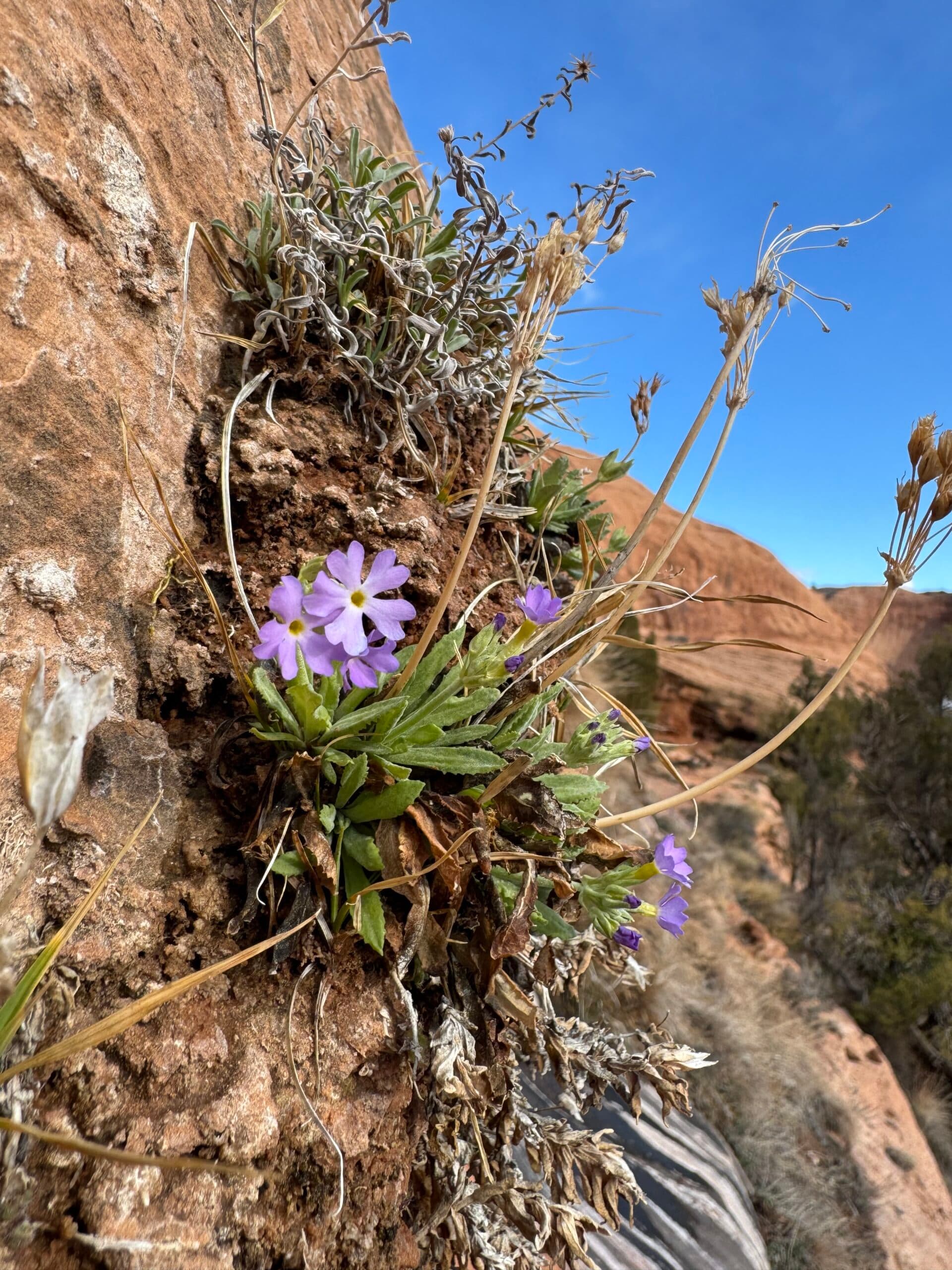
A spring hike through Moab can look like a lesson in stone until you notice the water. That is when the desert changes shape: a ledge turns green, a shaded alcove starts dripping, and a hanging garden appears where the canyon wall should feel bare. On a recent field walk with botanist Parker Lloyd, vice president of the Utah Native Plant Society, the story of Moab’s floral biodiversity came into focus around one especially rare plant, the cave-dwelling primrose, *Primula specuicola*. That is the payoff for hiking smarter here: once you know what to look for, the scenery starts telling a much richer story.
What a hanging garden really is
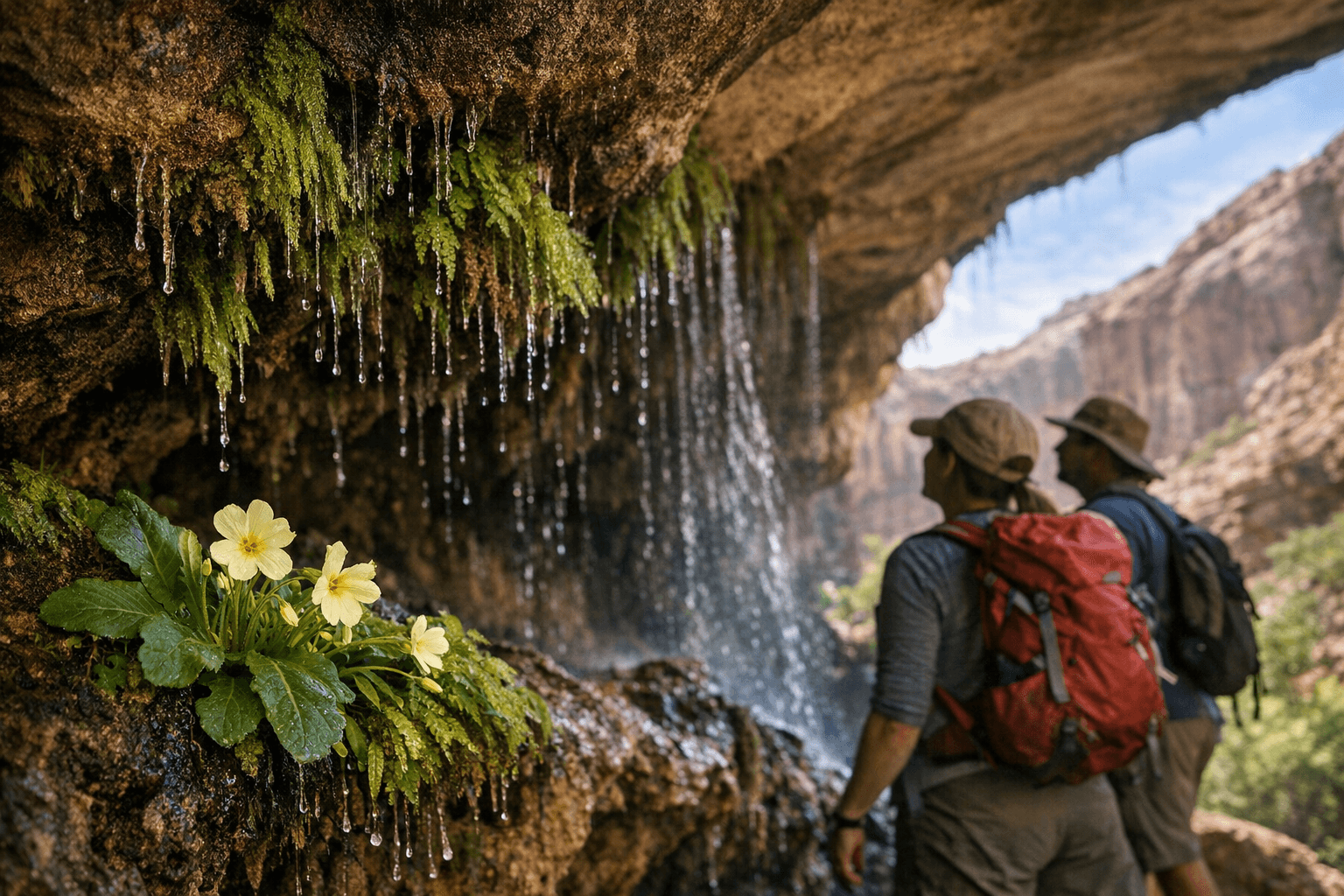
A hanging garden is not a decorative nickname. The National Park Service describes these as rare spring- or seep-supported plant communities on the Colorado Plateau, where water reaches the surface and drapes wet cliff faces or ledges with life. NatureServe breaks them into alcove, terrace, windowblind, and channel types, all of them tightly tied to canyon geology and perennial moisture. These places are often shaded for much of the day, which helps water-loving species survive in a landscape that is otherwise hot, dry, and exposed.
That contrast is the point. A hanging garden is a narrow ecological refuge, not just a pretty stop on a canyon walk. Water, shade, and rock structure combine to create conditions that can support orchids, monkeyflowers, and other specialized plants that would not last a few steps away from the seep.
Where to spot them in Southeast Utah
If you are hiking in Arches National Park, Canyonlands National Park, or Natural Bridges National Monument, you are in hanging-garden country. The National Park Service notes that these rare habitats occur in all three of those units, and they matter far beyond their small footprint. In fact, a 2021 NPS report says 8 to 9 percent of known endemic plant species at Arches National Park and Natural Bridges National Monument are hanging-garden specialists.
That is a surprising number for such tiny habitats, and it explains why they matter to anyone planning a Moab trip. These are not fringe botanical curiosities. They are a major reason the region’s canyon systems feel so alive in spring, especially when wildflowers are showing and the seep-fed pockets are easiest to notice.
The cave primrose is the plant to find in spring
The star of this story is *Primula specuicola*, the cave primrose. The National Park Service says it blooms in Arches in March and April, which makes spring the best season to look for it. It grows in hanging gardens and streamsides, especially in alcoves in Entrada and Navajo sandstone, where moisture lingers long enough to support delicate flowers.
The Flora of North America calls it a characteristic member of hanging-garden communities along the canyon walls of the Colorado River and its tributaries. It is also endemic to scattered locations in southeastern Utah and northeastern Arizona, which is part of what gives it such appeal for curious hikers and naturalists. You are not just seeing a flower. You are seeing a plant adapted to a very narrow slice of canyon habitat, one that exists only where the right geology and water sources meet.
What to look for on the trail
If you want to find these systems without damaging them, slow down and read the canyon wall the way Parker Lloyd would. Start with shade and moisture. Hanging gardens are usually tucked into alcoves, ledges, or other protected pockets where seep water emerges and keeps the rock face damp.
- Wet streaks on cliff faces or ledges
- Lush green patches in otherwise dry canyon corridors
- Orchids, monkeyflowers, and other moisture-loving plants
- Small clusters of primrose in shaded spring seep areas
- Vegetation that seems to hang off stone rather than grow in open soil
Look for:
The best viewing is often from the trail itself, not inside the seep zone. These places may look sturdy from a distance, but the living mat of plants, roots, and thin soils can be damaged quickly by a single misplaced step.
Why these ecosystems are so fragile
The National Park Service monitors springs, seeps, and hanging gardens to track water quantity, water quality, and vegetation health. That monitoring focus tells you almost everything you need to know about their vulnerability. If the water changes, the habitat changes. If the vegetation is trampled, the microhabitat can unravel.
Canyonlands National Park also points to increasing recreational use, adjacent land-use impacts, and exotic plant invasion as major natural-resource concerns. That makes stewardship part of the hiking experience, not an afterthought. The canyons may feel timeless, but the plants inside them are responding to pressures that can build quickly and quietly.
Why spring is the right time to go
Spring is when the canyon’s botanical drama is easiest to read. The cave primrose is in bloom in March and April, and the seep-fed gardens are often vivid enough to stand out even to casual hikers. For a Moab road trip, that means the same season that draws people to slickrock and desert views also opens a second layer of scenery, one that rewards patience and attention.
That is the best reason to build a little extra time into your hike. If you rush past the shaded walls, you miss the living system that makes the corridor special. If you pause and scan the alcoves, spring becomes less about distance covered and more about what the canyon is quietly sustaining.
A deeper conservation story sits behind the hike
This is not a one-off fascination with a pretty plant. Utah’s rare-plant tracking work began in the state’s natural heritage system in 1989, moved to Utah State University in 2011, and added a rare plant conservation coordinator in 2016. That history matters because it shows a long-running effort to understand and protect species like *Primula specuicola* and the habitats they depend on.
In other words, the canyon walk is part of a much larger conservation network. When you stop to study a seep, you are looking at the kind of site that botanists, park scientists, and rare-plant programs have spent decades learning how to document and protect.
How to visit responsibly this spring
The rules are simple, but they matter here more than almost anywhere else on a Moab hiking trip.
- Stay on the established trail, even if the garden looks close
- Do not step into wet seeps, mossy margins, or alcoves with active plant growth
- Watch for rare plants from a distance rather than moving in for a closer look
- Leave rocks, stems, and flowers exactly where they are
- Treat shaded cliff pockets as living habitat, not photo props
That approach protects the plants and keeps the experience better for the next person who comes through. In a region famous for big views and bold routes, the smallest places can be the most extraordinary. Hanging gardens and cave primrose are proof that Moab’s canyons are not just scenery. They are working ecosystems, and spring is when they reveal themselves most clearly.
This article was produced by Prism’s automated news system from verified source data, official records, and press releases, then run through automated quality and moderation checks before publishing. The system is built and supervised by the people who set the standards it runs under. Read our full AI policy.
Did this article answer your question?