How to Score a Grand Canyon Backcountry Permit for 2026
Only 750 applicants win a lottery timeslot each month to book a Grand Canyon backcountry permit, and that window can be as short as 30 minutes. Here's how to land one.
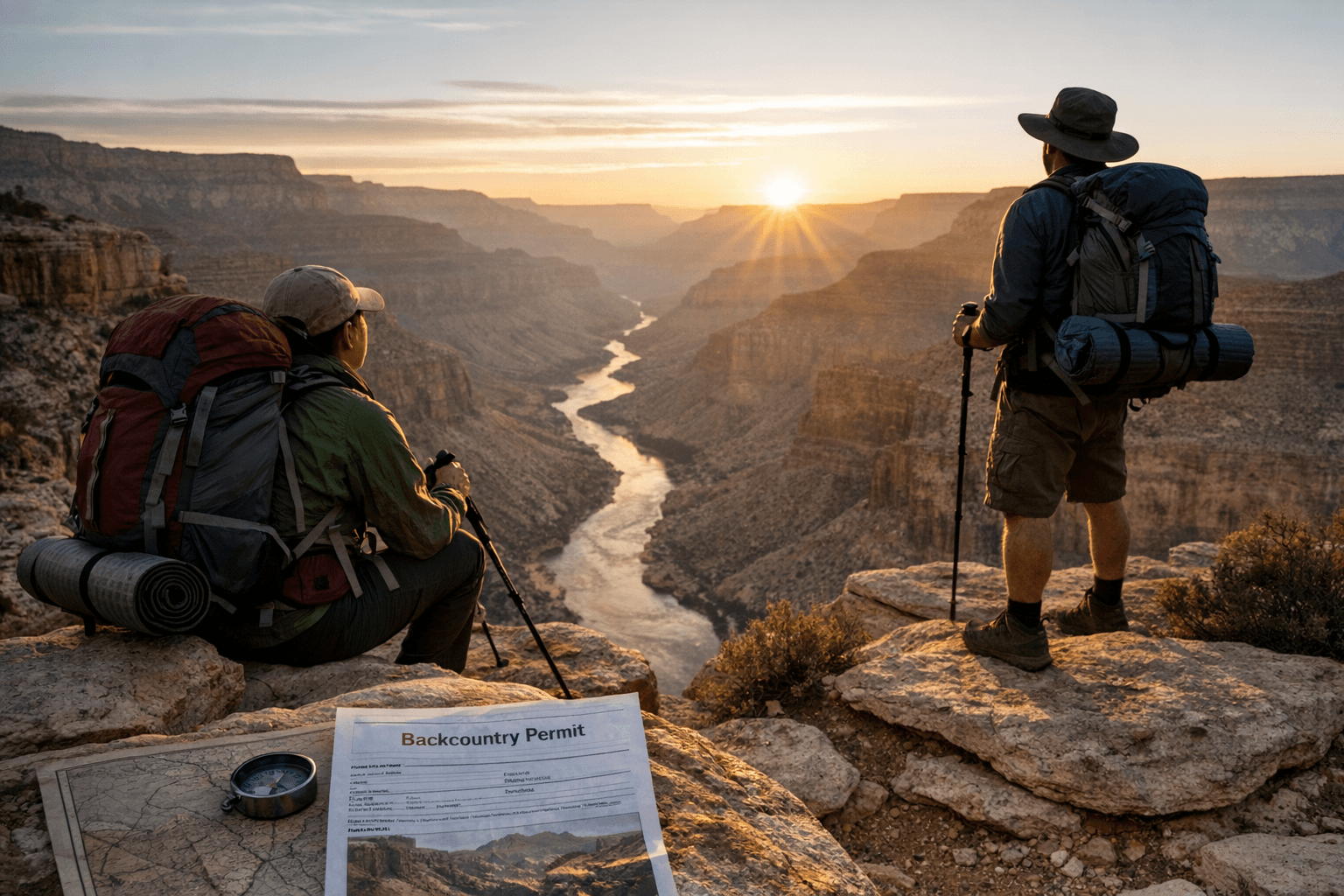
Securing a Grand Canyon backcountry permit is not a first-come, first-served race. It's a monthly lottery that awards only 750 applicants a booking window, and that window is often as short as 30 minutes. Miss it, and you're back in the queue or hunting for cancellations. Get it right, and you're sleeping under a billion stars at Bright Angel Campground with the Colorado River humming 50 feet away.
Who Actually Needs a Permit
Any overnight stay below the rim requires a backcountry permit, full stop. That covers established corridor campgrounds like Bright Angel Campground, Havasupai Gardens, and Cottonwood Campground (the three anchor sites along the primary rim-to-rim route), as well as every primitive zone and threshold area in the canyon. The rim campgrounds at Mather, Desert View on the South Rim, and North Rim Campground operate as standard campground reservations and are not part of the backcountry permit system. Day hiking is permit-free no matter how deep into the canyon you push, but the moment you're sleeping below the rim, even just one night, you need a permit, and it will specify exactly which campsite you occupy on each night of your itinerary.
How the Lottery Works
The NPS runs a monthly lottery through Recreation.gov to manage the demand. The entry window opens on the 16th of each month and closes on the 1st of the following month, with permits covering trips beginning four months later. If you want to hike in May, enter between December 16 and January 1. For October, that's mid-June through July 1. Results are announced around the 10th of the month after applications close.
The park selects 750 applicants and awards each a specific timeslot to log into Recreation.gov and complete their permit booking. Those timeslots are tight, often just 30 to 60 minutes, so you need your itinerary fully mapped out before your window opens. The park expects most winners will successfully secure a permit during their timeslot, though the most popular campsites and peak-season dates fill within the first few minutes.
The Step-by-Step Booking Process
1. Build your itinerary before anything else. The permit is tied to a specific route: starting trailhead, campsites by night, and exit point.
Lock in your first choice, then prepare two or three alternates before you enter the lottery.
2. Create or log into your Recreation.gov account. Do this well before the lottery opens on the 16th so you're not scrambling with account verification during the entry window.
3. Enter the lottery between the 16th and the 1st. You can rank multiple start dates and itinerary preferences to improve your odds.
The lottery entry itself is free; the $10 basic permit fee is paid at booking. Confirm the current fee structure on Recreation.gov before applying, as it can update year to year.
4. Watch for results around the 10th. If selected, you'll receive a confirmation email with your specific booking timeslot.
Log in during that window, finalize your campsite selections, and pay. The $10 permit fee is non-refundable but is waived for lottery winners booking through their assigned timeslot. Per-person nightly fees run $15 below the rim and $4 above it; those charges are refundable up to 30 days before your trip start date, as long as you haven't yet printed the permit.
5. If you're not selected, unclaimed spots from winners who didn't complete their booking open to the public roughly three months before the trip date.
Online booking closes five days before your permit start date; after that, your only option is appearing in person at the Backcountry Information Center on the South or North Rim and asking about last-minute availability.
Improving Your Odds
Flexibility is the single biggest variable in lottery success. The more start dates you're willing to accept, the more chances you have. Weekday starts and shoulder-season months face lighter competition than peak weekends in spring and fall. Prepare multiple acceptable itineraries rather than one dream trip: a party committed to Bright Angel Campground on a Saturday in October has very different odds than one willing to start midweek or swap a night to Cottonwood. If the Corridor feels too competitive, threshold and primitive zone itineraries use the same permit system and typically see lower demand.
NPS also provides a dedicated phone line for lottery winners to use during their reservation window. The Backcountry Detailed Availability instructions page on the NPS site explains how to access that support line before your timeslot opens, so pull it up in advance rather than searching for it mid-booking.
After You Have the Permit
Your permit can be printed as early as one month before your start date. Once printed, the nightly charges are no longer refundable, so wait to print until your plans are firm. Permittees cannot directly modify a finalized permit; contact the Backcountry Information Center if your dates or itinerary need to change.
Regardless of zone or campsite, come prepared for what the inner canyon actually delivers: carry at least one liter of water per hour of hiking in heat, pack a first-aid kit and a satellite communicator or personal locator beacon, and bring printed route maps rather than relying on cell signal. Canyon temperatures at river level bear no relation to the rim forecast. Follow NPS Leave No Trace rules closely: pack out all human waste using WAG bags (required below the rim), respect fire restrictions (prohibited in most below-rim areas), and give a wide berth to archaeological sites.
River Trips and Phantom Ranch: Separate Systems Entirely
One critical distinction worth flagging early: the backcountry permit system covers hiking and camping trips only. Noncommercial multi-day river trips use a completely separate weighted lottery through the Grand Canyon river permit system. Overnight stays at Phantom Ranch are lodge reservations through a different Recreation.gov portal with their own booking timeline. Don't conflate these systems when planning; each runs on independent lottery schedules, fees, and rules.
The Practical Bottom Line
Think of the permit process as a multi-layer puzzle: the monthly lottery four months out, leftover inventory opening roughly three months out, and in-person last-minute options as a backstop. The applicants who actually get below the rim share three habits: a fully built itinerary ready to book the moment a window opens, flexible dates that stretch beyond the obvious peak weekends, and a routine of checking Recreation.gov for cancellations in the weeks approaching their target month. Start the clock four months before you want to be on the trail.
This article was produced by Prism’s automated news system from verified source data, official records, and press releases, then run through automated quality and moderation checks before publishing. The system is built and supervised by the people who set the standards it runs under. Read our full AI policy.
Did this article answer your question?