International Climber Survives Skull Fracture After Red Rock Canyon Fall
New Zealand climber Will Campbell, 25, fractured his skull at Red Rock's Calico Basin after a rope entanglement; friends raised nearly $27,000 in days when travel insurance fell short.
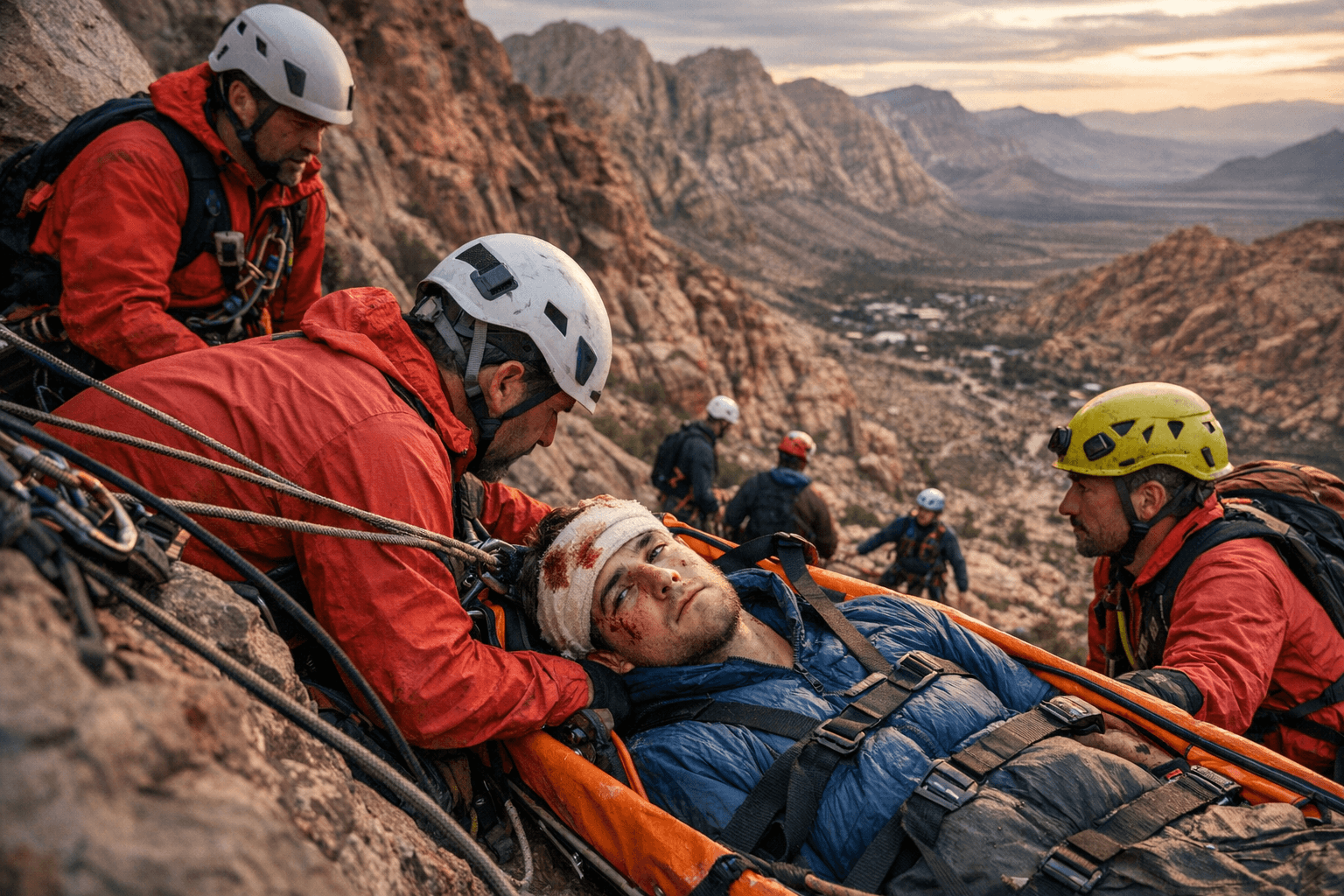
A rope entanglement flipped New Zealand climber Will Campbell upside down at Red Rock Canyon's Calico Basin on March 28, driving the back of his head into the sandstone and leaving him with a fractured skull, intracranial bleeding, and a seizure. Campbell, 25, was extracted by Las Vegas Metropolitan Police Department Search and Rescue and their AIR3 helicopter before being airlifted to University Medical Center in Las Vegas.
Campbell and his group were in the Las Vegas area for their annual spring break trip, a routine destination for a friend group Tomas Doell described as experienced and drawn specifically to Red Rock's range of pitches. Around 2 p.m. on March 28, Campbell's foot became entangled in his rope mid-route. The resulting flip sent him headfirst into the wall. Friends at the base called 911 immediately, and Metro SAR launched a technical extraction from Calico Basin that those present called traumatizing to watch.
By April 1, Campbell had been cleared for discharge from University Medical Center, though doctors told friends his recovery could stretch into months. Nausea and headaches persisted at the time of his release. Campbell noted that navigating the U.S. healthcare system compounded the ordeal, but said he considered himself fortunate given what followed on the fundraising front.
Doell, a senior at the University of Colorado Colorado Springs who was climbing with Campbell when he fell, launched a GoFundMe that raised nearly $27,000 by Wednesday, April 2. The campaign covered medical expenses Campbell's travel insurance would not. "Our hearts sunk," Doell said. "We never experienced something like that." The breadth of support shifted his outlook: "It's amazing how many people are willing to even just lend $1 and support Will with this. He's got such a large circle of loving people, so I know that it'll all be good."
Campbell's rescue was one of four helicopter operations Metro SAR's AIR3 ran across Red Rock and Gold Strike Canyon that same weekend, a figure that reflects the operational tempo the unit sustains as spring climbing season peaks. Two weeks earlier, on March 16, Metro SAR simultaneously handled three rescue operations in the Red Rock area alongside Red Rock Search and Rescue and Bureau of Land Management rangers. The unit is on call 24 hours a day, 365 days a year, and the late-March surge is consistent with the seasonal spike that follows warmer weather and spring break crowds into the canyon.
What the Campbell incident makes plain is the distance between a standard international travel policy and what a technical climbing rescue combined with U.S. trauma-level hospitalization actually costs. His insurance left a gap wide enough that a crowdfunded campaign became the financial backstop. The mechanism that triggered the fall, a foot caught in a rope on what his friends considered a routine outing for an experienced climber, is precisely the kind of freak event that makes helmet use and deliberate rope management non-negotiable on every pitch at Red Rock, not just the hard ones.
Know something we missed? Have a correction or additional information?
Submit a Tip