Lake Powell Faces Worst Snowmelt Inflows Ever, Complicating Summer Trips
Powell’s runoff outlook has dropped to 800,000 acre-feet, and Bullfrog Marina is already being shifted to deeper water near Halls Crossing.

If you're planning a Lake Powell trip this summer, the first thing to verify is not the forecast but the ramp, marina, and launch you expect to use. Federal hydrologists now project the reservoir could receive its worst natural snowmelt inflows since the 1960s, and that is already changing how boaters, campers, and backcountry travelers move around Glen Canyon National Recreation Area on the Utah-Arizona border.
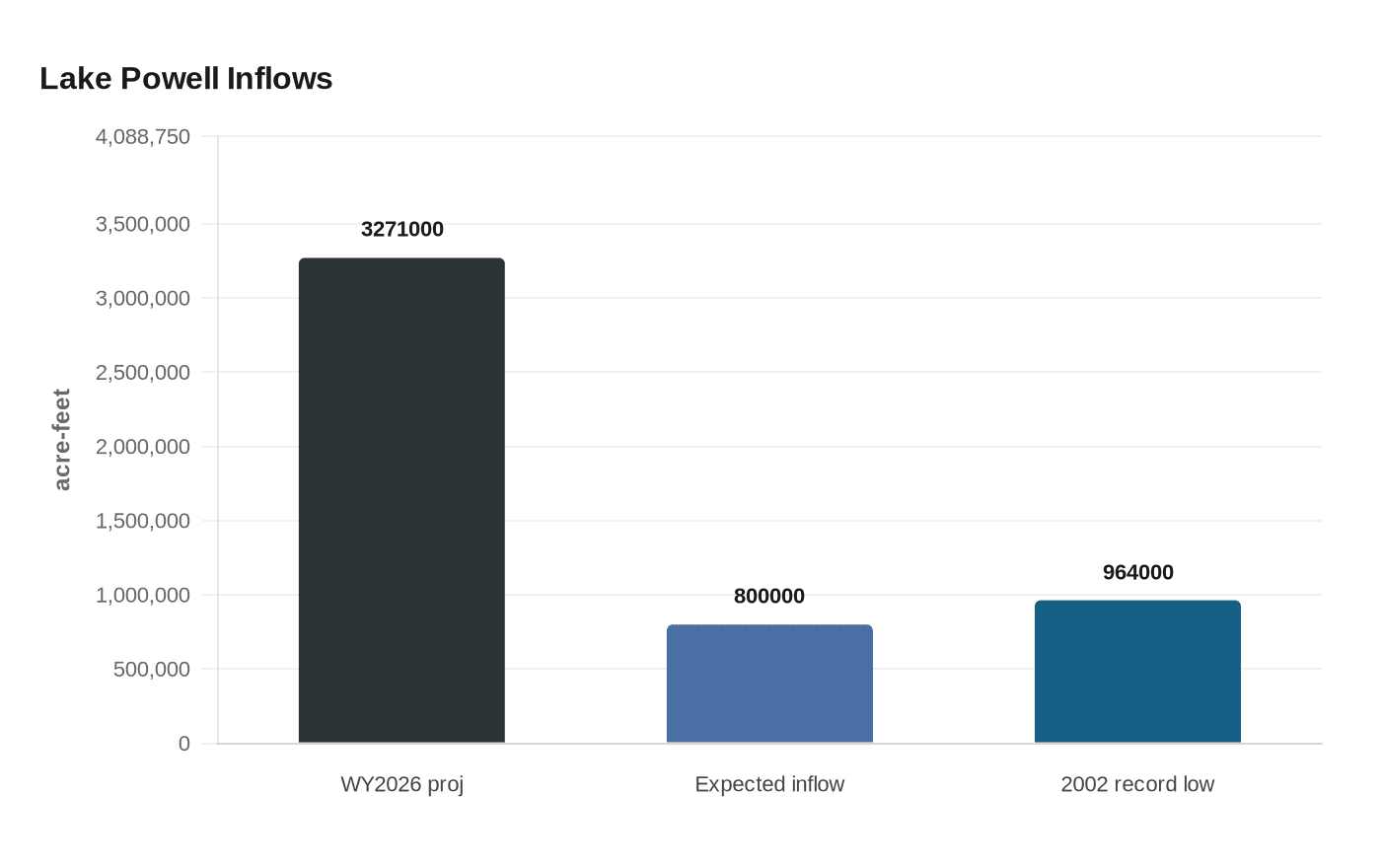
The latest Bureau of Reclamation weekly update, issued May 5, put Lake Powell’s water-year 2026 unregulated inflow at 3,271 thousand acre-feet, or 34% of normal. Reclamation’s April 24-Month Study projected the lake ending water year 2026 near 3,483.15 feet with about 3.44 million acre-feet in storage. Under the Probable Minimum scenario, Powell was projected to fall to 3,464.07 feet by December 31. Those numbers matter at the shoreline, where low water is already affecting marina operations, ramp usability, and visitor services.
The scale of the runoff problem is stark. The expected inflow is about 800,000 acre-feet, roughly 13% of the basin median, and below the previous record low annual inflow of 964,000 acre-feet set in 2002. Cody Moser said the basin had seen months of record-warm and dry weather, and late-season storms only partially eased the damage. Utah’s drought information statement on May 5 said extreme drought had expanded across much of the state, with the lowest ever snowpack conditions observed in recorded history as of April 1, since 1930.

Park managers have been preparing for this all spring. The National Park Service said in late February that lake access was not anticipated to be lost this summer, and in March it said it was adjusting facilities in the Bullfrog and Halls Crossing areas to keep uplake boating access available. Aramark began moving Bullfrog Marina on May 4, with the relocation expected to take four to six weeks. The boat rental and fuel dock at Bullfrog had already been moved to Halls Crossing by the end of March.
For visitors, that means familiar assumptions may no longer hold. A shoreline campsite that looked easy to reach in previous summers may sit farther from the waterline. Fishing access around coves and launch points can shift quickly as the lake drops. Even a straightforward boating day can require more attention to fuel stops, dock locations, and route planning than Powell regulars are used to.
The strain reaches beyond the lake itself. Controlled releases from Flaming Gorge are being considered as part of system-wide management responses, and NOAA’s Colorado Basin River Forecast Center is the federal office behind the projections. Utah also warned that significant wildland fire potential would be above normal in far southern Utah in May, then across the state by July. Powell is still open, but this season the lake level is part of the trip plan from the first ramp check to the last fuel stop.
This article was produced by Prism’s automated news system from verified source data, official records, and press releases, then run through automated quality and moderation checks before publishing. The system is built and supervised by the people who set the standards it runs under. Read our full AI policy.
Did this article answer your question?