Proposed Border Wall Threatens Big Bend’s Dark Skies and Wildlife
A border wall could cut across 118 miles of Rio Grande country in Big Bend, where 106,000 signatures and 130 groups are fighting to protect dark skies and wildlife.
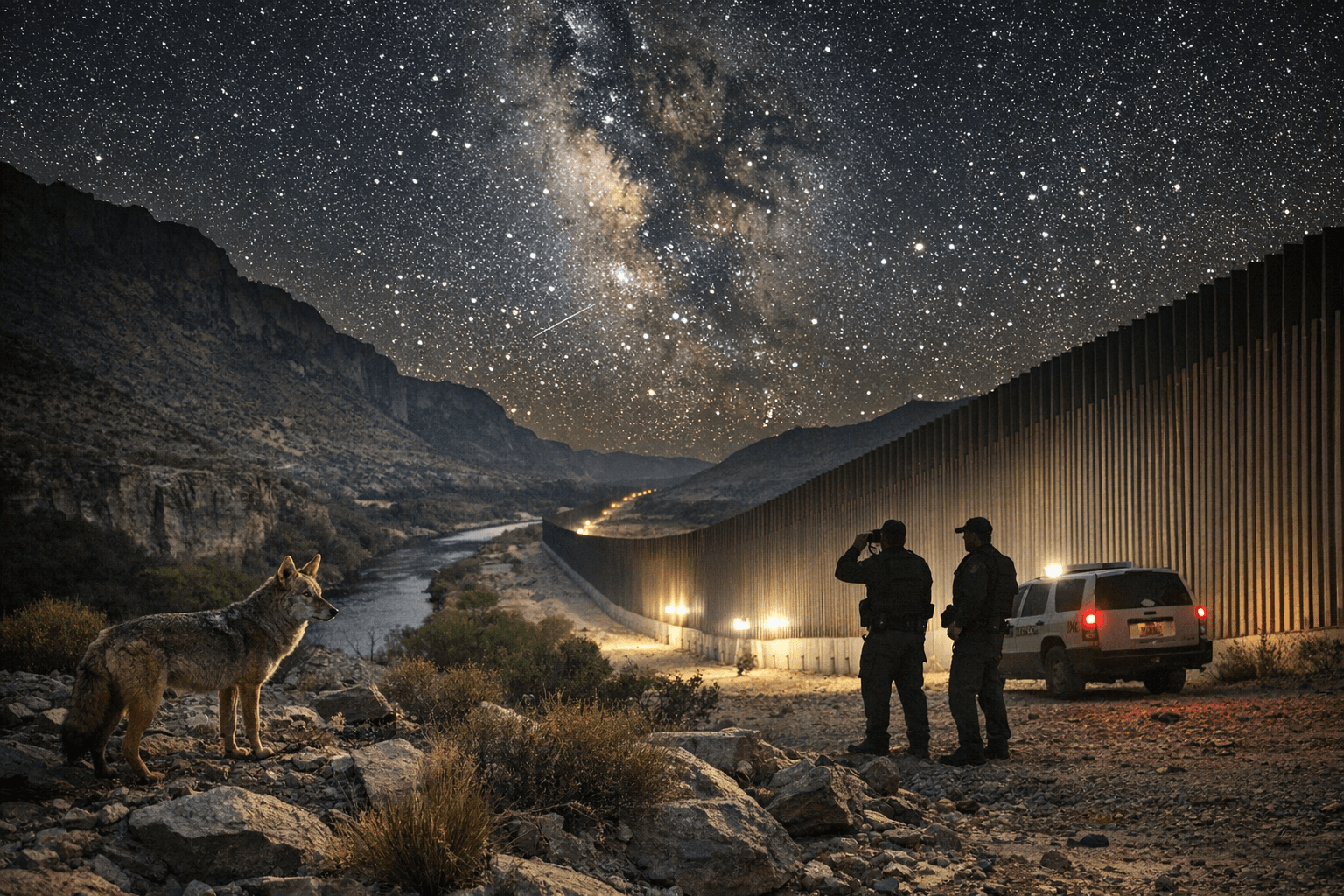
A border wall cutting through Big Bend National Park would slice across 118 miles of Rio Grande country, a place defined by darkness, remoteness and open desert horizons. It would also target one of the Southwest’s biggest drawcards: a park that covers more than 801,000 acres, welcomes over 500,000 visitors a year, and holds some of the darkest measured skies in the lower 48 states.
That is why the backlash has been so unusually broad. In late March, about 130 conservation groups, outfitters and rural Texas businesses sent Congress a letter urging intervention to stop the wall plans in the Big Bend parks. A petition from a local photographer gathered more than 106,000 signatures, and rallies were planned at the Texas Capitol and in Big Bend National Park on April 4, signaling a coalition that reaches well beyond the usual environmental camp. The concern is not only about wildlife habitat; it is also about scenery, access and the identity of a place many visitors come to for silence, solitude and star-filled nights.
The timing sharpened after a lawsuit was filed April 16, 2026, challenging the Trump administration’s use of waivers to accelerate construction in the Big Bend area. The suit, brought by a West Texas river guide, Friends of the Ruidosa Church and the Center for Biological Diversity, argues that the administration illegally bypassed environmental laws and would damage iconic stretches of the Rio Grande corridor. Separate reporting said the administration had waived more than two dozen environmental laws in February to speed a 150-mile border barrier through West Texas, including Big Bend National Park and neighboring Big Bend Ranch State Park.
Big Bend is especially vulnerable because of what lives there and how people use it. The National Park Service says the park contains more than 1,200 plant species, over 400 bird species, 75 mammal species, 56 reptile species, 11 amphibian species and about 3,600 insect species. Any barrier through that landscape raises concerns about habitat fragmentation and wildlife movement. It also threatens the park’s river experience: the Rio Grande is Big Bend’s most prominent water source and a key corridor for paddling and river travel through canyons and beaches.
The park’s defenders argue this is not just a border-security fight, but a fight over a landscape long treated as a connected binational space. Big Bend was authorized by Congress in 1935 and established in 1944, after an early 1933 proposal for an international park and a 1935 letter from Sen. Morris Sheppard to President Franklin D. Roosevelt. That history helps explain why a hard wall here feels so jarring: in Big Bend, openness has always been part of the experience.
This article was produced by Prism’s automated news system from verified source data, official records, and press releases, then run through automated quality and moderation checks before publishing. The system is built and supervised by the people who set the standards it runs under. Read our full AI policy.
Did this article answer your question?