Grand Canyon eases South Rim water restrictions after pipeline repairs
Water restrictions are easing at the South Rim, but Mather Campground, Desert View, and other visitor routines are still not back to normal.
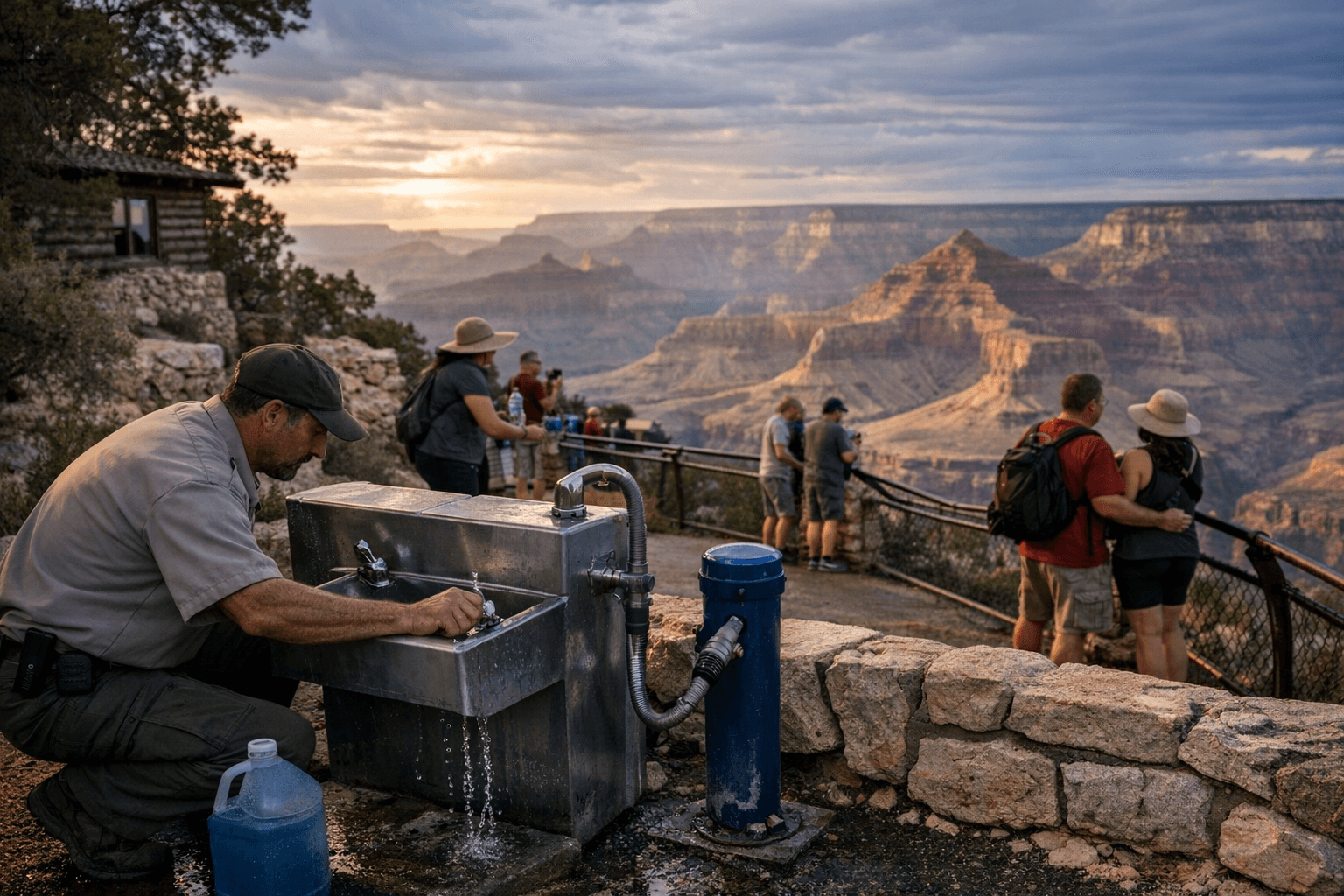
Grand Canyon National Park began easing South Rim water conservation measures Friday at 12 p.m. after crews made progress repairing the pipeline and restoring pumping to the rim, but this is still a partial reset, not a return to business as usual. The South Rim remains tied to a constrained, aging, and increasingly vulnerable legacy water system, so travelers should still plan for conservation-minded operations and possible service limits.
That matters because the South Rim is the park’s busiest hub, the place where lodging, dining, shuttles, campground operations, and trail access all collide. The park’s move signals improvement, but not enough slack in the system to relax completely. Spring visitors should still check current operating conditions before arriving and build in extra water, especially if they are camping, hiking, or staying overnight near the rim.
The easing follows a rough month for the park’s water supply. Grand Canyon moved to Stage 3 Water Restrictions on April 1 after a break in the water pipeline along the North Kaibab Trail. By mid-March, the park said no water was being pumped to the South Rim. Earlier conservation measures were tied to a series of pipeline breaks in the inner canyon, and the response included closing Camper Services at Mather Campground, turning off water spigots at Mather Campground and Desert View, and prohibiting outdoor wood and charcoal fires at Mather Campground.
The backbone of the system is the Transcanyon Waterline, a line built in the late 1960s that provides potable water and fire suppression for South Rim facilities and some inner-canyon sites, including more than 800 historic buildings. The National Park Service says the line has outlasted its expected lifespan and fails often, with at least one break a month on average. A single break typically interrupts service for three to five days and can cost more than $25,000 to repair.
That is why the park is already pushing a much bigger fix. The Transcanyon Waterline rehabilitation is a multi-year, $208 million project intended to support the park for about 50 years, and two new 1-million-gallon water tanks are being built on the South Rim as part of the work. For now, the message from Grand Canyon is straightforward: the water situation is better, the South Rim stays open, but the canyon’s most visited edge is still operating with caution, and that caution should shape every spring trip plan.
This article was produced by Prism’s automated news system from verified source data, official records, and press releases, then run through automated quality and moderation checks before publishing. The system is built and supervised by the people who set the standards it runs under. Read our full AI policy.
Did this article answer your question?