Sabino Canyon set for major upgrades, new trails and visitor center overhaul
Sabino Canyon’s first upgrades will focus on safer stairs, new restrooms, shade and interpretive fixes in 2026, while the full visitor-center rebuild still waits on funding.

Sabino Canyon is heading into a construction era that will matter most to the people who actually use it: hikers, shuttle riders, families, and anyone trying to beat the heat. The big visitor-center rebuild is approved in concept but not fully funded yet, so the first changes visitors are likely to feel are the practical ones, including new restrooms, stair repairs near Sabino Dam, and other site improvements expected in 2026.
What visitors will notice first
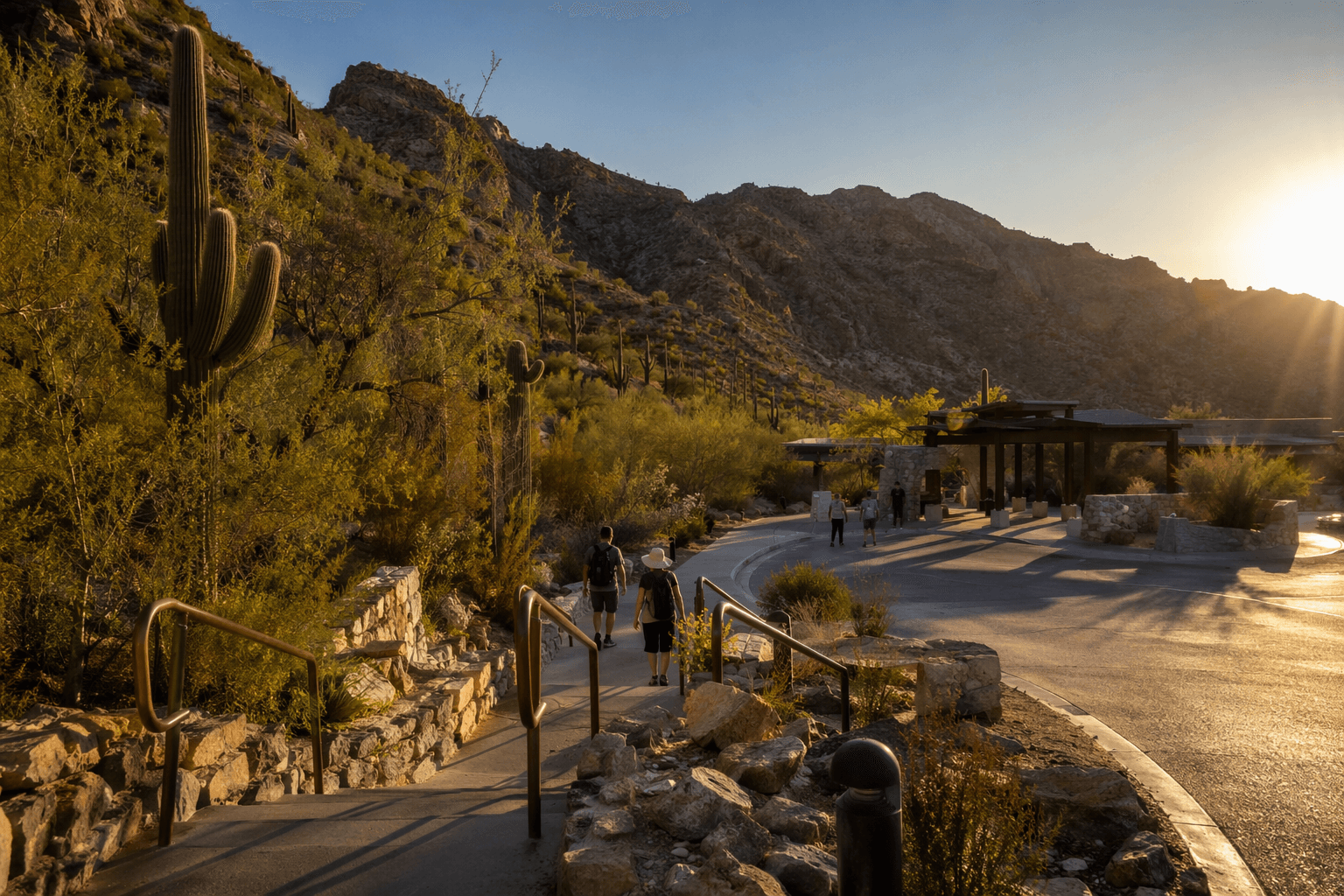
The clearest near-term shift is that Sabino Canyon is no longer talking only about planning. The U.S. Forest Service has approved the project through the environmental review process, and the work now points toward visible upgrades in the recreation area itself. For a canyon that has been closed to private vehicles since 1978, every change to the parking, entry plaza, crawler boarding area, and trail access carries real consequences for how a day here unfolds.
That matters because the site is already one of the busiest outdoor destinations in southern Arizona, drawing more than one million visitors a year and ranking as the most visited area in the Coronado National Forest. The current visitor center dates to the 1960s and was modified in the 1990s, so the basic pressure points are familiar to anyone who has spent time here: crowded facilities, limited shade, aging restrooms, and the constant problem of making a popular canyon more accessible without overwhelming it.
What the reimagined project covers
The broader effort is being framed as the Sabino Canyon Visitor Center Reimagined project, and the scope is bigger than a single building. The plan calls for replacing outdated public and office facilities at the Sabino Canyon Recreation Area with a new visitor center, an administrative complex, and associated parking designed to serve future generations. The project area includes the visitor center, U.S. Forest Service offices, crawler boarding area, primary parking area, entry plaza, restrooms, and the Bajada Loop Trail.
That footprint is important for anyone planning a visit, because it shows where the strain on the canyon is concentrated. Shuttle riders use the crawler boarding area, hikers pass through trailheads and the Bajada Loop Trail zone, and families usually feel the pinch first at parking, restrooms, and the entry plaza. The promised additions, including shade structures and new trails, are meant to make that gateway area work harder in extreme sun while keeping the natural landscape intact.
The biggest changes are still ahead, but some work is already funded
The full visitor-center replacement is not currently funded, which means visitors should not expect a complete overhaul all at once. What is expected in 2026 is a smaller but still useful set of improvements elsewhere in the recreation area: reconstruction of stairs next to the historic Sabino Dam, installation of a restroom at the Sabino overflow lot, and interpretive site improvements within the canyon.
Those upgrades matter in very concrete ways. Rebuilt stairs near Sabino Dam can reduce a common bottleneck and improve safety on a heavily used stretch of the canyon. A restroom at the overflow lot gives families and shuttle users a more practical option before they head deeper into the recreation area. Interpretive improvements help turn a busy stop into a more informative one, especially for visitors who want to understand the canyon’s water, geology, and ecology without needing a guided tour.
Planning has been years in the making
This project did not appear overnight. The master planning effort began in March 2023, and in early October 2023 the Arizona-based design firm Weddle Gilmore was selected to develop a conceptual design under a cost-sharing agreement between the Forest Service and Friends of Sabino Canyon. That partnership structure has been central from the start, with the planning process carried by both public and nonprofit support.
A steering committee brought together Friends of Sabino Canyon, Sabino Canyon Volunteer Naturalists, Santa Catalina Volunteer Patrol, and other partners. Local government agencies, nonprofits, tribal nations, and user groups were also involved, which is a sign of how many interests have a stake in the canyon’s future. Public scoping ran from July 11 through August 12, 2024, and a public open house was held on July 11, 2024, at the Sheraton Tucson Hotel and Suites in Tucson.
The canyon has already seen smaller upgrades
The 2026 work is part of a broader pattern of incremental improvements. In December 2024, more than 100 community members gathered for the unveiling of a renovated open-air shelter that added new interpretive exhibits, along with a restroom and a potable water fountain. That project was led by Friends of Sabino Canyon with support from private donors, Forest Service funding, and Secure Rural Schools Act grant money recommended by the Southern Arizona Resource Advisory Committee.
Those exhibits focused on aquatic ecology, the source of water in Sabino Canyon, and how water flows into the Tucson basin. That subject is not just interpretive window dressing here. In a canyon defined by heat, water, and steep terrain, visitors rely on practical information as much as scenic value, and the addition of water and restroom access in a high-use area gives the site more breathing room on crowded days.
Jim Darling, president of Friends of Sabino Canyon, has described the group’s mission as conserving, protecting, and enhancing the place. District Ranger Don Delmastro has said the improvements would not happen without the Friends and other partners, which is exactly what the timeline shows: the canyon’s future is being built through a layered mix of design work, public input, and phased construction.
For now, Sabino Canyon is moving into the part of the process visitors will feel most directly. The canyon is not getting a complete reset overnight, but the first upgrades are aimed squarely at the pain points that make hot-season visits harder than they should be, and that is what will shape the next chapter for anyone heading into the canyon in 2026.
This article was produced by Prism’s automated news system from verified source data, official records, and press releases, then run through automated quality and moderation checks before publishing. The system is built and supervised by the people who set the standards it runs under. Read our full AI policy.
Know something we missed? Have a correction or additional information?
Submit a Tip