Southwest adventure trips need the Ten Essentials for desert safety
The Ten Essentials fix the classic Southwest packing mistake: dressing for the drive, not the trail. Water, sun layers, altitude prep, and shelter keep a desert day from going sideways.
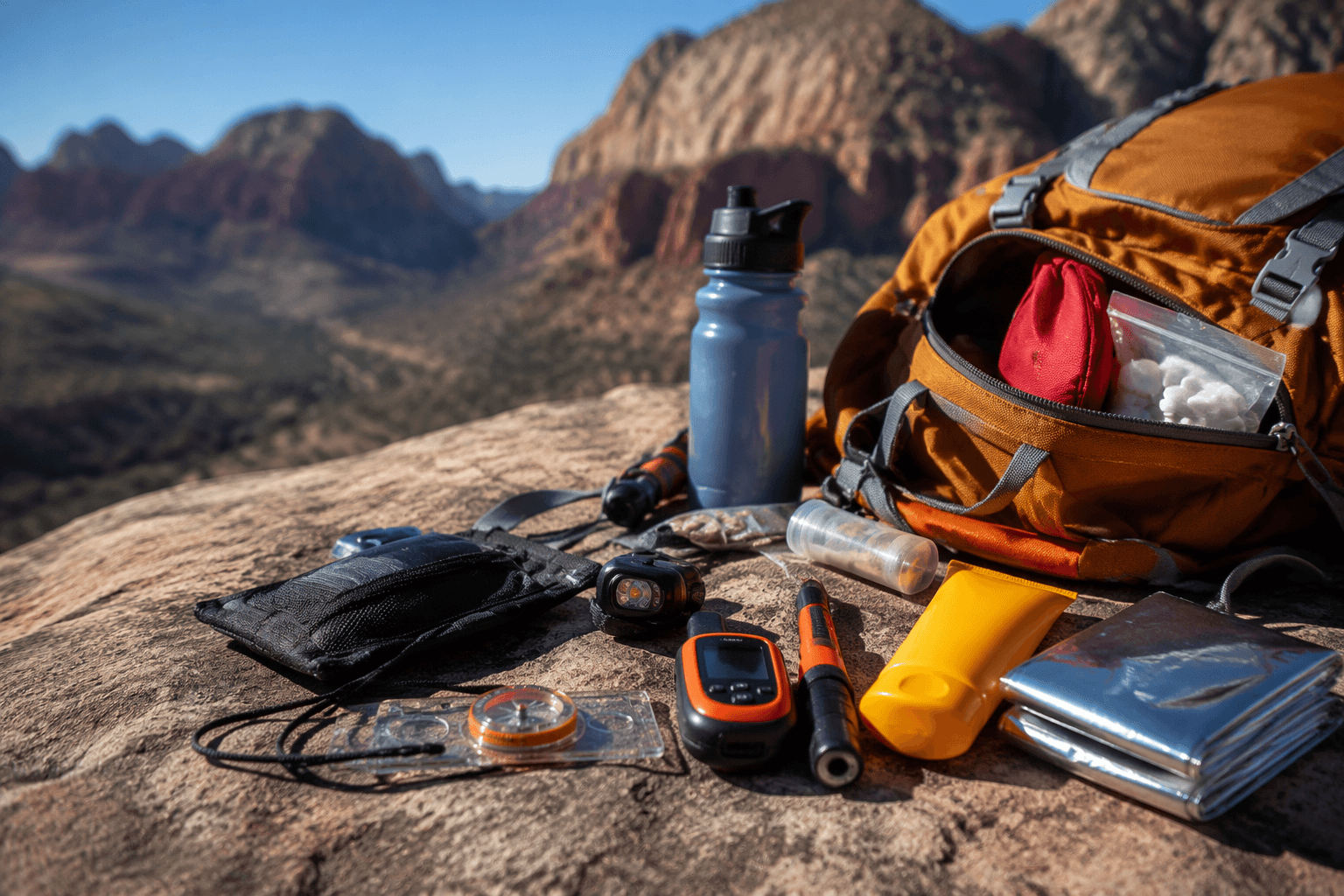
The Ten Essentials are the simplest way to stop a classic Southwest packing mistake: loading up for the drive and arriving underdressed for the trail. A route that starts on desert floor and climbs into slickrock, slot canyons, or a high plateau asks for more than a cooler and a full gas tank.
Start with the system, not the gadget
The original Ten Essentials were assembled in the 1930s by The Mountaineers, a Seattle-based organization for climbers and outdoor adventurers, and REI and the American Hiking Society still recommend carrying them on every hike. Leave No Trace calls them “fundamental systems of preparedness,” which is exactly how they work in the Southwest: not as a pile of optional extras, but as the backup plan for heat, distance, and changing terrain. One itinerary can move from a roadside trail to canyon country and then to a higher, colder camp or overlook.
Water is the item people underestimate first
“Water is life,” the National Park Service says in its hiking safety guidance for the Santa Monica Mountains. One or more quarts may be enough for short walks, while longer hikes require more. In the Southwest, dry air, direct sun, and physical exertion drain you fast, so water capacity should be sized for the full outing, not the drive to the trailhead. If your return takes longer than planned, the difference between enough water and “probably enough” shows up quickly.
Time your hike around heat
Grand Canyon National Park’s summer safety guidance advises avoiding the Inner Canyon between 10 a.m. and 4 p.m. and avoiding hikes during excessive heat warnings. Southwest trips often stack very different microclimates into a single day. A morning on a rim trail, an afternoon on exposed desert flats, and a late drive to higher ground can all happen on the same itinerary, and the hottest window is the one most likely to punish a sloppy plan.
Sun protection, insulation, and light work together
Sun protection is non-negotiable on exposed sandstone, desert roads, and high-elevation trails where shade can be scarce. UV radiation is not visible or felt, which is why sunburn sneaks up on people who assume the air feels cool enough to skip protection. The World Health Organization recommends sunglasses that filter all UVA and UVB radiation, along with protective clothing and sunscreen, to help minimize UV exposure.
Insulation matters for the same reason. Many travelers pack for daytime heat and forget how sharply temperatures can fall after sunset, especially at elevation, so a warm layer is part of desert safety, not just camp comfort. Illumination matters too, because desert hikes often start early or end late, and a simple headlamp with spare batteries can keep a minor delay from becoming a serious problem.
Altitude changes the math
Rapid travel above 8,000 feet, or 2,500 meters, may cause acute mountain sickness, the Centers for Disease Control and Prevention warns. Its symptoms include headache, fatigue, nausea, anorexia, insomnia, and dizziness, which is a bad combination when you still have miles of trail or a long drive ahead. People traveling to elevations higher than 8,000 feet may be at risk for altitude illness, and the CDC recommends gradual ascent when possible, along with medical advice on prevention or treatment if the itinerary does not allow acclimatization.
One trip can jump from low desert to mountain parks or rim country in a few hours. If your itinerary includes a high trailhead or overnight at elevation, build in an easier first day and pay attention to how your body responds before pushing harder.
Pack the rest for the failure points
- Navigation matters because canyon-country route-finding can be confusing, with sparse junctions and landmarks that look alike.
- First-aid supplies handle the problems most likely to slow you down, including blisters, scrapes, headaches, sunburn, and minor sprains.
- Fire starter matters when a cold front, a long delay, or an unexpected overnight turns warmth into a real need.
- Repair kit and tools help when a broken pack strap, loose buckle, or small gear failure could otherwise end the day early.
- Nutrition keeps you moving when heat, mileage, and altitude make it harder to keep your energy up.
- Emergency shelter matters when a windstorm or weather shift turns a day hike into an unplanned night outside.
This article was produced by Prism’s automated news system from verified source data, official records, and press releases, then run through automated quality and moderation checks before publishing. The system is built and supervised by the people who set the standards it runs under. Read our full AI policy.
Did this article answer your question?