Utah approves Big Cottonwood Canyon transit plan to ease mountain traffic
Big Cottonwood Canyon’s fix is a 1,750-stall hub, faster buses and tolls. UDOT says the change could start reshaping ski and trail access by 2028.

Big Cottonwood Canyon’s familiar ski-day jam is headed for a very different setup: a 1,750-stall parking structure and mobility hub near Fort Union and Wasatch boulevards, plus faster buses and tolls aimed at moving traffic before it ever reaches the canyon.
Utah transportation officials issued a record of decision on May 13, 2026, for the Big Cottonwood Canyon environmental assessment, clearing the way for final design, right-of-way acquisition and other preconstruction work. The plan is built around State Route 190, where winter congestion has long slowed skiers, hikers and canyon residents between Fort Union Boulevard and Brighton.
For visitors, the biggest operational change is simple: parking and bus timing would be managed much more tightly than they are now. UDOT’s current proposal calls for buses to leave the new hub every 10 to 15 minutes at first, with a long-term target of every seven minutes by 2050. That is a major shift from the roughly 30-minute service now running on the Utah Transit Authority route between Fort Union Station in Midvale and Brighton.
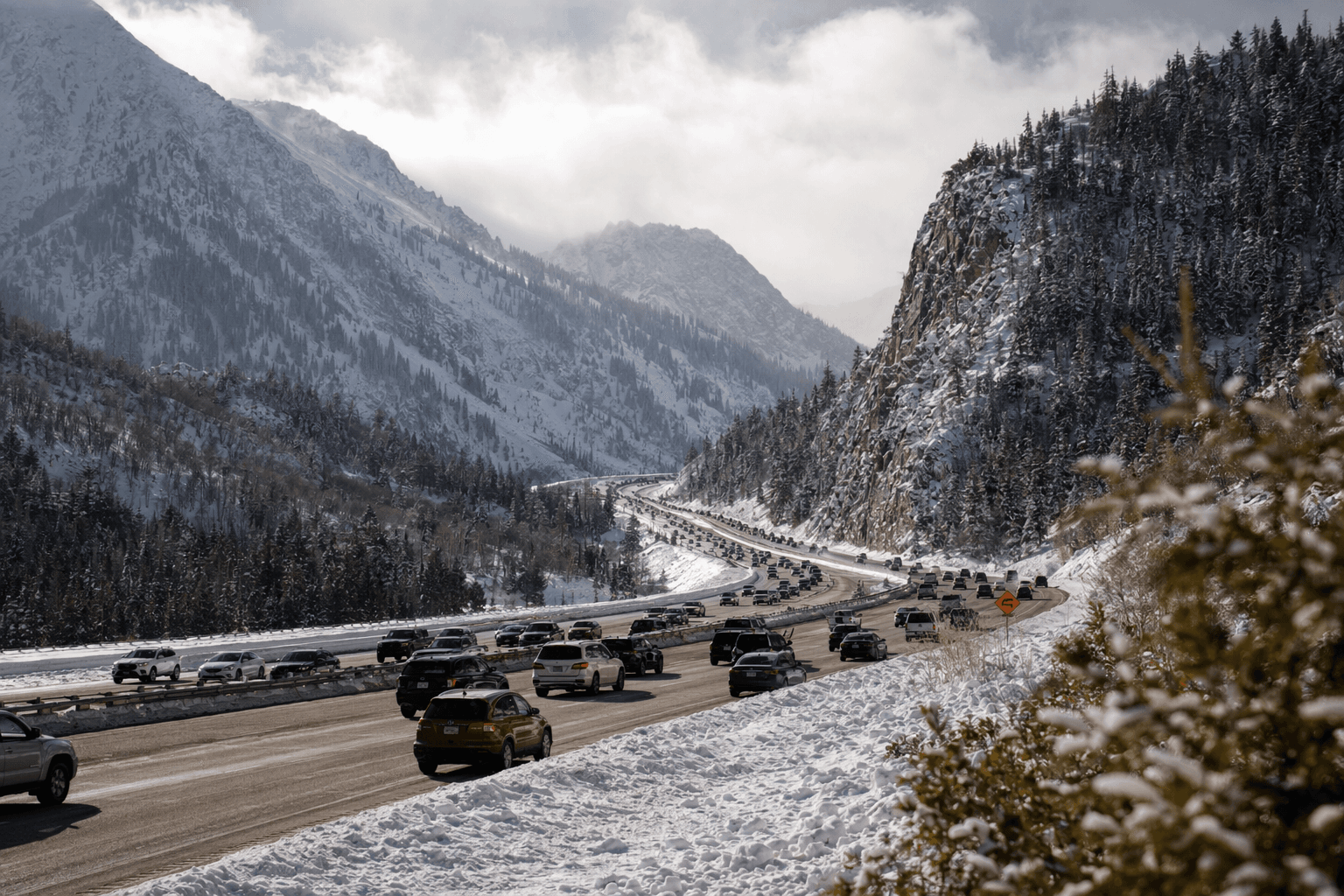
The project also layers in a grade-separated intersection at Wasatch Boulevard, a bus-only transitway at the hub, a bus-priority lane at Brighton Loop Road and indoor bus stops at Solitude Mountain Resort and Brighton Resort. UDOT said the Brighton Loop bus lane could shave about five minutes off bus travel time. The agency is also planning variable-priced tolls to manage demand, a move that could affect both trip cost and the timing of canyon runs for anyone trying to beat the weekend rush.
UDOT project manager Devin Weder said the aim is to give travelers “another reliable option” and make canyon travel “more predictable and less stressful.” That matters for the full mix of Big Cottonwood users, from first-chair skiers to summer hikers, climbers and fall leaf-peepers heading for the trailheads, Nordic terrain and high-elevation day trips that draw crowds every season.

UDOT put the project at about $264.5 million, and said $114 million is already programmed from Little Cottonwood Canyon mobility-hub funding for parts of the build. Officials said implementation could begin in 2028.
The decision follows a December 3, 2025 environmental assessment and a public comment period that ran through January 2026. The Central Wasatch Commission started the Big Cottonwood Canyon Mobility Action Plan process in late 2022 and approved the final plan in May 2023, after receiving just under 1,000 survey responses. Public comments generally backed the concept and pushed for active transportation, electric buses, monitoring, enforcement and watershed protection.
One thing the new plan does not include is a gondola. That separates Big Cottonwood’s traffic fix from the longer-running Little Cottonwood debate and leaves the canyon’s future pointed squarely toward buses, parking control and managed access. For anyone used to creeping up the canyon behind brake lights, that is the real change now coming into view.
Know something we missed? Have a correction or additional information?
Submit a Tip