STUCUBE reveals how speedcubing creators are growing on YouTube
STUCUBE’s interview points to a new cubing race: not just faster solves, but stronger channels, sharper storytelling, and more trust with viewers.

Speedcubing’s media game is getting bigger, and STUCUBE’s latest interview makes that impossible to miss. The episode lands as part of a creator-driven shift where cubers are building status not only on the stackmat, but also on camera, through audience trust, story choices, and recognizable platform identity.
Creators are becoming part of the competition
SpeedcubingTv now looks a lot broader than a livestream hub. The channel says it has 10.2K subscribers and 920 videos, and describes itself as “the home of professional speedcubing livestreams,” but its current slate also includes podcasts, interviews, and editorial collaborations. STUCUBE’s Secret to YouTube - Speedcuber’s Spotlight EP. 4 fits that expansion cleanly: it is listed as a 41:37 interview and appears in the channel’s collaborations playlist, which gives it the feel of a planned media lane rather than a one-off guest spot.
That matters because the episode is not just about one creator’s channel. Its description points viewers toward an extended version on Speedcuber’s Digest, making the project feel cross-platform by design. In practice, that means cubing content is starting to work like a network: one channel feeds another, audiences move between them, and creators can build reach through collaboration instead of trying to grow alone.
Speedcubing’s new status track is about more than solve times
The bigger story here is the change in what cubing audiences value. Solve times still matter, but the community is clearly making room for another kind of performance: who can explain the sport best, package it well, and keep people watching between competition weekends. That is the lane Speedcuber’s Spotlight is aiming at, since it is described as a new interview series from Speedcuber’s Digest and SpeedcubingTV focused on “the people behind the solves.”
The first episode, featuring Dylan Miller, set the tone by covering competition pressure, content creation, motivation, burnout, and growing up in the speedcubing community. That mix is telling. It treats cubing as both a competitive pursuit and a creator culture, where personality, consistency, and editorial voice can matter almost as much as raw execution. STUCUBE’s episode pushes the same idea further by spotlighting how a cubing creator grows on YouTube in a space that rewards both expertise and personality.
For viewers inside the hobby, that shift is practical. It explains why some channels travel farther than others, why certain styles feel more watchable, and why a creator’s identity can become part of their appeal. For the scene as a whole, it means speedcubing is no longer only producing competitors. It is also producing interpreters, hosts, and media brands.
The sport’s old infrastructure is still the foundation
This creator boom is landing on top of a much older community and competition structure. The World Cube Association says Ernő Rubik invented the Rubik’s Cube in spring 1974, and that it became commercially available toward the end of 1977. The WCA also traces the earliest archived cubing exchanges to July 1980 through the MIT Cube Lovers mailing list, then points to the first major world championship, the World Rubik’s Cube Championship in 1982.
That history matters because the modern media layer did not appear in a vacuum. The WCA says it was formed in August 2004 after early proposals in the Yahoo! Speedsolving Rubik’s Cube Group and the launch of speedcubing.com in 2000. The sport already had its rules, records, and community identity in place long before YouTube became a serious stage for cubing personalities. What is changing now is the visibility around that structure, not the structure itself.
The audience is larger, and the live stage is too
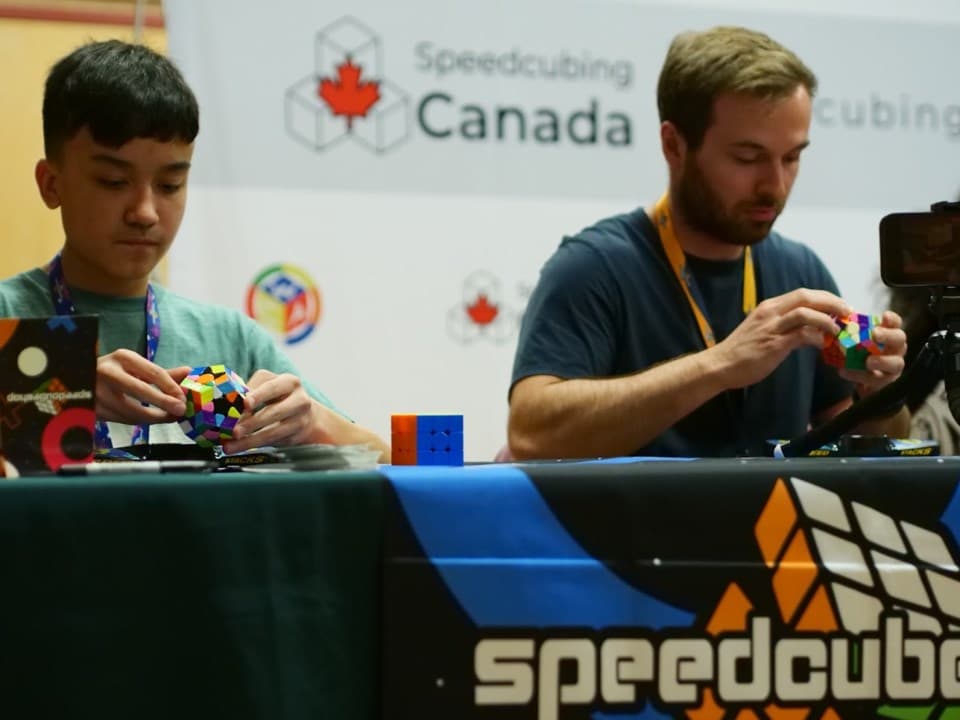
The growth is not just theoretical. The WCA said its 2025 World Championship in Seattle would bring together more than 2,000 competitors from 74 countries, calling it the largest official speedcubing competition in WCA history. The championship was scheduled for July 3-6, 2025 at the Seattle Convention Center, and the WCA said it would be livestreamed on its official YouTube channel.
That scale gives creator-focused cubing media a much larger ecosystem to serve. A championship with thousands of competitors and a global livestream naturally creates more moments to cover, more personalities to profile, and more stories that can live beyond the official results page. It also helps explain why interview-driven content is gaining traction: the audience is no longer only looking for who won, but also for context, voice, and the human side of the event.
The WCA’s rankings page being updated as recently as June 10, 2026 at 7:39 PM PDT is a reminder that the competition layer is still active and central. But now it sits alongside a growing media layer that can shape how the community understands itself. That is the key change STUCUBE’s episode points toward: cubing is becoming a sport with not just standings, but storytellers.
What STUCUBE’s episode says about the future
The real takeaway from this new creator track is that speedcubing status is diversifying. A strong competitor still earns respect on the board, but a strong creator can earn it in a different arena, by building an audience that returns for commentary, interviews, and personality-driven coverage. In that sense, STUCUBE is part of a broader shift where the hobby’s most visible figures are expected to do more than turn fast. They are expected to translate the sport, shape its narrative, and help define how cubing looks to the outside world.
That is why this interview feels larger than a channel feature. It sits at the point where competition and media meet, and it shows a hobby learning how to grow by telling its own story better.
This article was produced by Prism’s automated news system from verified source data, official records, and press releases, then run through automated quality and moderation checks before publishing. The system is built and supervised by the people who set the standards it runs under. Read our full AI policy.
Did this article answer your question?