EA Raid protest turns theatrical outside EA headquarters in Redwood City
A 50-foot petition scroll and oversized cutouts turned the EA Raid protest into a pointed scene outside Redwood City, not a random stunt.
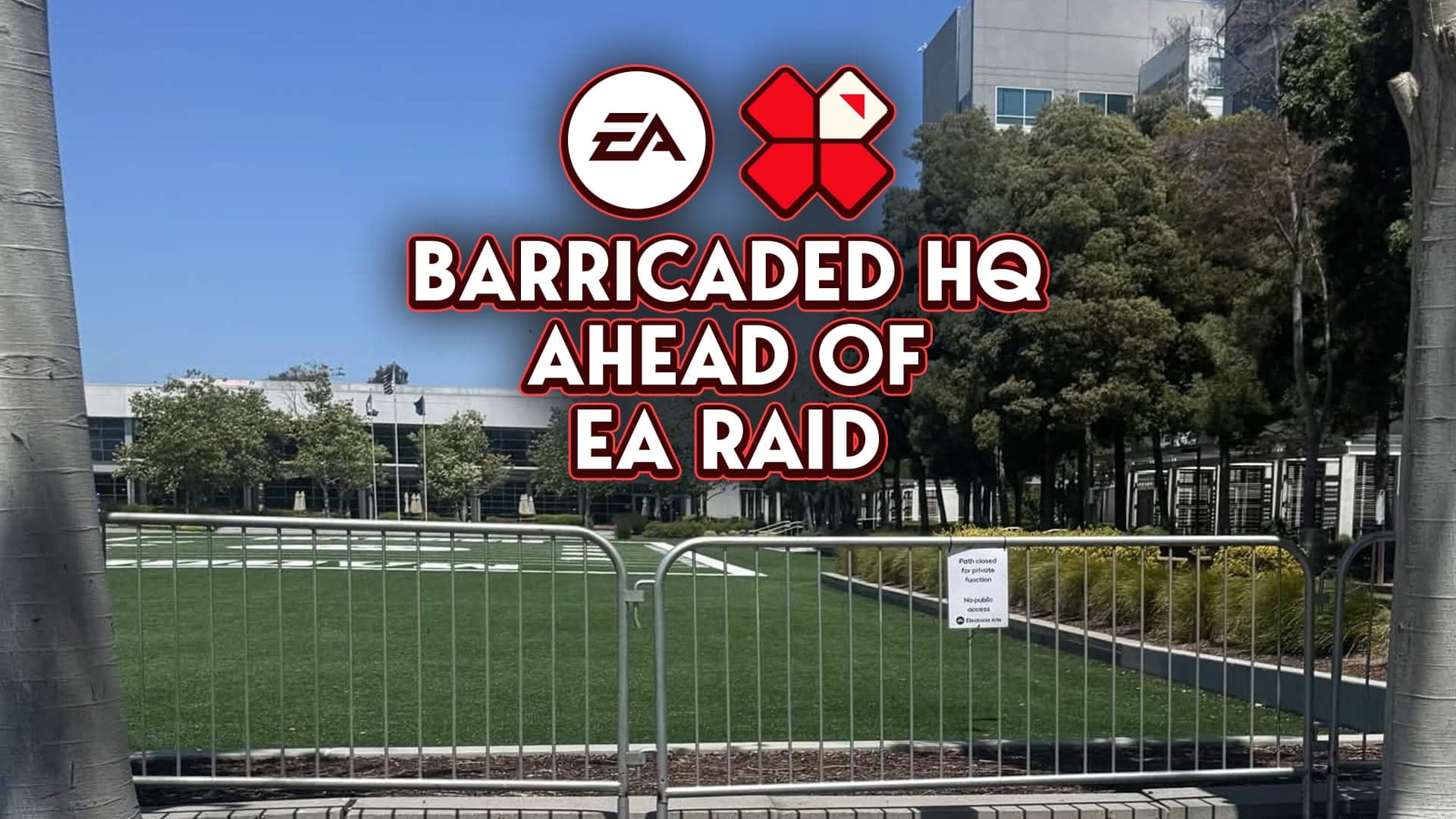
Outside a barricaded EA campus in Redwood City, the “EA Raid” protest looked less like a riot and more like a carefully staged warning shot. The Players Alliance gathered at Electronic Arts headquarters at 11 a.m. Pacific time, with security and EA staff allowing protesters to speak and assemble outside 209 Redwood Shores Parkway, but not to enter the building.
What made the scene memorable was the pageantry. Organizers brought a 50-foot scroll of petition signatures, with more than 70,000 names attached, and used oversized cutouts of Jared Kushner, Andrew Wilson, and Mohammed bin Salman to frame the buyout as a fight over who gets to shape EA’s future. Speakers leaned into the theatricality with mock loot boxes and papers marked as layoffs, turning the protest into a visual argument about what the proposed $55 billion deal could mean for jobs, pricing, and the way EA makes money.
That message landed because the company is not just any publisher. EA lists The Sims as one of its core brands, and it says digital live services and other net revenue made up 73% of total net revenue in fiscal 2025. When a company’s business leans so heavily on ongoing monetization, Sims players, Maxis watchers, and labor advocates read a buyout differently. EA also said The Sims closed fiscal 2025 with a historic fourth quarter, which only sharpened concern that the franchise could be pulled deeper into a private-equity playbook.
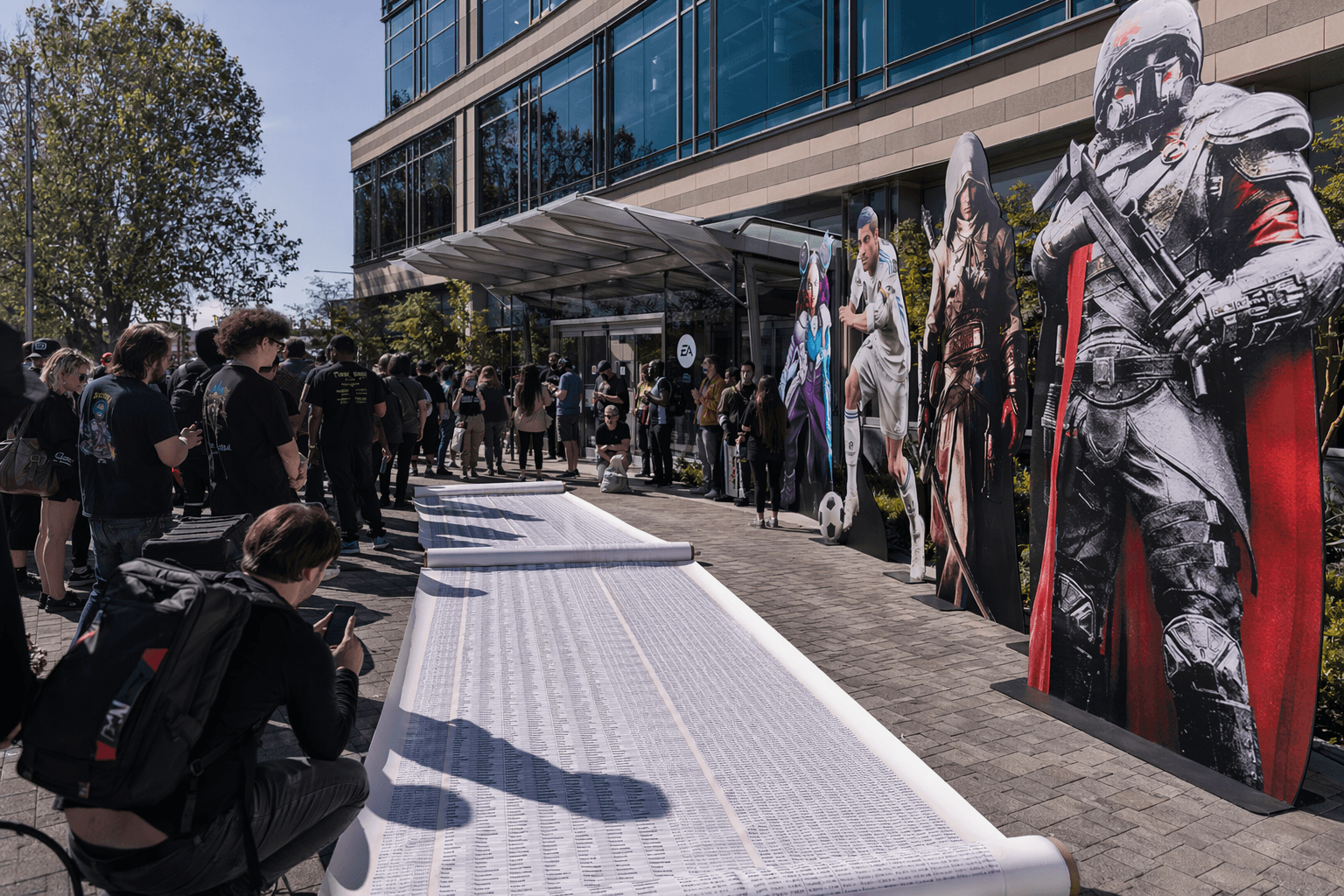
The protest was aimed at a deal EA announced on September 29, 2025: an all-cash acquisition by Public Investment Fund, Silver Lake, and Affinity Partners, valuing the company at about $55 billion and offering shareholders $210 per share. The agreement was already under regulatory and political scrutiny, including a January 2026 push from more than 40 members of Congress and the Labor Caucus asking the Federal Trade Commission to take another look. That made the Redwood City gathering feel less like a one-off outburst and more like a public temperature check on simmering distrust.
The crowd outside EA headquarters may not have represented the whole player base, but it was organized enough to make its point. The petition scroll, the cutouts, and the mock corporate props gave the protest a deliberately theatrical shape, and that was the point: this was a symbolic action with a real message, aimed squarely at ownership, monetization, and the future of the games tucked inside EA’s walls.
Know something we missed? Have a correction or additional information?
Submit a Tip