How Simlish gives The Sims music emotion beyond gibberish
Simlish turns songs and chatter into pure feeling, letting The Sims stay universal while artists from Depeche Mode to Bebe Rexha sing inside its own made-up language.
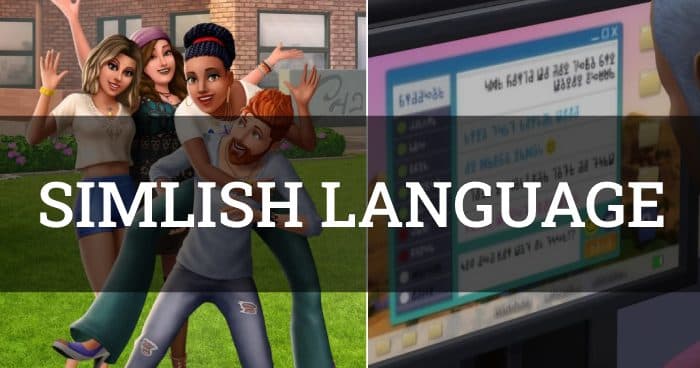
Simlish works because it never tries to be a real language. In The Sims, that invented speech lets songs and dialogue carry mood, joke timing, and personality without tying the series to one real-world tongue. EA has said music has been a major part of Sims history for more than 22 years, and it sits beside art and animation as part of how a Simmer tells a story.
What Simlish is really doing
Simlish is not just nonsense syllables tossed over a beat. It is a deliberate creative system that keeps the rhythm, emotion, and playful texture of a song or line of dialogue intact while stripping away literal meaning. That is why a track can be re-recorded in Simlish and still feel recognizably like the original, even when the words no longer carry their normal dictionary sense.
EA forum staff have also made the design choice plain: the Sims speak their own language, Simlish, and it is not possible to make Sims speak a different language. That matters because it turns Simlish into part of the franchise’s identity, not a cosmetic setting that can be switched off.
Why the language fits The Sims
The Sims has always depended on player projection. Simlish gives you just enough tone to read a conversation or a performance, but not enough literal detail to lock every scene into one fixed interpretation. That is especially useful in a life-sim where the same clip can feel comic, affectionate, awkward, or dramatic depending on what your household is doing.
EA’s 2022 “Reimagining Sims Sessions” post framed that idea directly, saying music is key in a Simmer’s storytelling process alongside art and animation. In practice, Simlish gives music the same flexibility as the rest of the game: it can support the scene without overpowering it with specific language that might narrow the mood.
From a one-off novelty to a brand signature
The easiest way to see how central Simlish became is to trace the milestone releases. In 2006, EA announced that Depeche Mode’s “Suffer Well” had been translated into Simlish for The Sims 2: Open for Business, showing that the franchise was already treating the language as part of its music strategy rather than a joke. That was an early sign that Simlish could carry an established artist’s work without losing its edge.
By 2010, the scope had widened dramatically. EA said more than three dozen global artists re-recorded their current hits or upcoming singles in Simlish for The Sims 3 and The Sims 3 Late Night. EA’s Sims 3 World Adventures coverage that same year named LeAnn Rimes, Fefe Dobson, and Natalie Portman’s Shaved Head among the artists singing in Simlish, which shows how the language moved across genres and into different corners of the franchise.
Why the songs still feel recognizable
The trick is that Simlish preserves performance, not just lyrics. When Bebe Rexha, Glass Animals, and Joy Oladokun debuted summer hits in Simlish for Sims Sessions, the point was not to hide the songs. It was to let them land as music inside The Sims world, with the phrasing and delivery reworked so the game could absorb them naturally.
EA’s 2021 announcement called Sims Sessions The Sims’ first-ever in-game music event, and the event ran from June 29 to July 7, 2021. That window matters because it shows how the franchise had evolved from isolated re-recordings into a live event structure built around Simlish as a feature. Instead of treating the language as a one-off gimmick, EA used it to anchor an entire in-game music festival.
The phrases players already know
Part of Simlish’s staying power comes from the handful of phrases that fans can instantly recognize. EA’s 2015 post about Echosmith and Big Data noted that players might know expressions such as “Sul Sul” and “Jiboo.” Those small fragments do a lot of work: they give the world a familiar sound without pinning it to a single country, accent, or translation.
That familiarity is why Simlish can be funny and emotionally readable at the same time. A Sim can sound excited, annoyed, flirty, or overwhelmed without the game needing to explain every line in plain English. The result is that the player fills in the gaps, and the scene feels more personal because the meaning is partly created in the moment.
How to read Simlish in your own game
Once you understand what Simlish is built for, it becomes easier to spot why it keeps showing up in so many corners of the series.
- Listen for tone first. A Simlish vocal performance is meant to sell energy, not literal wording.
- Treat the language as part of the scene. In The Sims, speech and music are working with animation and art to shape the story.
- Watch for event-based music moments. Sims Sessions showed how EA uses Simlish to turn in-game concerts into worldbuilding.
- Remember the long history. Depeche Mode in 2006, the more than three dozen artists in 2010, and the Echosmith and Big Data examples in 2015 all point to the same design choice.
That continuity is what keeps Simlish from feeling like a throwaway joke. It has become one of the franchise’s clearest signatures because it solves a problem every localization-heavy game runs into: how to make characters and songs feel expressive without losing the shared, playful world the player is building. Decades after Depeche Mode first sang in Simlish, that made-up language still does the same job it always did, and it still makes The Sims feel like its own place.
This article was produced by Prism’s automated news system from verified source data, official records, and press releases, then run through automated quality and moderation checks before publishing. The system is built and supervised by the people who set the standards it runs under. Read our full AI policy.
Did this article answer your question?