Sims 2 guide covers every death type, ghost, and revival option
The Sims 2’s 16 death types become a toolbox here, with ghost lore and resurrection tips for challenge runs, legacy drama, and saves that keep their edge.
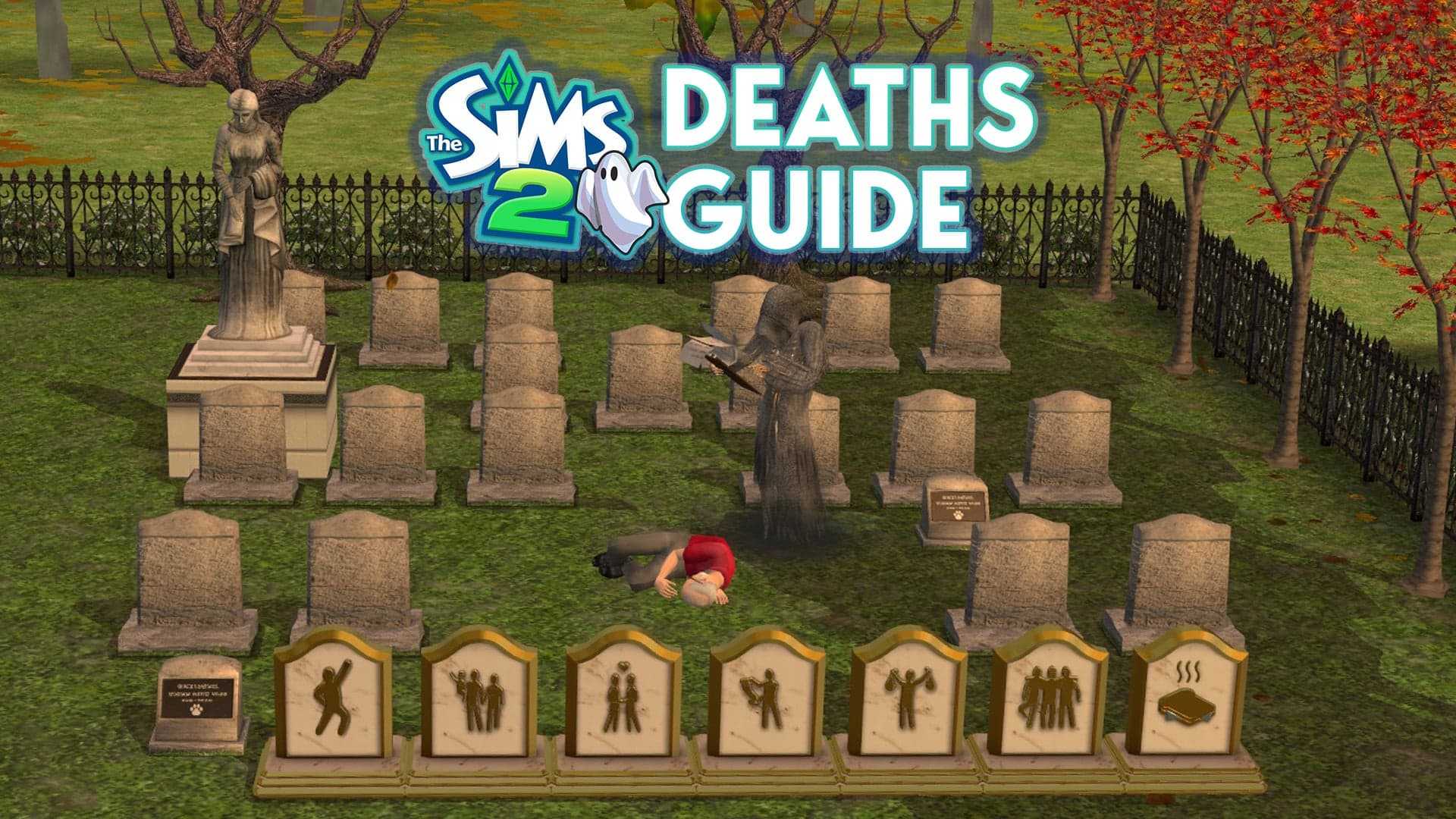
The Sims 2 has never really treated death like a dead end, and this guide leans into that with full force. Instead of filing it away as a failure state, it turns 16 different ways to die into a gameplay toolkit for chaos, challenge runs, and story-heavy saves.
Death as a system, not a reset screen
The most useful thing about the guide is how deliberately it treats mortality as part of the game’s design. It lays out 16 different death types in The Sims 2, then shows how each one can be used either to avoid disaster or to create it on purpose. That matters because the game’s life stage system changes the stakes: age now matters, and no Sim lives forever.
That shift changes the way a household feels from the ground up. A risky kitchen, a bad swim, a neglected need, or a reckless legacy setup stops being background flavor and becomes a decision point. The guide gives players a way to read those moments as tools for pacing rather than surprises to be endured.
How the guide helps you play for stakes
The strongest angle in the guide is that it works from both directions. If you want a household to survive, it helps you recognize where danger comes from and how to dodge a fatal outcome. If you want a disaster run, it also shows how to engineer one with intent instead of simply waiting for chance to do the work.
That makes it especially useful for legacy play and controlled storytelling. A legacy save gets sharper when death creates succession pressure, and a challenge save gets more interesting when the rules are clear enough to bend without breaking. The guide’s value is that it lets you build stakes while still understanding the machinery behind them.
- Run a “no accidental deaths” household and treat every fatal risk like a puzzle.
- Build a hard mode legacy where each generation has to survive a specific death scenario.
- Stage dramatic arcs by timing deaths around heir transitions, hauntings, or family feuds.
- Use death knowledge to make old Sims 2 chaos feel intentional again instead of random.
A few ways players can use that structure:
Ghosts turn every death into long-tail storytelling
The guide does more than name the deaths. It also covers the ghost tied to each death type, which is exactly the sort of detail that makes The Sims 2 feel like a living archive of bad decisions and memorable stories. For players who care about hauntings, family lore, or a save file that remembers its past, that layer matters as much as the death itself.
Ghosts are part of how The Sims 2 keeps consequences visible. A household does not just lose a Sim and move on; it inherits a haunting, a visual reminder, and a new piece of narrative texture. That is why the ghost section makes the guide feel less like a reference sheet and more like a tool for preserving the emotional shape of a save.
Revival gives you an escape hatch
The guide also includes revival advice, which keeps it from being a pure catalog of endings. In The Sims Wiki’s terms, The Sims 2 and later entries can bring back any Sim with character data through resurrection, and that character data lives on an urn or tombstone. That means death still leaves behind something usable, which is exactly why grave management matters.
For players, that opens up a different kind of storytelling. A Sim can die, become a ghost, and still remain part of the household’s history before a later resurrection brings them back into the active story. The urn or tombstone is not just a memorial object here; it is a storage point for future plot twists.
Why the re-release puts this guide back in the spotlight
EA’s The Sims 2: Legacy Collection gives all of this new relevance. The re-release is framed as part of the series’ 25th anniversary wave, and it is built for Windows 10 and Windows 11. EA Forums’ FAQ material says it includes almost every Expansion and Stuff Pack originally available, which is a big reason older systems like death, ghosts, and resurrection are suddenly back in the conversation.
EA Help also points players toward support for installation, crashes, graphics issues, and missing neighborhoods, which shows the collection is being treated as a living product rather than a museum piece. That is reinforced by the 2025 patch notes for the Legacy Collection, which show active post-launch support. When an older Sims game is being patched, the old mechanics stop being nostalgia and start being practical again.
A classic Sims 2 problem solved for a modern audience
That is where the guide lands best. It does not just list every way a Sim can die. It gives you the vocabulary to turn those deaths into structure, whether you are trying to keep a household intact, recreate the unpredictable swing of classic Sims 2 play, or stage a family saga where the graveyard matters as much as the living room.
The real trick is that once you understand the 16 death types, the ghosts they leave behind, and the resurrection paths that still exist, the game gets less random and more playable. The danger is still there, but now it is something you can shape, repeat, and build stories around.
This article was produced by Prism’s automated news system from verified source data, official records, and press releases, then run through automated quality and moderation checks before publishing. The system is built and supervised by the people who set the standards it runs under. Read our full AI policy.
Did this article answer your question?