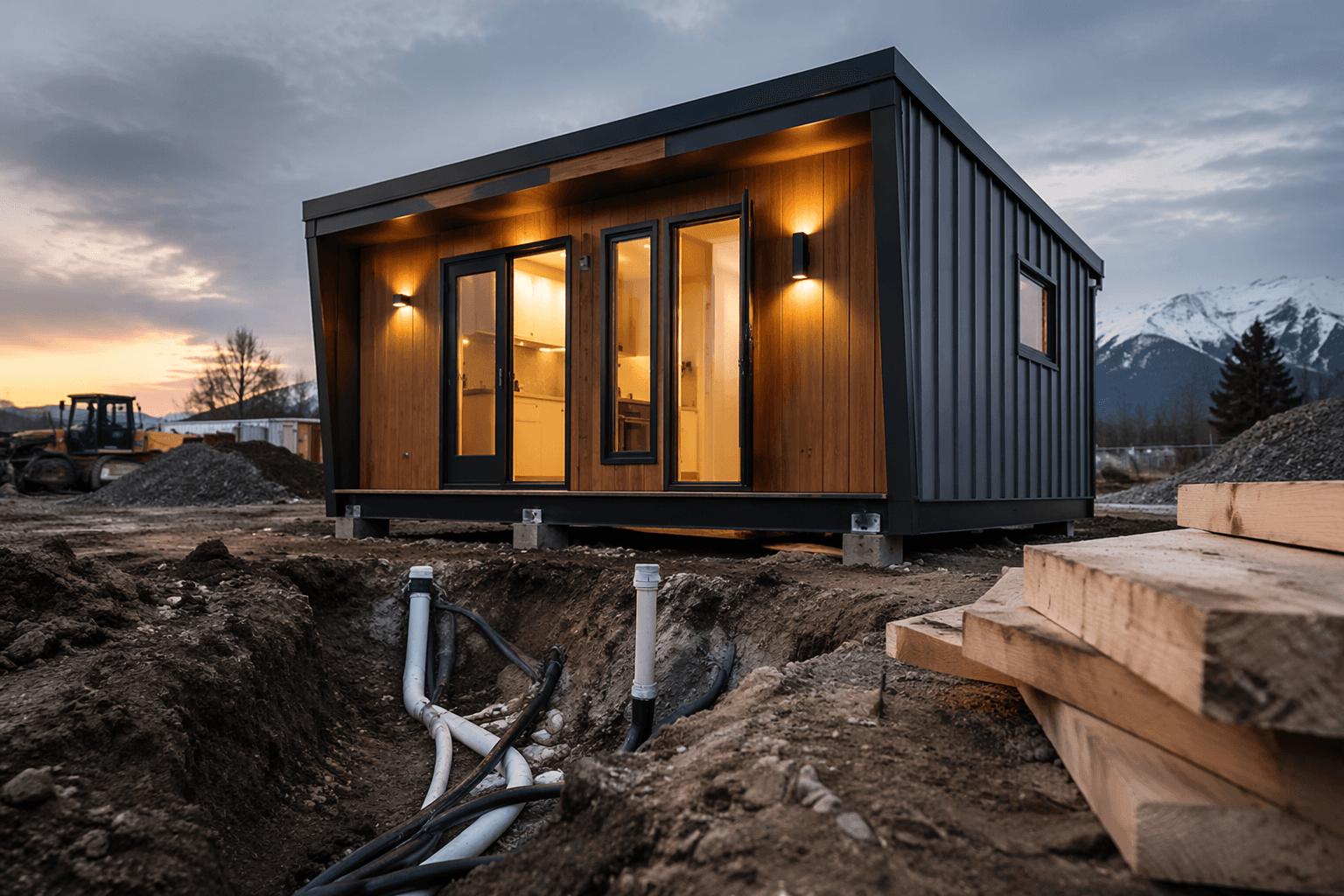
Austin Tiny Houses Shift From Lifestyle Choice to Housing Necessity
Austin's tiny houses have shifted from aspirational lifestyle symbols to last-resort shelter, new research warns they risk fueling the very gentrification they once resisted.
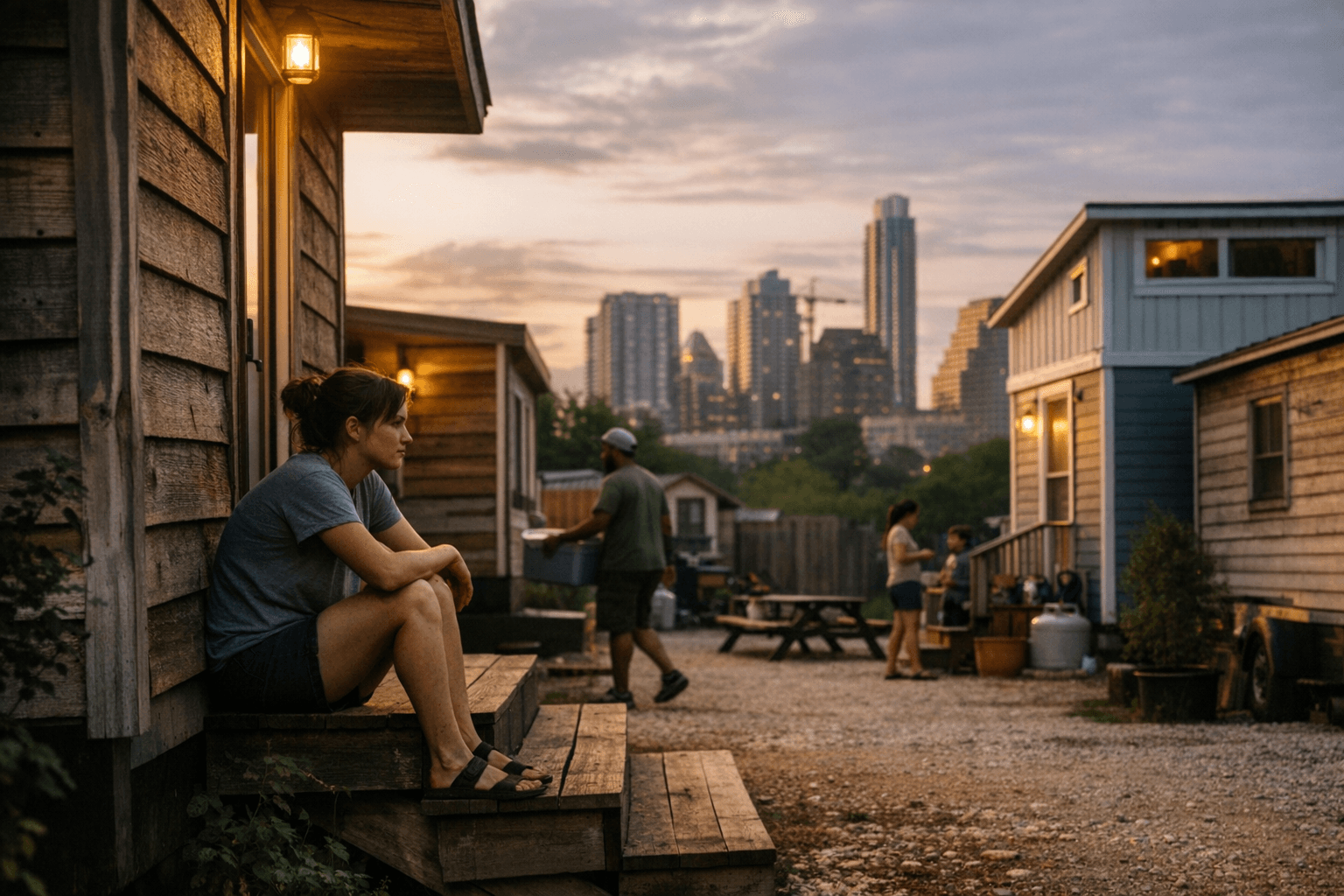
Three researchers set out to understand why Americans were voluntarily shrinking their lives into 200 square feet, and what they found in Austin upended the feel-good narrative entirely. Ella Harris, Mel Nowicki, and Tim White, whose work on shrinking domestic space in the U.K. drew their attention westward, selected Austin as the focal point of their investigation precisely because the city had earned a reputation as the "epicentre of the tiny house movement" during the 2010s. Their findings are now compiled in *Reconstructing the American Dream: Life Inside the Tiny House Nation*, with five Texas case studies spotlighted in a recent Dezeen feature that pushes the tiny-house conversation far beyond aesthetics.
From Aspiration to Necessity
The most striking finding from the research is also the simplest: the people living in Austin's tiny homes have changed. Tim White describes a clear shift in who is choosing these structures and why. Tiny homes that once embodied deliberate lifestyle choices, a voluntary rejection of McMansion culture and consumer excess, are now frequently occupied by people selecting them out of necessity due to a lack of affordable options in large metro areas. Austin's population surge, driven heavily by the tech sector's southward expansion, has pushed housing costs to levels that price out vast segments of the city's existing workforce and longtime residents. For many occupants today, a tiny house is not a design statement; it is what remains affordable.
This transition matters because it reframes the entire policy and cultural conversation around tiny housing. When tiny homes were primarily lifestyle products, the dominant questions were about zoning, aesthetics, and whether 200 square feet constituted dignified living. Now that necessity is increasingly the driver, the questions shift to equity, displacement risk, and whether tiny-home developments genuinely expand housing access or simply rebrand scarcity.
The Paradox at the Core
Harris, Nowicki, and White are careful not to dismiss what tiny homes can offer. The research acknowledges real benefits: reduced costs, a meaningful degree of autonomy, and a tangible challenge to the cultural myth that bigger is always better. In a housing market where the default aspiration is an ever-larger single-family home, tiny houses do represent a genuine contestation of that norm.
But the same structures that offer liberation to some residents can quietly reproduce the inequalities they appear to escape. The researchers identify a particularly pointed irony in how tiny-home communities are sometimes marketed and perceived: they can function as an aesthetic upgrade relative to trailer parks, presenting a curated, Instagram-ready version of compact living that attracts higher-income residents. When that happens, the land beneath those communities becomes more valuable, and existing lower-income residents, often in the trailer parks that tiny-home developments superficially resemble, face displacement as landowners capitalize on rising demand.
This is the paradox the book places at the center of its analysis. Tiny homes are not ideologically neutral. Their social meaning and economic impact depend almost entirely on who builds them, who owns the land, who can afford to live in them, and what happens to the community surrounding them.
Austin as Case Study
The choice of Austin as the research team's primary lens was deliberate and instructive. The city's rapid growth made it a pressure cooker for exactly the tensions the researchers wanted to examine: a tight housing market, a politically engaged tiny-house community, and a tech-driven population influx that escalated land values faster than local policy could respond. The five Texas projects featured in the Dezeen piece function as more than architectural showcases. Each one illustrates a different facet of how tiny-house adoption intersects with housing affordability and class dynamics in fast-growing cities.
What the case studies collectively reveal is that tiny homes cannot be extracted from the broader housing market and analyzed in isolation. They are embedded in it. A tiny home on privately owned land in a gentrifying Austin neighborhood is a fundamentally different social object than a tiny home in a community land trust or a municipally supported affordable housing cluster, even if the two structures are architecturally identical.
Why Tiny Homes Are Not a Systemic Fix
One of the research team's clearest warnings is directed at advocates and policymakers who position tiny-home developments as a solution to homelessness or the broader affordability crisis. The research draws attention to how tiny homes become entangled with broader housing-market pressures rather than functioning as a standalone systemic fix. Building tiny homes without accompanying structural policy, tenant protections, anti-displacement measures, and land use reform risks producing a scenario where the aesthetic and cultural benefits of compact living accrue to higher-income residents while the underlying affordability problem worsens for the people most in need.
This is not an argument against tiny homes. It is an argument for pairing them with the policy infrastructure that can prevent commodification from hollowing out their social promise. The researchers suggest that practitioners, designers, and local officials approach tiny-home developments with a rigorous methodology: documenting lived experience among current and displaced residents, measuring displacement risks before and after development, and building protections for existing communities into any expansion plan from the outset.
A Maturing Conversation
What the Dezeen feature ultimately signals, drawing on Harris, Nowicki, and White's work, is that the tiny-house movement has reached an inflection point. The early years of the movement were dominated by design enthusiasm, minimalist lifestyle content, and zoning battles won one variance at a time. That phase produced real gains in public awareness and regulatory flexibility in cities like Austin, but it also left a substantial gap between the movement's self-image and its measurable impact on housing affordability.
The research represents a maturing of that conversation. Integrating design enthusiasm with critical policy analysis is not a retreat from the tiny-house vision; it is the necessary next step for a movement that now has enough history to examine its own consequences. The five Texas case studies in *Reconstructing the American Dream* serve as both celebration and critique, evidence that tiny homes can be sites of genuine creative living and, when left to market forces without guardrails, another lever for gentrification.
Austin's housing trajectory will continue to be shaped by forces far larger than any single construction trend. But the question the research poses, whether tiny homes alleviate or exacerbate the affordability crisis, is one the city's planners, advocates, and residents will need to answer with policy, not just passion.
This article was produced by Prism’s automated news system from verified source data, official records, and press releases, then run through automated quality and moderation checks before publishing. The system is built and supervised by the people who set the standards it runs under. Read our full AI policy.
Did this article answer your question?