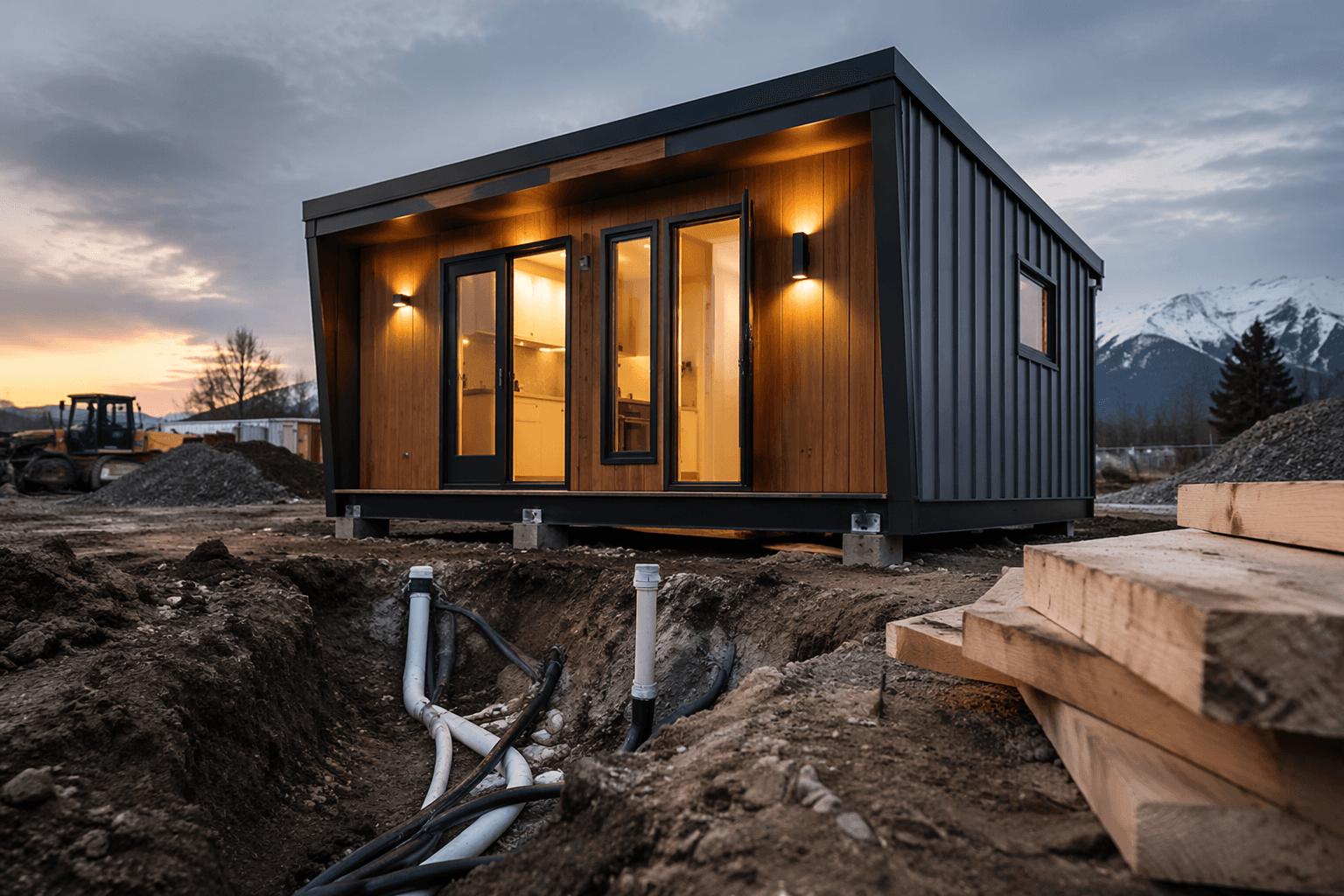
German-Designed TinyCareHome Brings Accessible Aging-in-Place Living to Kandel
At just 17 square meters, Germany's TinyCareHome fits a nursing bed, fall detection, and a full wheelchair turning circle. It arrives in Kandel on April 16.
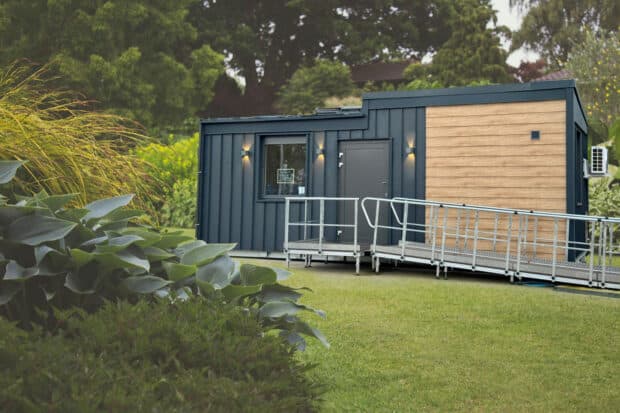
Seventeen square meters. That is the entire footprint of the TinyCareHome, the first mobile care-and-assistance module of its kind in Germany, and somehow it contains a nursing bed, a roll-in shower, a kitchen with underride clearance for wheelchairs, a washing machine, a desk, and enough floor space to complete a full wheelchair turning circle without touching a wall. The unit rolls into Kandel on April 16.
Developed jointly by the Bosch Digital Innovation Hub (BDIH) of the Robert Bosch Stiftung in Stuttgart and the Steinbeis Transfer Center for Social and Technical Innovations in Tübingen, the TinyCareHome will sit on the Verbandsgemeinde parking lot from April 16 through April 19, open daily from 11 a.m. to 4 p.m. The Bürgergemeinschaft Kandel and the Verbandsgemeinde are co-hosting the stop, and a local nature kindergarten will operate a cafe on site to draw in casual visitors alongside the curious and the caregiving-adjacent.
The interior also incorporates fall-detection technology, placing it firmly beyond the territory of lifestyle tiny-house design and into the category of purpose-built care infrastructure. The concept is explicit: elderly or care-dependent people should be able to live independently in a structure placed on family property or in a family garden, close to relatives but on their own terms, with a layout that allows a caregiver to access the nursing bed from multiple sides.
The TinyCareHome has been making stops across Germany as part of a national touring demonstration, collecting feedback from citizens and local officials and feeding those observations back into the design. At the Sinsheim stop in autumn 2025, the prototype drew as many as 100 visitors per day.
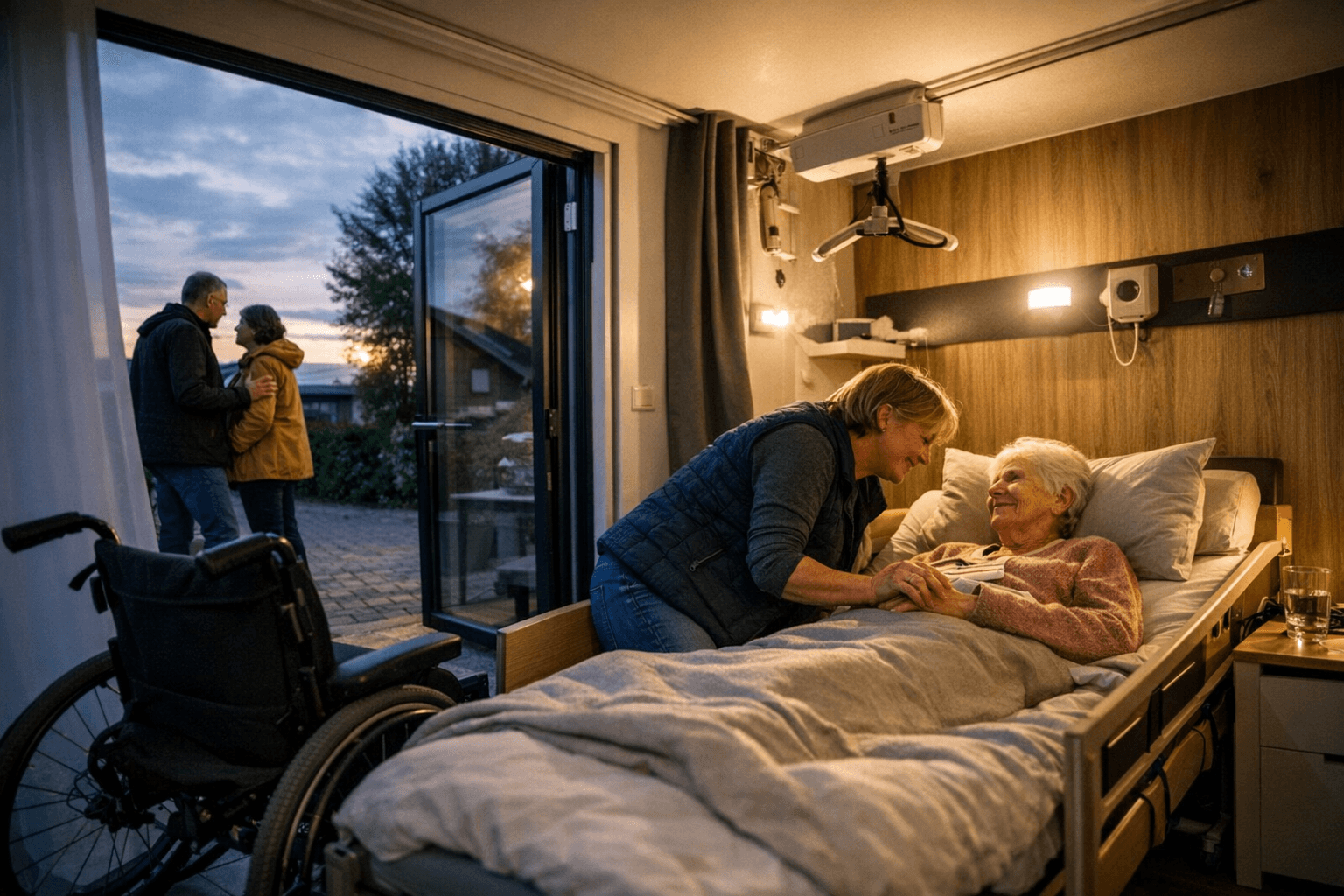
For tiny-house builders working outside Germany, the project effectively defines a minimum feature set for a credible elder-care unit: barrier-free bathroom with roll-in shower, underride kitchen counter, turning-circle clearance for wheelchair maneuverability, integrated fall detection, and a room layout that does not sacrifice caregiver access around the nursing bed. At roughly 183 square feet, the 17-square-meter footprint sits well within the envelope of most garden-annex and accessory-dwelling-unit regulations in the U.S., the U.K., and Australia, making it a realistic reference for ADU builders targeting elder-care applications. The features tied to German barrier-free construction standards, particularly the turning circle and the underride kitchen, translate directly to ADA-aligned accessible design; the fall detection layer is hardware-agnostic and vendor-portable.
Whether the TinyCareHome advances from touring prototype to a broadly permitted product depends on how Germany's individual state governments choose to treat secondary-dwelling approvals for care-specific structures. By backing the tour with the research credibility of the Robert Bosch Stiftung, the project team is putting the unit directly in front of the local officials and community members who would make exactly those decisions.
This article was produced by Prism’s automated news system from verified source data, official records, and press releases, then run through automated quality and moderation checks before publishing. The system is built and supervised by the people who set the standards it runs under. Read our full AI policy.
Did this article answer your question?