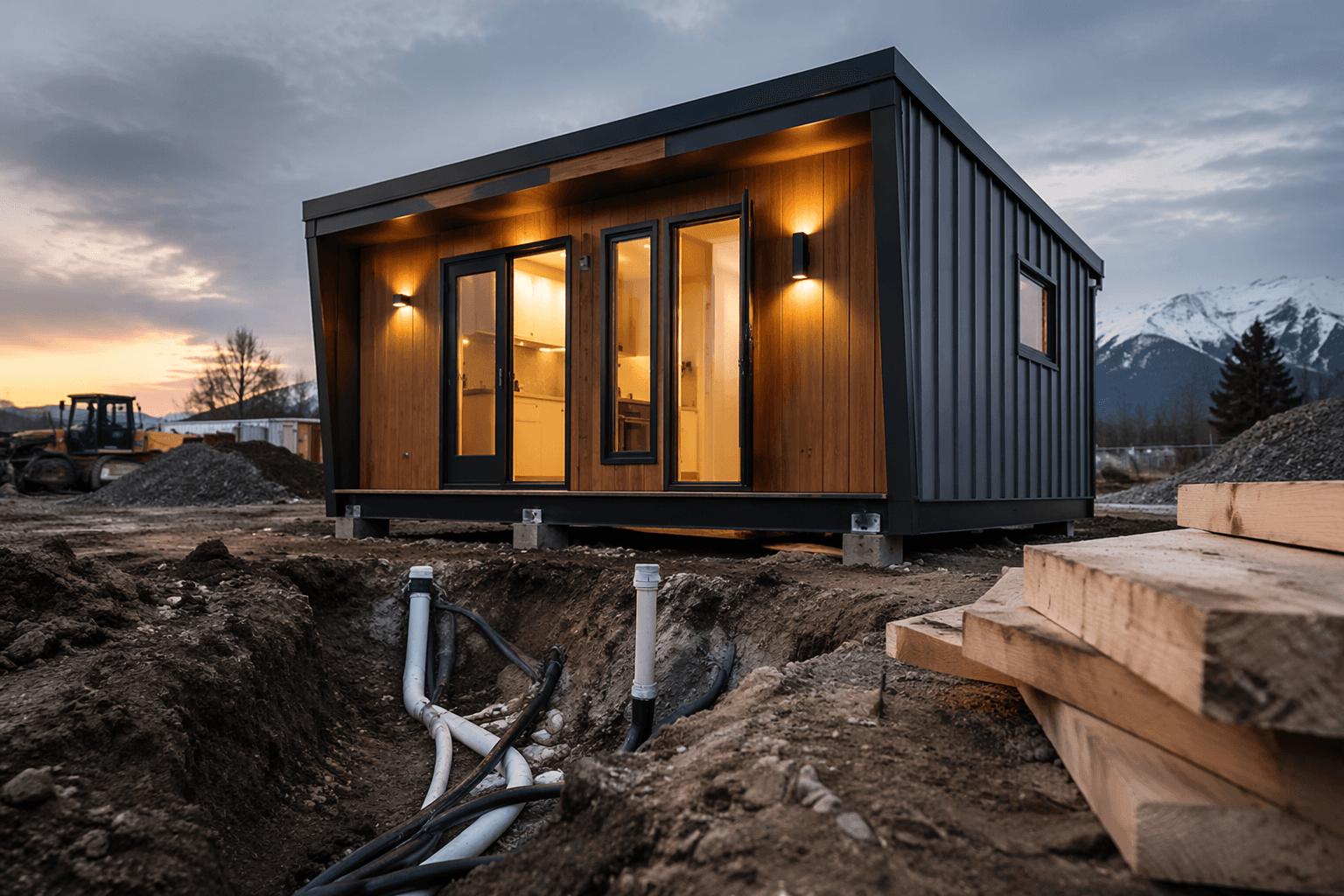
Solar Power Is Reshaping Tiny Home Living Through Falling Costs and Better Batteries
Solar costs have dropped 75% in 15 years and tiny homes use just 1/10th the power of a standard house — making off-grid living more achievable than ever.
The Numbers That Make Solar Click for Tiny Homes
A traditional American home burns through roughly 30 kWh of electricity per day. A well-built tiny home, with LED lighting, a mini-split, and an on-demand water heater, typically runs on around 3 kWh. That single fact reframes the entire solar conversation: you're not trying to replicate a conventional energy system in a smaller box; you're powering something fundamentally leaner. And when your demand is that low, the math on going solar stops being aspirational and starts being practical.
That shift is being driven by three things happening at once: panel prices continuing their long descent, battery technology delivering meaningful generational leaps in density and lifespan, and a new category of compact, purpose-built kits aimed squarely at tiny houses on wheels (THOWs) and park models. Together, they're turning solar from a lifestyle statement into a core infrastructure decision for anyone building or buying a tiny home in 2026.
Why Battery Tech Is the Real Story
The panel price story is well known at this point, but the battery side is where the real transformation is happening. Battery storage costs have plummeted over the last decade. In 2010, batteries cost $1,000-$1,500 per kWh. Today, advanced chemistries like LFP and LiFePO4 have brought that down to $200-$400 per kWh, a 75% drop over 15 years.
For tiny home owners, the chemistry change matters as much as the price drop. LiFePO4 batteries provide 2,000-5,000 charge cycles compared to 500-1,500 for standard lithium ion. That's the difference between a battery bank that lasts a decade and one you're replacing in four or five years. Modern packs also charge faster, discharge deeper without damage, and handle the irregular charge patterns that come with rooftop solar more gracefully than older lead-acid systems ever could.
The practical upshot: you can now run appliances that were once considered off-grid non-starters. Induction cooktops, energy-efficient mini-splits, and standard entertainment setups (critical for anyone working or streaming remotely) are all within reach of a properly sized battery-backed array. The constraint has shifted. Rooftop area and storage capacity are now the binding limits, not panel cost.
What a Real System Costs
A typical tiny home solar system needs 1,000 to 3,000 watts of panels, battery storage for nighttime power, and an inverter to run household appliances. Total costs range from $6,000 to $30,000 depending on system size and battery type. That's a wide range, but the variance is almost entirely in the battery bank and whether you're sizing for full off-grid independence or grid-assisted backup.
Solar panels for tiny homes will cost between $2,275 and $6,825, and you could save between $250 and $750 per year on your electric bill by installing solar. For a THOW owner who was previously dependent on shore power or a generator, even the lower end of those savings compounds quickly against the install cost.
One specific data point worth anchoring to: to run an AC off-grid, you will need a 2,000W or larger solar array and a massive 10 kWh or larger lithium battery bank, which will easily cost over $6,000. That's not a dealbreaker, but it's the budget floor for anyone planning serious climate-controlled off-grid living. Budget for the storage first, then work backward to panel count.
Plug-and-Play Kits and the THOW Market
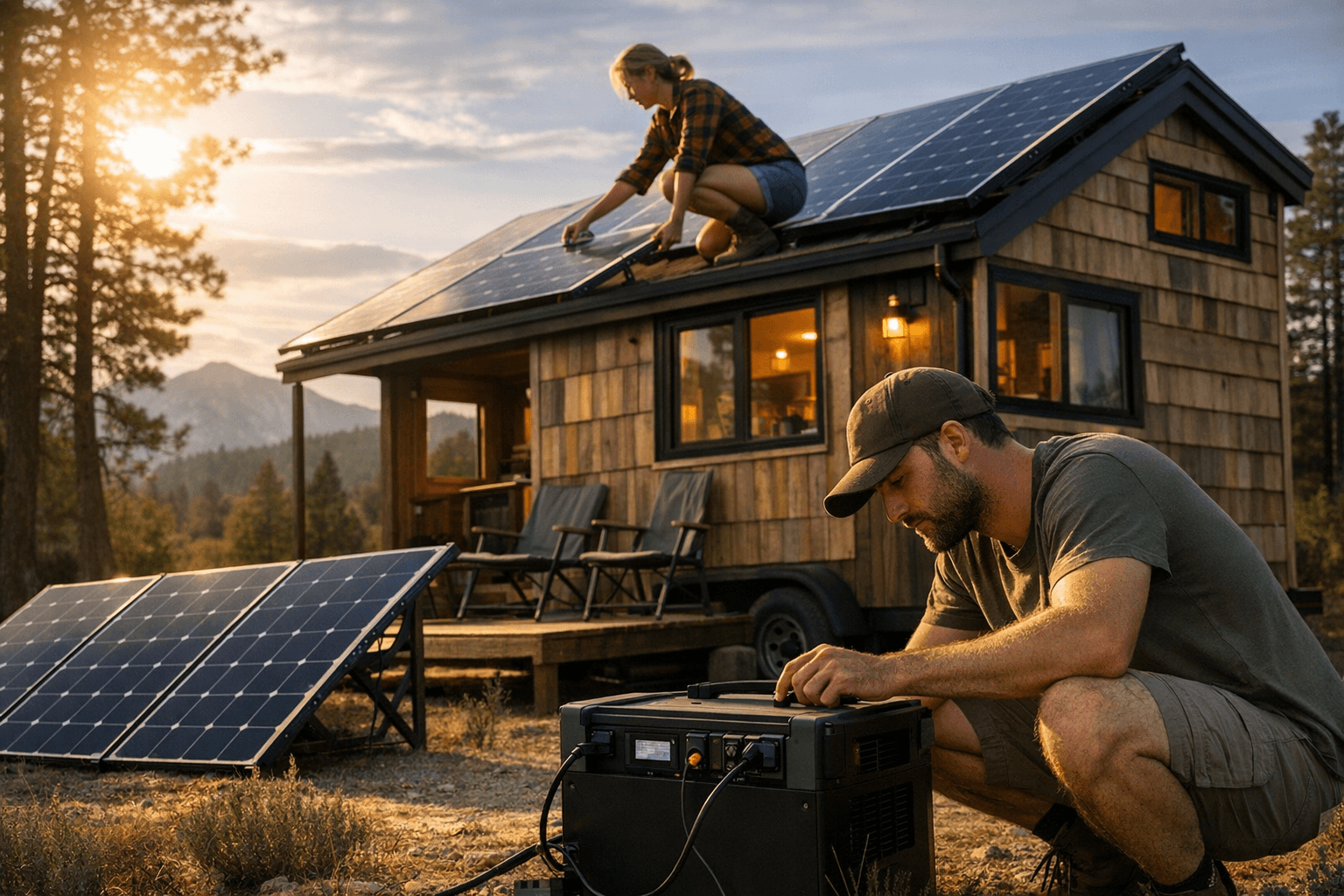
One of the more significant developments for the tiny home community specifically is the proliferation of systems engineered for small footprints and trailer-mounted electrical setups. These aren't repurposed RV kits or scaled-down residential arrays; they're purpose-built for the weight limits, roof geometries, and wiring realities of THOWs and single-level park models.
Some plug-and-play kits are now available for around $6,000, including six panels, a hybrid inverter, and a backup battery, with a pre-wired design and expandable capacity, all without requiring permits or professional installation. The monitoring has gotten smarter too, with Bluetooth-enabled systems letting you track generation directly from a smartphone app while you're parked somewhere without cell service.
This matters for less technically experienced owners in particular. The entry point for off-grid configuration used to require either an installer or a lot of DIY electrical confidence. Plug-and-play systems don't eliminate the need for careful planning, but they substantially reduce the technical barrier.
Where You Can Live Now
This is the part of the solar story that doesn't get discussed enough: it's not just about saving money on electricity. Reliable solar power changes the geography of tiny home living. Anyone tethered to an urban grid because they needed reliable power for remote work, streaming, and basic appliances now has a realistic path to seasonal living near a lake, a forest, or a rural plot that would never have had hookup access.
The carbon equation also shifts. Replacing a fossil-fueled backup generator with a battery-backed solar array meaningfully reduces the operational footprint of tiny home living, which matters to most people in this community on a values level, not just a utility cost level.
The Permit and Code Reality
None of this means you can park anywhere and flip a switch. Code and permitting barriers remain a real friction point, and they vary sharply by jurisdiction. Battery installations specifically are drawing new scrutiny from fire and electrical inspectors who aren't always familiar with LiFePO4 chemistry or trailer-mounted systems. Many plug-and-play kits are marketed as requiring no permits, but this can be an oversimplification for any system that interacts with home wiring. The moment a solar generator connects to the grid, it falls under the purview of local utility and building authorities, with key factors being the system's grid connection and total power output.
The market side of the picture is evolving alongside the regulatory one. Builders and dealerships are increasingly differentiating on "solar-ready" packages, and some lenders are now offering financing options tied to integrated energy systems, treating the solar array as part of the home's core value rather than an add-on.
Sizing It Right: What You Should Do Before You Buy
The biggest mistake people make with tiny home solar is treating it as a binary decision, either all-in off-grid or grid-connected. The smarter move is to start with an energy audit, figure out your actual daily kWh demand (accounting for seasonal variation and whether you plan to run AC), and then work with an installer who has specific experience with small-footprint and trailer-mounted systems.
A few practical rules of thumb:
- Size your battery bank first. Storage determines your year-round resilience, not panel count.
- Cold or heavily overcast climates require larger arrays and more storage days than sun-belt locations. Don't size for your best solar month.
- Choose efficient appliances before you finalize your panel count. Every watt you cut from consumption is a watt you don't have to generate.
- Even if you start with a modest array, buy into a system that's expandable. Your energy needs will grow, and adding panels later is far cheaper than replacing an undersized inverter.
- Verify permit requirements in your specific jurisdiction before installation, particularly for battery banks above a certain capacity threshold.
The trajectory here is clear. Solar hardware costs have collapsed, battery technology has matured to where LiFePO4 systems can handle the demands of full-time living, and the kit market is finally speaking directly to the THOW and park-model community with products sized for real tiny home roofs and real tiny home budgets. The remaining friction is on the regulatory and planning side, and that's solvable with the right installer and a bit of homework before you buy. For tiny home owners weighing their next move, the question is no longer whether solar makes sense; it's how to size it correctly for where you actually want to live.
This article was produced by Prism’s automated news system from verified source data, official records, and press releases, then run through automated quality and moderation checks before publishing. The system is built and supervised by the people who set the standards it runs under. Read our full AI policy.
Did this article answer your question?