Australian tiny home Arcadia adds downstairs bedroom and walkthrough bath
Arcadia puts a bedroom downstairs and the bath in the flow, making a 265-square-foot tiny home feel far more workable for full-time couple living.
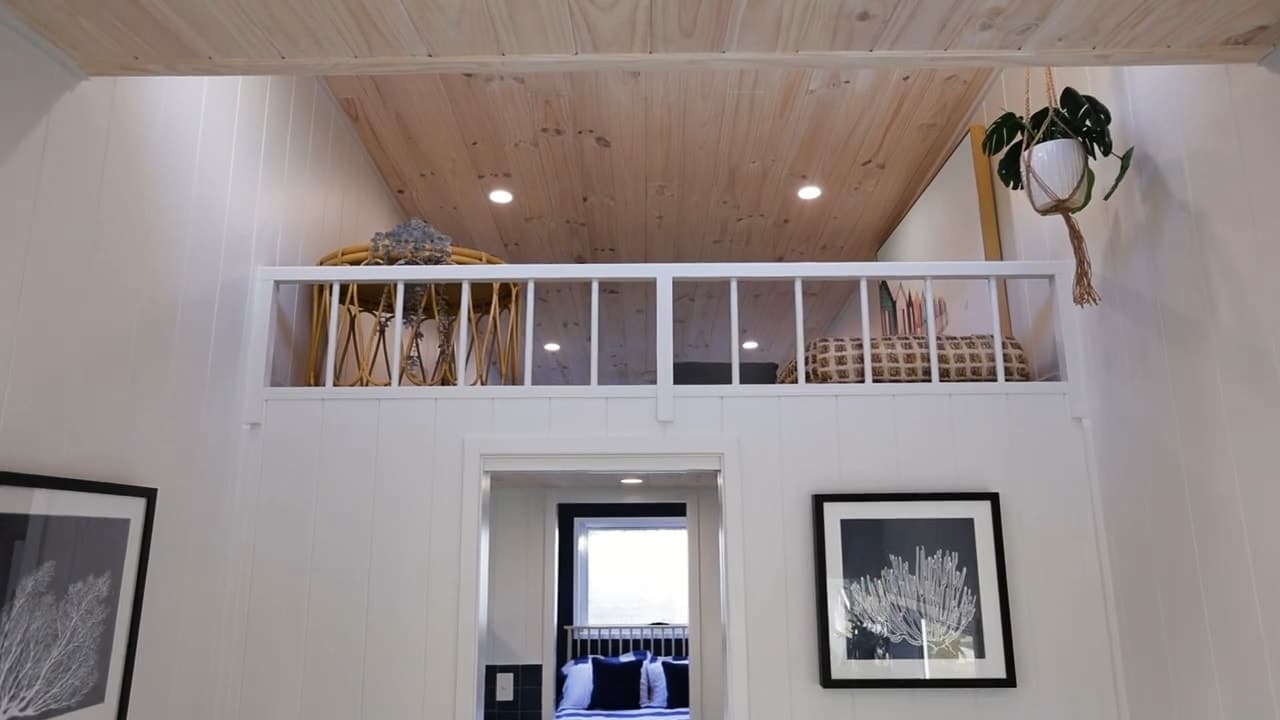
Arcadia makes its sharpest argument with a single choice: the bedroom is downstairs. In a tiny home on wheels that measures 9 meters long, 2.5 meters wide, and about 23.8 square meters, or 265 square feet, that decision changes the whole rhythm of the layout. Add a folding dining table, a storage loft, and a walkthrough bathroom, and the home starts reading less like a loft-first experiment and more like a compact couple’s home built for daily life.
A layout that asks less of the body
The biggest livability gain here is access. Loft sleeping is common in tiny homes, but it also turns bedtime, wake-up, and middle-of-the-night movement into a climb. By putting the main bedroom on the ground floor, Arcadia removes that hurdle and makes the home easier to live in full-time, especially for couples who want the main sleeping space to feel calm, simple, and immediately usable.
That same logic carries through the bathroom. A walkthrough bath gives the interior a more conventional circulation pattern, which matters in a home this small because every step has to earn its place. Instead of forcing the plan around a ladder and a stacked loft layout, Arcadia keeps the daily path clear, so the home can handle ordinary routines without feeling like a puzzle.
Why the downstairs bedroom matters so much
This is the point where Arcadia separates itself from the most familiar tiny house script. In many loft-based wheels builds, the sleeping zone becomes the defining feature of the whole home, which can work for short stays but often feels like a compromise when the house is meant to be lived in every day. Arcadia flips that priority and makes the bedroom part of the main living level, where it is easier to access and easier to integrate with the rest of the plan.
That choice also helps the home work better for two people sharing the space. Couples usually need more than a place to sleep, they need a layout that lets one person move around while the other rests, keeps daily routines from colliding, and avoids turning the entire home into a ladder zone. Arcadia’s downstairs bedroom makes that possible in a way that loft-only homes often do not.
The supporting cast inside the shell
The rest of the layout backs up that main decision. A folding dining table keeps the dining zone flexible, so the home can shift between eating, working, and open floor space without feeling crowded. The small loft is there too, but it is clearly playing a supporting role as storage rather than carrying the whole sleeping burden.
The kitchen is described as one of the home’s highlights, and that matters more than it might in a larger house. In a tiny home, the kitchen is where the difference between a pretty model and a practical one becomes obvious fast. If the kitchen feels finished, useful, and properly integrated, the rest of the house usually follows suit, and Arcadia leans hard into that everyday usability.
Coastal styling that still serves the floor plan
Arcadia’s exterior keeps the same practical mood while softening it with a coastal look. Light blue vertical siding meets white horizontal siding around the entrance, all capped by an asymmetrical shed roof and a sliding glass door. It is a clean, airy shell that gives the compact footprint a lighter visual weight, which helps the home feel open before you even step inside.
Inside, the coastal theme continues with white shiplap walls, pale furniture, blue accents, oak-toned flooring, and plenty of natural light. That palette does more than decorate the house. It supports the layout by making the main level feel bigger and calmer, which is especially important when the bedroom sits downstairs and the bath has to move cleanly through the plan.
Where Arcadia sits in the Australian tiny-home market
Arcadia is one of the current designs listed by Tiny Home Solutions, the Sydney-area builder based in Waitara. The company says it opened its head office there in March 2024 and describes its tiny homes on wheels as movable dwellings with self-contained amenities that are suitable for residential use. It is also framed as part of a larger award-winning building group with decades of construction experience, which helps explain why Arcadia reads as a polished product rather than a one-off novelty build.
The broader lineup makes the pattern even clearer. Tiny Home Solutions’ Le Bateau also combines a ground-floor bedroom with a loft, while Aussie Tiny Houses markets the Casuarina 9.0 as a model with a separate ground-level bedroom. Downstairs sleeping space is no longer a fringe feature in the Australian market; it is becoming one of the clearest signals that a tiny home is designed for real occupancy, not just occasional stays.
The rules and the housing backdrop
Tiny Home Solutions says New South Wales tiny-home installation rules are primarily governed by the Local Government, Manufactured Home Estates, Caravan Parks, Camping Grounds, and Moveable Dwellings Regulation 2021, specifically section 77. That kind of framework matters because the livability question is never only about design. A tiny home has to make sense on paper, on site, and in daily use if it is going to function as a proper home.
Australia’s housing pressure gives the design trend extra weight. The National Housing Supply and Affordability Council’s 2026 housing report consulted governments, planning bodies, residential construction and development groups, and community housing stakeholders, which says plenty about how central supply and affordability remain. In that context, a layout like Arcadia’s feels timely because it is trying to make compact living feel less like a workaround and more like a legitimate long-term option.
Arcadia’s real innovation is not just that it has a bedroom on the ground floor. It is that the bedroom, bath, kitchen, and dining setup are arranged so a couple can move through the home without constantly negotiating a ladder, a loft, or a compromise. In a tiny house market full of clever packaging, that kind of everyday ease is what makes the layout feel genuinely grown-up.
This article was produced by Prism’s automated news system from verified source data, official records, and press releases, then run through automated quality and moderation checks before publishing. The system is built and supervised by the people who set the standards it runs under. Read our full AI policy.
Did this article answer your question?