Are Amazon tiny homes legit, or just flashy prefab shells?
That sub-$30,000 Amazon listing can be a shell, not a home. The hidden costs show up in transport, permits, utility hookups, and code compliance.
A sub-$30,000 Amazon tiny-home listing can look like the shortest path to ownership, but that sticker price usually leaves out the hard part: turning a compact structure into a legal, livable place to sleep. The products behind those flashy ads are often prefab shells, expandable units, or small modular builds, not finished homes that arrive ready for a key handoff. Once you add land, delivery, site prep, utilities, appliances, and labor, the bargain can change fast.
What the listing is really selling
The first mistake is assuming every “tiny home” listing means the same thing. Some of these under-$30,000 travel models are closer to park models, kit builds, or bare shells than to a completed residence, because the buyer is not just buying square footage. They are buying a structure that still has to be moved, set, connected, and often finished.
That gap between the online photo and the real project is where a lot of buyers get burned. A shell can be perfectly legitimate as a product and still be wildly incomplete as housing. If the unit needs transport, a pad or foundation, plumbing, electrical, and interior finish work, the cheap click is only the first line item.
The code issue is where the fantasy usually breaks
Tiny-house rules are not as simple as the marketing makes it sound. Appendix AQ applies to tiny houses used as single dwelling units and covers houses 400 square feet or less. It also relaxes requirements for compact stairs, loft headroom, ladders, and emergency escape and rescue openings.
That is also why the same small structure can be treated very differently depending on how it is built and where it is going. The Tiny Home Industry Association has been blunt on that point: code appendix adoption is not automatic, and tiny houses can run into building codes, zoning codes, and titling or registration rules that vary by state and locality.
Why a “tiny home” can land in the wrong bucket
This is where Amazon shoppers need to slow down and sort the product from the promise. A structure marketed as a tiny home may actually fit a different category altogether, including a manufactured home, a modular unit, a park model, or even an RV-like structure. Each category can trigger a different legal path, and that path is usually what determines whether the thing can be placed where you want it.
HUD’s Office of Manufactured Housing Programs enforces federal construction and installation standards for manufactured homes. Federal regulation defines a manufactured home as a transportable structure built on a permanent chassis and designed as a dwelling, with or without a permanent foundation. A buyer who thinks they are buying a tiny house for a backyard lot may actually be buying something that lives under a completely different federal and local framework.
The real bill shows up after checkout
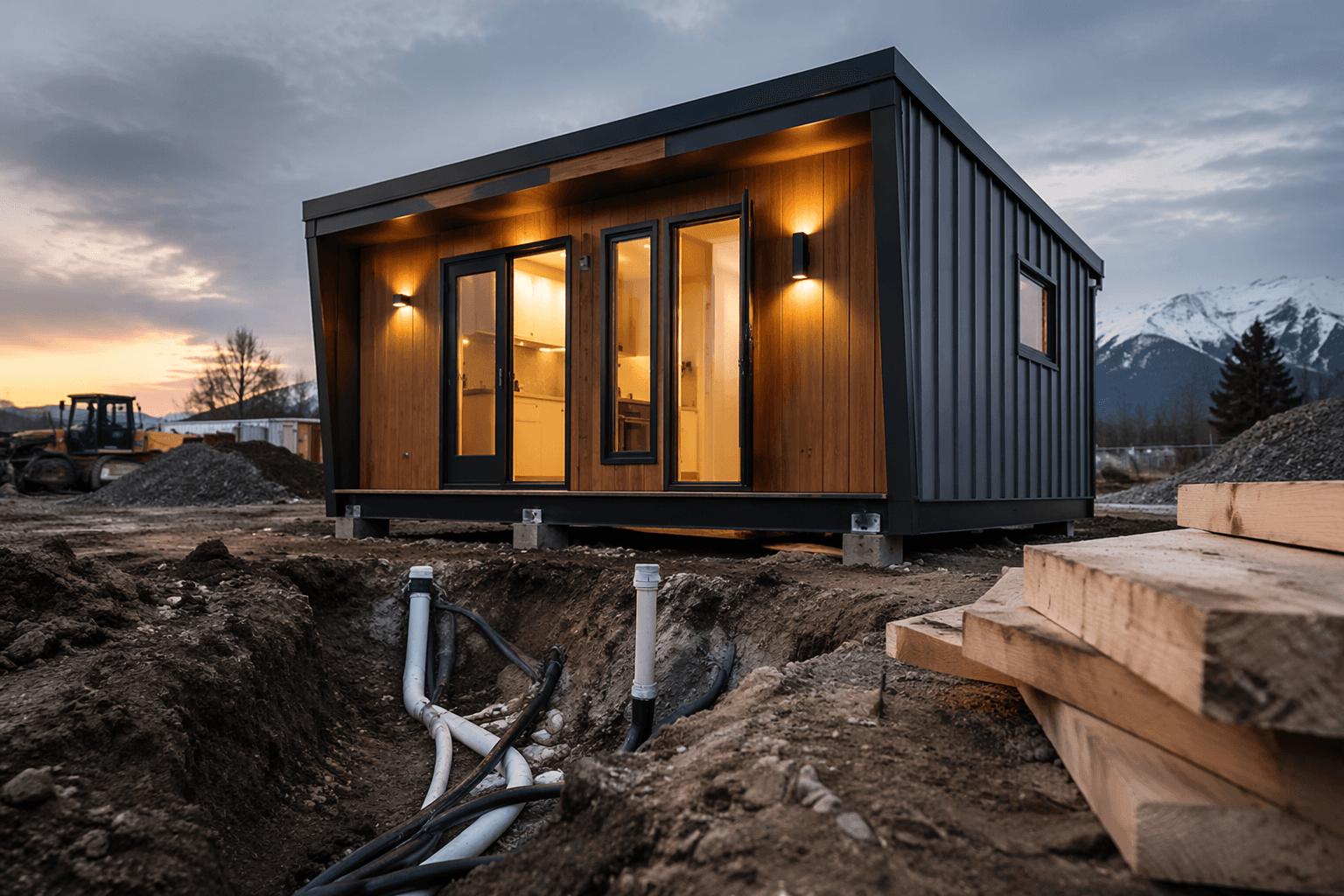
The low price is only convincing if you ignore the site work. Land is rarely included, and neither are permits, utility connections, foundations or pads, or the labor to get the unit installed correctly. Even when the structure itself is inexpensive, the project can still demand serious money before it becomes usable full-time, and vacation use or accessory-structure use may be the only practical fit in some places.
That is the part most online listings quietly skip. A buyer sees a compact footprint and imagines a finished home; what arrives may be a structure that still needs a site, approvals, hookups, and finishing work before it can function. The cheaper the listing, the more carefully you need to read what is excluded.
Appendix Q, Appendix AQ, and the move toward clearer standards
The code side of tiny housing has been evolving for a while. The 2018 and 2021 IRC tiny-house provisions were built to clarify confusion around tiny-house regulations, and the 2021 International Residential Code Appendix AQ continues that effort.
The next step is ICC/THIA Standard 1215, which is intended to set minimum requirements for design, construction, inspection, certification, and regulatory compliance for tiny houses used for permanent occupancy. ICC set an anticipated completion date of spring 2026, and the standard is meant to cover tiny houses on a foundation or on wheels.
How to shop without getting fooled by the price tag
Before you treat an online tiny home like a bargain, break the project into pieces. Ask what category the unit actually falls into, where it can legally be placed, and what the seller is excluding from the advertised price. If the listing does not clearly explain transport, setup, site prep, and code path, assume those costs are yours.
The safest way to read a sub-$30,000 tiny-home listing is as a starting point, not a finished house. The photo may show a cute exterior and a clean interior, but the real test is whether the unit can survive permits, delivery, utilities, and local rules without turning into a far more expensive project.
This article was produced by Prism’s automated news system from verified source data, official records, and press releases, then run through automated quality and moderation checks before publishing. The system is built and supervised by the people who set the standards it runs under. Read our full AI policy.
Did this article answer your question?