Bloomington's Tiny-House Village Shelters Homeless Residents Through Brutal Winter
Three days before temperatures hit -8°F, Bloomington's $2.7M tiny-cabin shelter village opened its doors, pulling people out of frozen tent camps and into a structured path to permanent housing.

Three days. That's the margin between The Bridge opening its gates and temperatures in central Illinois plunging below zero. When the city of Bloomington launched its first tiny-house shelter village in late 2025, winter wasn't a looming threat, it was already arriving. January lows hit -8°F, with average temperatures hovering around 20°F across the region. For the roughly 100 people housing advocates counted living outside in Bloomington at the time, that gap between exposure and shelter wasn't measured in weeks. It was measured in days.
A Crisis That Took Years to Become Visible
Bloomington's homelessness problem didn't emerge overnight. The housing shortage became acute in 2021, when an influx of workers drawn by a new manufacturing company strained a rental market that simply hadn't built enough supply to keep up. Homelessness increased steadily, but for most residents, the crisis remained invisible until 2023. That's when people without permanent housing began setting up a tent encampment in a downtown church parking lot.
Matt Burgess, CEO of Home Sweet Home Ministries, describes what shifted community attitudes: "Literally hundreds of people would drive by it every single day. And that's when the community started to say, 'you know, it's not okay that we have people who are stuck outside.'" Home Sweet Home Ministries, which has served people on the margins of Bloomington society for more than 100 years, was positioned to respond, and Burgess began researching what a real solution might look like.
Looking at What Already Worked
Rather than building something from scratch, Burgess studied shelter-village models that had already proven effective in other cities: Burlington, Vermont; Denver, Colorado; Missoula, Montana; and Austin, Texas. He didn't just review reports. "I actually physically visited the Missoula, Montana shelter village," Burgess said. "They call it a 'temporary, safe outdoor space.' And so, I got to see that in action, talk to the people that were running that program, personally, as part of our" research process.
That on-the-ground due diligence shaped what Home Sweet Home Ministries built back in Bloomington. The lot on Oakland Avenue, near the ministry's existing facilities and The Junction, was purchased, and The Bridge opened six months later. Construction began in summer 2025, with a groundbreaking attended by Mayor Dan Brady and Bloomington City Council member Cody Hendricks. Getting to that point required navigating real obstacles: zoning complications had to be resolved, public forums were held to address community concerns, and the nonprofit had to reach an agreement with a transit company that operated near the site.
What $2.7 Million Bought
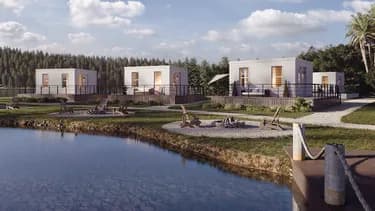
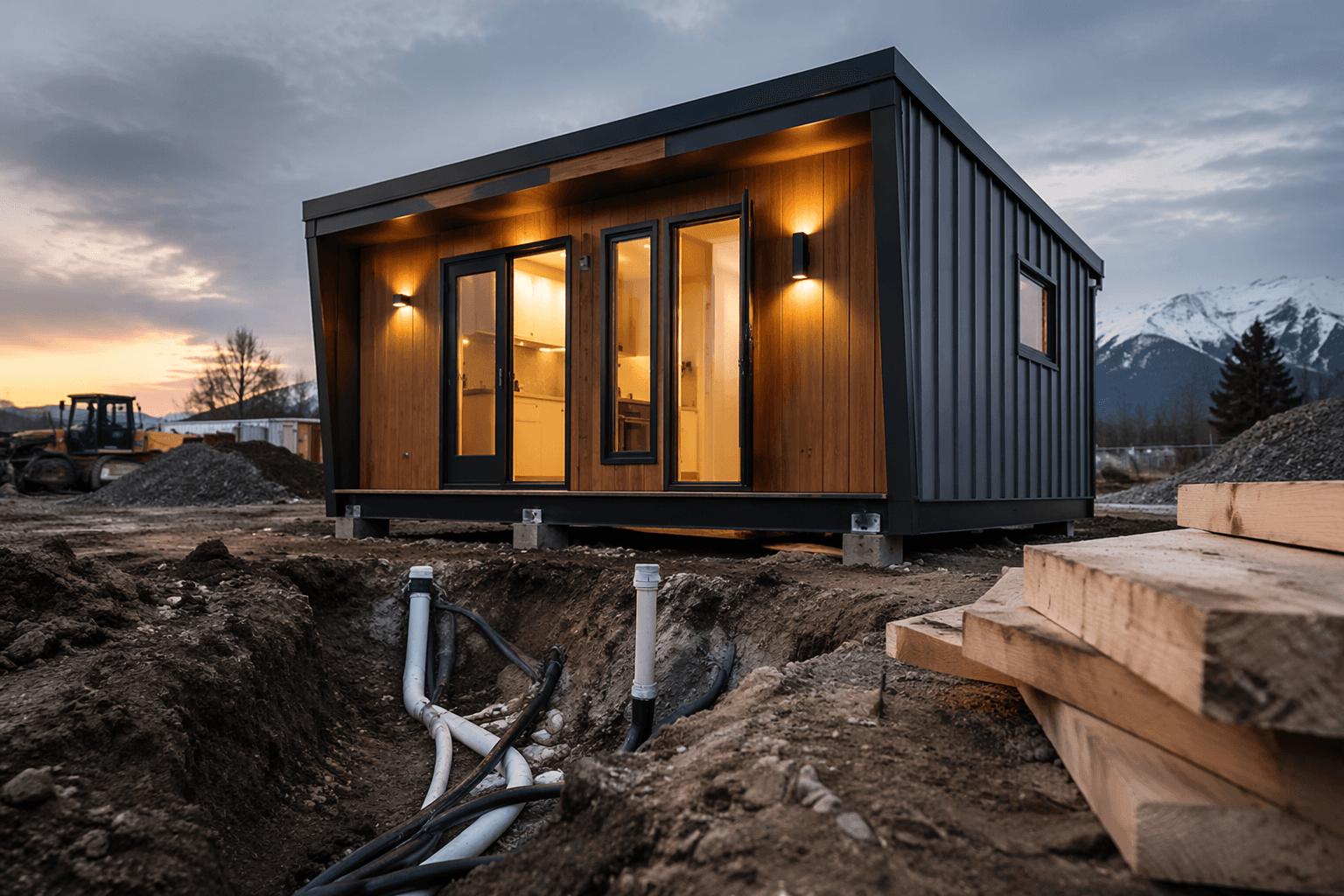
The Bridge cost $2.7 million to build. Two-thirds of that came from private donations; the remaining third came from a county grant. For that investment, Bloomington got a fully enclosed campus with a bathhouse, a community center, and 48 tiny sleeping cabins capable of accommodating up to 56 adults.
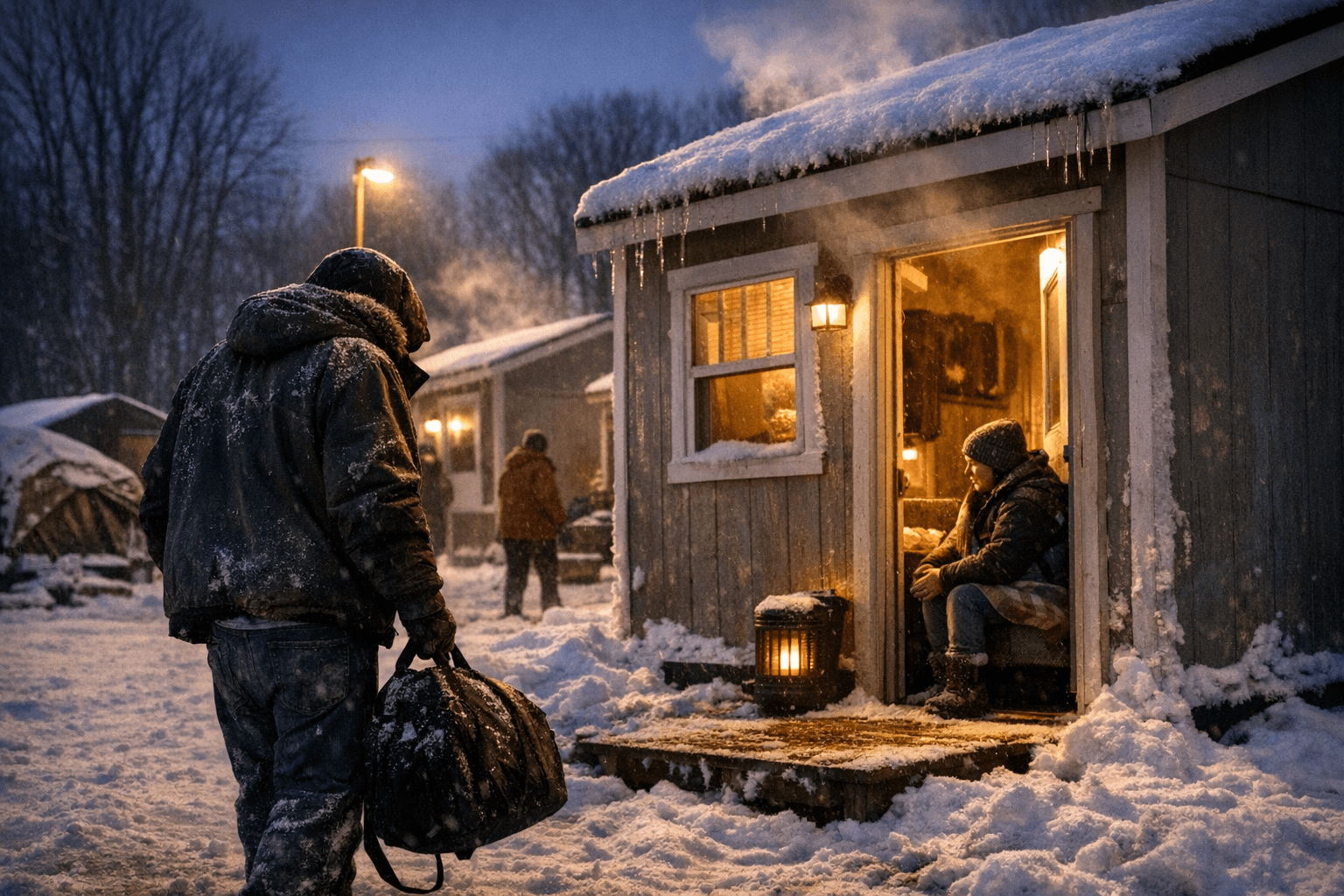
The design philosophy is deliberate. Unlike congregate shelters, where dozens of people share open sleeping areas, each cabin at The Bridge provides a private space. Residents can sleep without being watched, store their belongings without fear of theft, and maintain a basic sense of autonomy. The campus is low-barrier by design: few restrictions govern who can live there, with the exception of people convicted of sex offenses.
That low-barrier approach matters enormously in practice. People with pets, people with complicated histories, people who have repeatedly fallen through the cracks of more rule-heavy shelters, can access The Bridge. Matthew Stone arrived from exactly that kind of situation: a tent encampment in the woods of a central Illinois city, in the middle of one of the coldest winters in recent memory. "It was very horrible, a very horrible experience," Stone said. "I was living in a tent with my dog. It was just, all in all, a horrible experience, very cold this winter." The Bridge accepted him, and his dog, and gave them both a place out of the cold.
More Than Emergency Shelter
The private cabin is the entry point, not the endpoint. The Bridge is structured as a transitional program: residents engage with case management and wraparound services while they live on campus, with the explicit goal of moving into permanent housing. The bathhouse and community center aren't amenities for their own sake; they support a daily structure that keeps residents connected to staff and to the process of stabilizing their lives.
Burgess and his team track housing transitions as the primary measure of success. The early signals are encouraging. Housing advocates counted approximately 100 people living outside in Bloomington before The Bridge opened. Since then, the ministry's street outreach team has reported finding fewer people in that situation, a shift that, while not yet backed by a long-term longitudinal study, suggests the village is absorbing people who would otherwise remain unsheltered.
What Bloomington Proves for the Rest of the Midwest
The shelter-village model has drawn significant national attention as cities across the country wrestle with homelessness interventions that are both humane and operationally feasible. What Bloomington adds to that conversation is a proof of concept from a non-coastal, mid-sized Midwestern city: a market where rapid weather swings create acute life-threatening risk, where housing supply constraints hit hard, and where community skepticism had to be earned through public forums rather than assumed.
The Bridge went from a purchased lot to a functioning village in six months, opened three days ahead of a brutal cold snap, and is already moving residents toward permanent housing. For advocates or municipal leaders in similar markets watching for a replicable model, Bloomington's example carries a straightforward lesson: the timeline from decision to impact doesn't have to be measured in years. It took one determined nonprofit, a century of community trust, and the political will to act before temperatures dropped below zero.
This article was produced by Prism’s automated news system from verified source data, official records, and press releases, then run through automated quality and moderation checks before publishing. The system is built and supervised by the people who set the standards it runs under. Read our full AI policy.
Did this article answer your question?