Bluebird bus becomes a $170,000 off-grid home on wheels
Jonathan Perera turned a $7,000 Bluebird into a $170,000-plus skoolie with 1,200 watts of solar, a wood stove, and a split bath.
Jonathan Perera’s 36-foot Bluebird started as a $7,000 bus with a little more than 130,000 miles on it, but the finished rig now sits in the luxury end of skoolie country at more than $170,000. For tiny-house readers, the useful part is not just the price tag, but what Perera and Skoolie.com in Hendersonville, North Carolina did with the shell: a 20-inch roof raise, about $20,000 in custom woodwork, and a layout built to travel roughly 11,000 miles across the United States with his Siberian Husky, Skye.
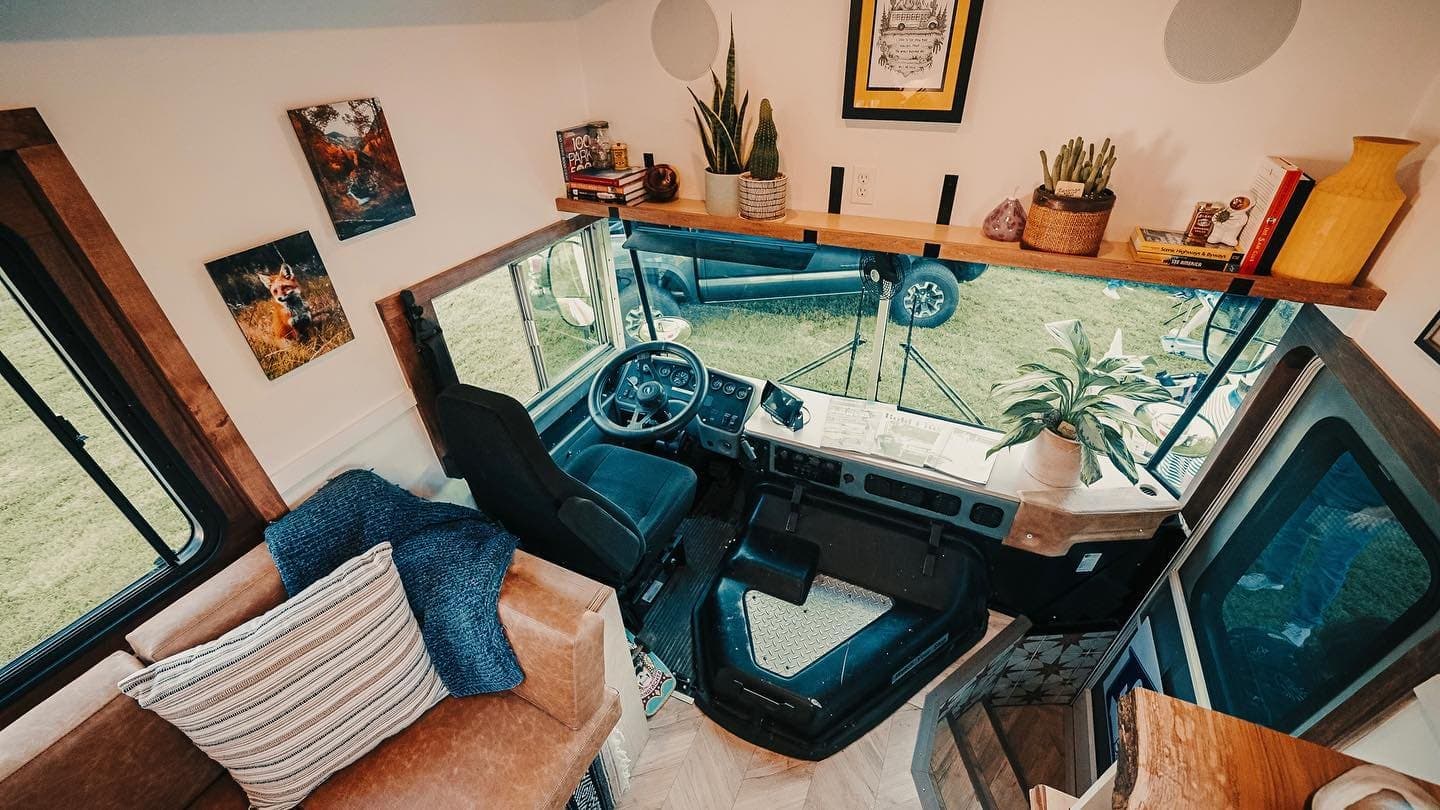
The best borrowing point for trailer-based tiny homes is the way the front cockpit got treated like real living space instead of dead space. Perera turned it into a social zone with a captain’s chair and a leather sofa, which is smart in a narrow mobile build because it preserves the aisle and keeps the front of the home from feeling like a cab you only pass through. The same logic shows up in the galley, where a full-size four-burner propane range, an electric fridge-freezer, and custom cabinetry make the kitchen work like a compact apartment instead of a stripped-down camper. The Moroccan-inspired backsplash, drawn from his grandmother, gives the whole setup a visual anchor without wasting square footage.
That matters because the bus has only about 250 square feet of interior space, yet it still carries a wood stove, a split bathroom layout, and 1,200 watts of solar power. Those are the choices tiny-house builders can study closely. The split bath is especially relevant for small-footprint homes, because separating functions can make one tight room feel less cramped. The solar setup is another practical lesson: Perera built for off-grid living as a daily system, not as a weekend novelty. In a tiny house on a trailer, that kind of power budget changes how you think about refrigeration, heating, and time off-grid.
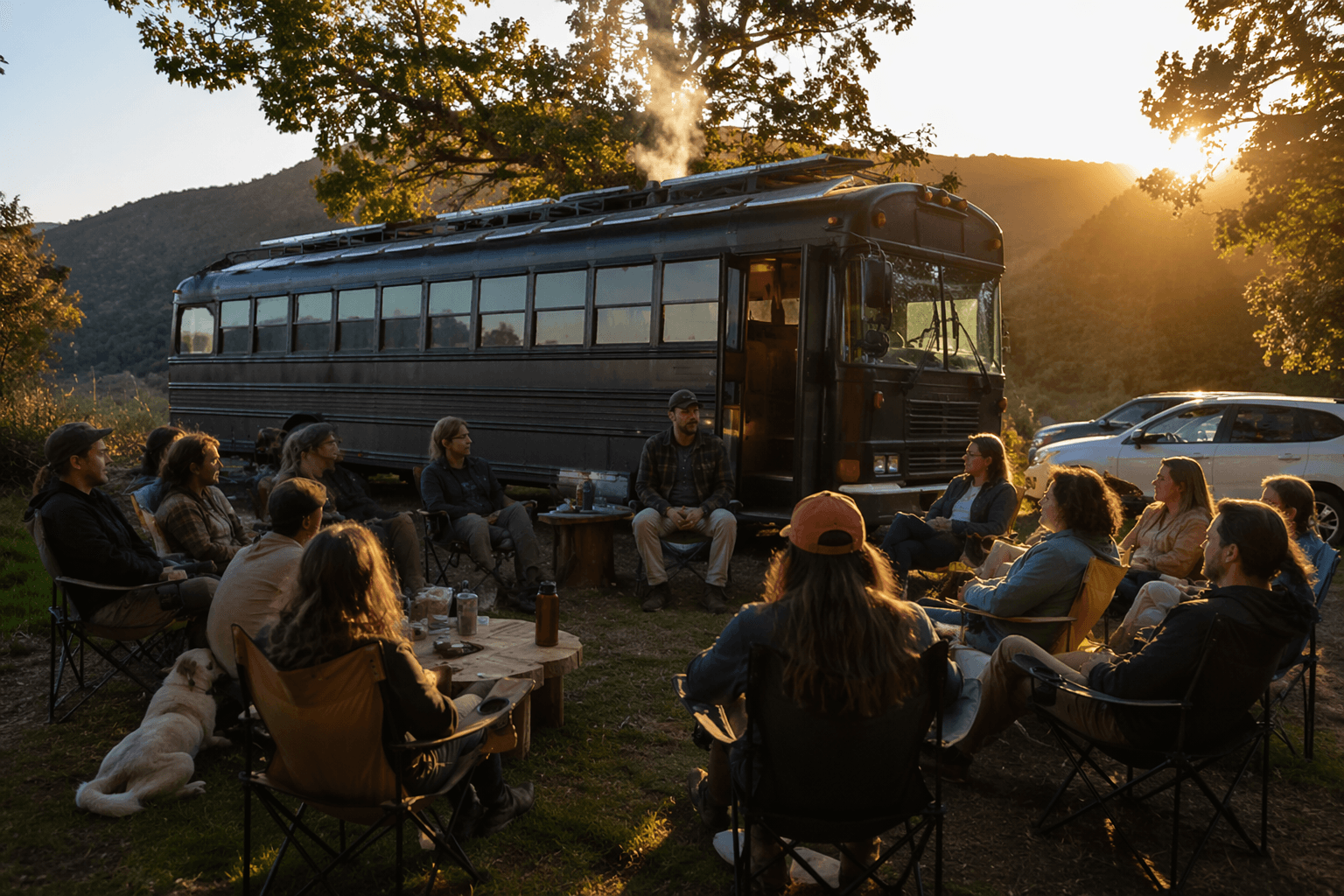
The build also took longer than planned. What was supposed to be an eight-month project stretched to two years after COVID-19 disruptions pushed up steel, lumber, and lithium-component costs. Perera, who works as a certified life coach and small-business consultant and teaches snowboarding in winter, designed much of the interior around travel experiences, including Holbox Island in Mexico and art and ceramics gathered from New Mexico to Canada.
Skoolies have been around long enough to have their own deep bench of knowledge, and that is part of the point here. Perera’s Bluebird is not a tiny house in the strictest sense, but it solves the same problems with a different shell, turning mobility, storage, and off-grid capacity into a home that can keep moving without giving up comfort.
This article was produced by Prism’s automated news system from verified source data, official records, and press releases, then run through automated quality and moderation checks before publishing. The system is built and supervised by the people who set the standards it runs under. Read our full AI policy.
Know something we missed? Have a correction or additional information?
Submit a Tip