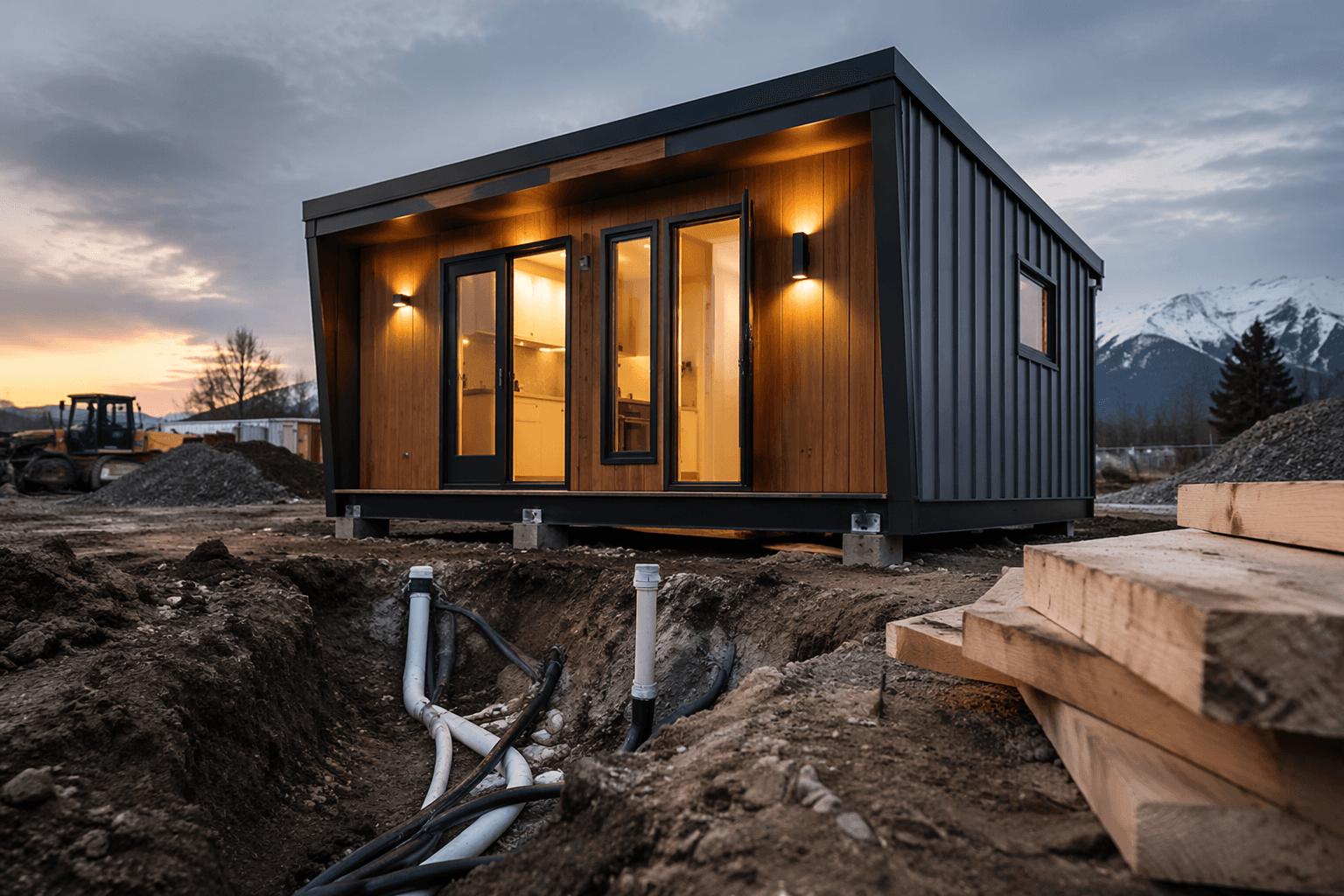
Bulgarian Shoji tiny house packs bedroom, office, and kitchen into 130 sq ft
130 sq ft is all Shoji gets, yet it still fits sleep, work, cooking, and a real bath by making every fixture do double duty.
130 sq ft, one room, no wasted motions
Shoji squeezes bedroom, office, kitchen, and bath logic into 130 sq ft, and the point is not to pretend that space is bigger than it is. At 18 ft long, this Bulgarian build by Koleliba and architect Hristina Hristova works because it stays disciplined: one floor, one core room, and a string of moves that each solve more than one daily need. The result is less a tiny version of a conventional house and more a compact system for living well without excess.
What makes that approach matter is the restraint. Instead of carving out a separate living room just to tick a box, Shoji lets the main volume carry the load, which is exactly where many small homes fail or succeed. In a space this small, every unnecessary wall becomes lost utility, and every piece of furniture has to earn its footprint.
How the main room does the work of three
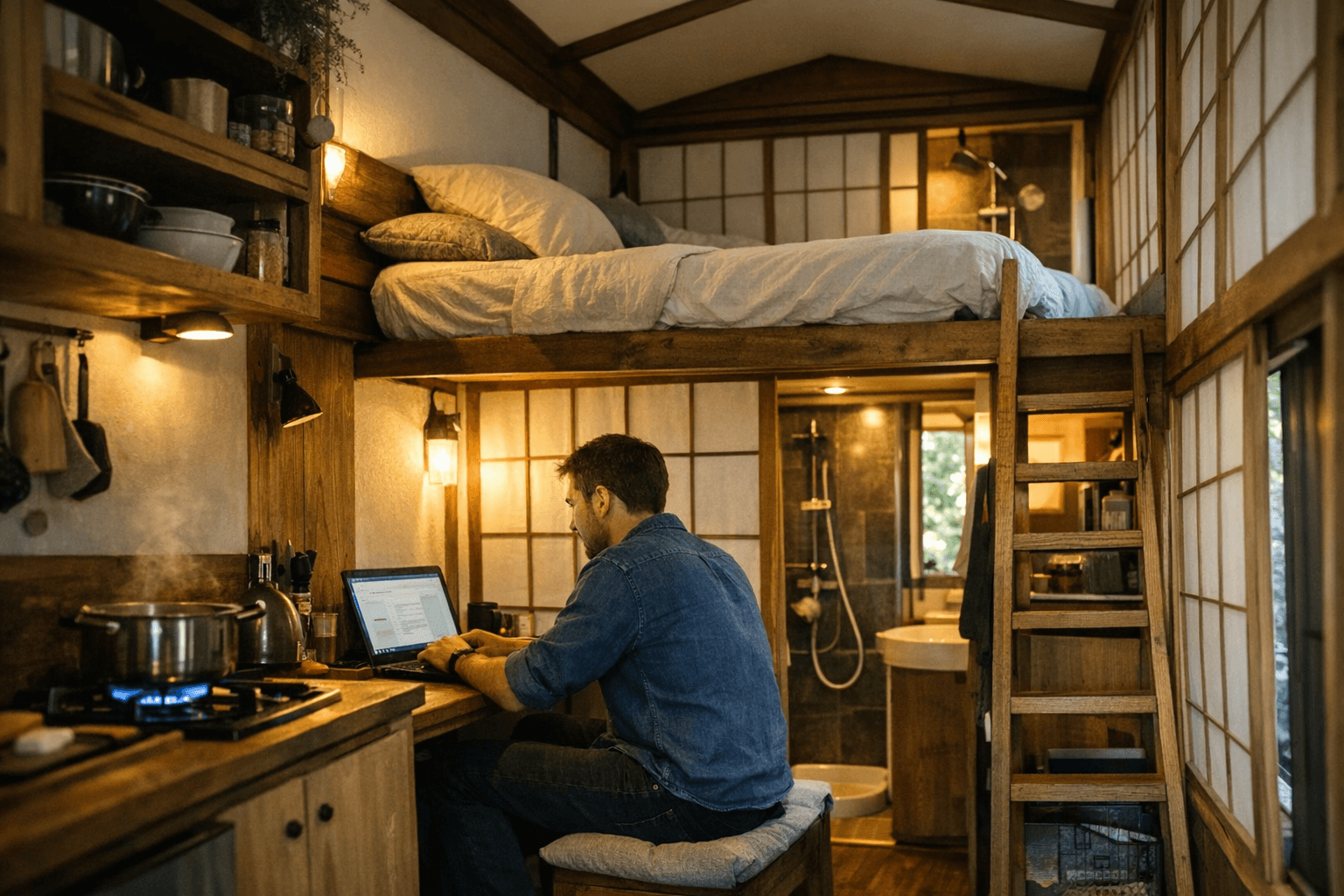
The smartest part of Shoji is the way the sleeping area and hangout zone overlap. The raised double bed doubles as a lounge area, so the bed is not dead space during the day, and the living area is not just an afterthought at night. That is a genuinely borrowable move for anyone designing around a tight floor plan: when the bed is always present, it needs to be comfortable enough to support daytime use without feeling like a compromise.
Beside it sits a storage unit with a pull-out desk that can function as both a workspace and a dining table. That detail carries real practical value because it solves one of the biggest small-home headaches: where to put a laptop, a plate, and a chair without turning the room into a traffic jam. For remote work, meals, and everyday admin, the pull-out surface is the kind of multifunctional element that actually earns its keep.
The trick here is not that the house offers more rooms than it should. It is that it makes one room shift with the rhythm of the day. Morning coffee, work calls, dinner, and sleep all happen in the same core space, but the layout keeps those uses legible instead of chaotic.
A kitchen that stays modest on purpose
Shoji’s kitchen is deliberately compact, with a sink, induction cooktop, cabinetry, and room for more appliances if the buyer wants to customize later. That is a sensible choice in a 130 sq ft home, because a tiny house kitchen becomes unmanageable fast if it tries to imitate a suburban layout. Here, the kitchen does enough to support real daily cooking without swallowing the rest of the interior.
This is one of the clearest examples of what works on paper and in practice. A tiny house kitchen should not be judged by how many counters it can cram in; it should be judged by whether it still leaves room for the rest of life. Shoji’s version does that by keeping the baseline modest and leaving customization open for buyers who actually know their routines, whether that means adding appliances or keeping the setup lean.
The same logic applies to the storage and utility planning throughout the home. A small interior only works when cooking gear, work gear, and daily clutter all have obvious places to land. Shoji appears designed with that discipline in mind rather than hoping the occupant will simply learn to live with the mess.
The bathroom keeps it in real residential territory
The bathroom is compact, but it still includes a glass shower, vanity sink, and flushing toilet. That matters more than it may sound, because those are the details that keep a tiny house from feeling like a campsite upgrade. Shoji does not treat hygiene as an afterthought, and that makes the home much more viable as a true daily dwelling.
In small-house terms, this is where the line between clever and merely cute becomes obvious. A shower stall with a proper enclosure, a real sink, and a flushing toilet gives the unit the baseline dignity of residential use. It also makes the home easier to imagine living in full time, especially for buyers who want compact living without surrendering the basics.
Koleliba also notes a washing machine in the home, which extends that practicality beyond bathing alone. In a house this size, laundry integration is not a luxury flourish; it is one more sign that the design is trying to handle ordinary life, not just weekend stays.
Light, shell, and the indoor-outdoor feel
Shoji’s exterior helps the small footprint feel less sealed-in. Vertical timber siding, a metal roof, lots of glazing, and sliding glass doors keep the home visually light and connect it to the outside. That matters in a compact build, because natural light and sightlines can make 130 sq ft feel contained in a good way rather than claustrophobic.
Koleliba describes the home as a connected, mobile, ecological tiny home, and that framing matches the design language. Expansive windows and sliding doors give the interior a sense of breathing room, while the shell keeps to timber and a clean roofline rather than trying to overwhelm the site. It is a reminder that small living is not just about shrinking dimensions; it is about controlling how space feels when you are inside it.
That indoor-outdoor emphasis also has a longer lineage. Hristova’s earlier Koleliba prototype from 2015 was a trailer-based home of about 9 sq m, or 96 sq ft, meant as a mobile alternative to costly seaside holiday homes. It used a canopy, deck, collapsible bench, and outdoor kitchen setup, which shows that Shoji is part of a design thread that has long tried to move everyday life outward instead of forcing everything into one sealed box.
Why the philosophy behind Shoji matters
Hristina Hristova has said the tiny-house idea grew from her own experience as an architect in cramped and expensive London, before she returned to Bulgaria and helped form Koleliba. That background explains why the company’s philosophy is so blunt about scale and consumption: “We don’t need much to be happy.” It is a position rooted in lived pressure, not trend-chasing.
Koleliba later described itself as a family-run business established in 2015, and it says its houses are small-scale, zero-footprint sustainable timber houses that are fully furnished and ready to use. Build times typically run two to four months depending on size and complexity, with prices starting at €28,900 excluding VAT for the smallest units and reaching about €70,000 for the largest. Shoji itself is listed at about €44,227, which puts it in a middle band for buyers who want a finished unit without starting from a shell.
What carries across, and what does not
Shoji’s best ideas are easy to borrow: let one surface do two jobs, keep the kitchen honest, and use light and glazing to protect livability. The less universal parts are the off-grid upgrades, which can include solar panels, a gasoline generator, water tanks, and filters. Those options are valuable, but they suit a specific buyer profile and budget, not every compact-living setup.
That is what makes Shoji worth paying attention to. It does not try to win by pretending 130 sq ft is enough for everything. It wins by showing which everyday functions can be compressed cleanly, which ones need to stay real, and which ones should never be sacrificed just to make the plan look clever.
This article was produced by Prism’s automated news system from verified source data, official records, and press releases, then run through automated quality and moderation checks before publishing. The system is built and supervised by the people who set the standards it runs under. Read our full AI policy.
Did this article answer your question?