Tiny House Flips the Loft, Adds Three Bedrooms Below Upstairs Living
Onda flips the tiny-house script with three bedrooms downstairs and living upstairs, testing whether a smarter layout can make a tiny home feel truly family-sized.
The reversal that changes everything
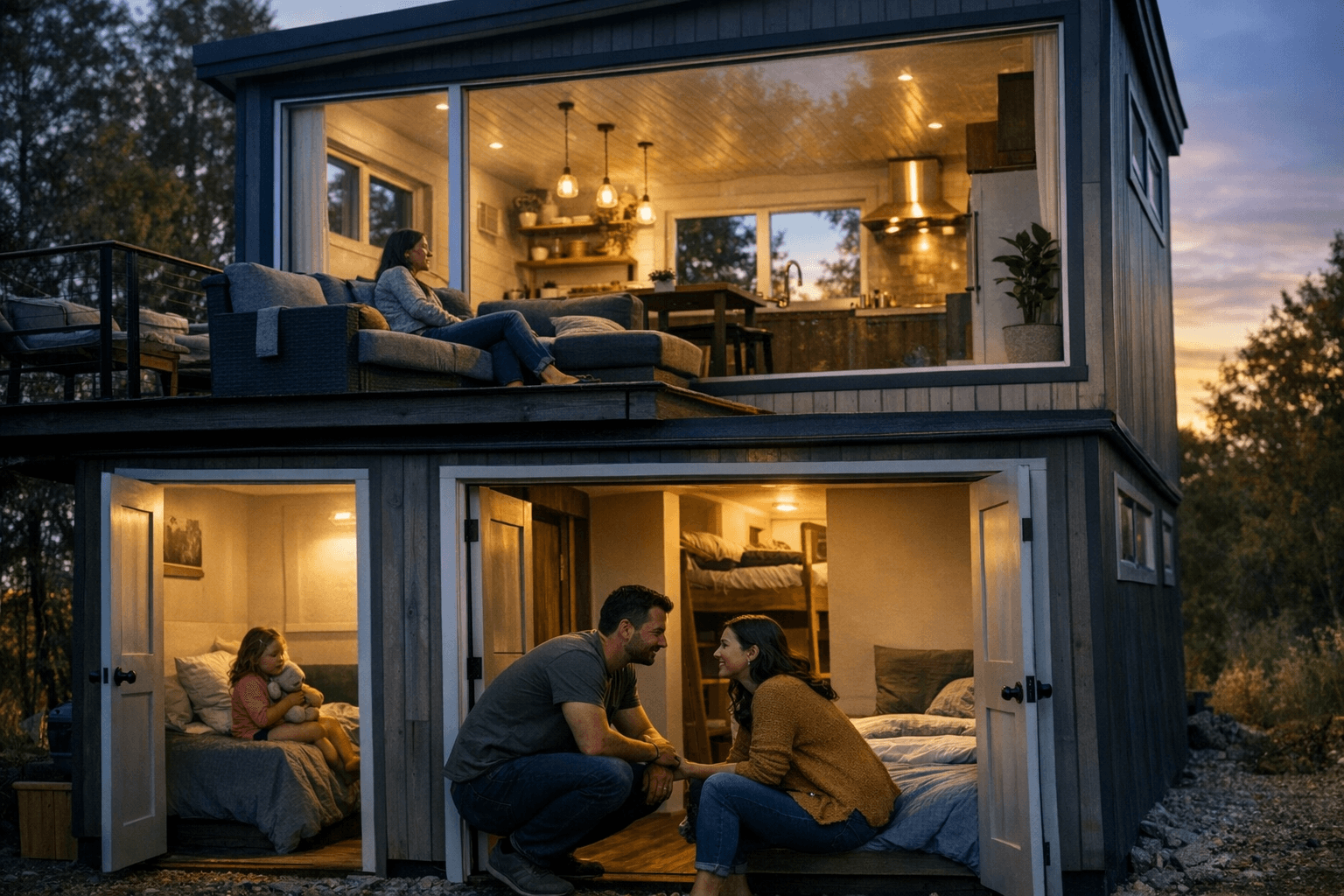
Onda makes its case by doing the one thing most tiny houses do not: it throws out the standard loft-first plan and puts the bedrooms on the ground level. Instead of sleeping above and living below, Removed Tiny Homes gives Onda three bedrooms downstairs and moves the lounge, kitchen, and bathroom upstairs. That reversal is the whole story, because it changes how the home moves, how private it feels, and how workable it is for a family that needs more than one sleeping space.
Removed calls the layout a “world-first,” and the claim makes sense as soon as you picture the daily routine inside it. In a conventional tiny house, the loft is where the compromise lives, with low ceilings, ladder climbs, and bedtime traffic cutting through the same space used for daytime living. Onda separates those functions more cleanly, turning the upper level into shared territory and leaving the lower level for sleep and quiet.
Why the layout matters in real life
The biggest gain here is privacy. Three downstairs bedrooms mean parents, kids, or guests can each have a defined room without forcing everybody into one sleeping loft or a pull-out sofa arrangement. That is a major shift for tiny-house families, because it turns the home from a multi-use box into something with actual circulation and separation.
The downstairs hallway is part of that transformation. Removed says it runs full height with 200 cm of standing clearance, which is the kind of detail that makes the plan feel less like a novelty and more like a proper house compressed into a towable shell. That extra headroom matters because it keeps the bedroom level from feeling like a crawlspace, and it makes the home easier to live in day after day.
Accessibility is another quiet advantage. Loft living has always been a problem for people who want a home that is easier to move through, easier to make for children, and easier to use without constant climbing. Onda answers that with downstairs bedrooms and a clearer split between rest and activity, which is exactly why the design feels more family-ready than many tiny builds that chase drama over comfort.
How Removed packages the Tiny Mansions line
Onda sits inside Removed Tiny Homes’ Tiny Mansions collection, and that label tells you a lot about the company’s pitch. These are not stripped-down trailers built to prove how little you can live with. They are 60 to 70 square meter homes on wheels with 1 to 3 bedrooms, starting from $204,990, aimed at buyers who want tiny-house mobility without giving up residential comfort.
Removed is based in Brisbane, Queensland, and describes itself as building custom, off-grid tiny homes with distinctive architectural styles. That background shows in the way Onda is framed: not as a minimalist experiment, but as a luxe family home scaled down to fit a trailer. The company says the line uses a heavier-duty chassis and structure, which is what makes upgrades like stone benchtops, skylights, full tiling, and extra joinery part of the package instead of afterthoughts.
The launch push also leaned hard into premium finish. Removed says each design in the Tiny Mansions collection currently includes more than $30,000 in upgrades, with fully tiled bathrooms, stone benchtops, and premium skylights or rooftop upgrades depending on the model. The launch upgrade pack is limited to five Tiny Mansions before it turns into a paid upgrade bundle, which makes the early offer feel like a short window into the company’s ideal version of tiny luxury.
Size, structure, and the feel of a bigger home
At 10 meters long and 3.4 meters wide, Onda is still a towable tiny house, but it is firmly on the large end of that category. The 70 square meter footprint pushes the home into a territory that feels much closer to a compact house than a conventional trailer-based build. That scale is a big reason the layout works at all, because three bedrooms downstairs would be hard to imagine in a smaller shell.
The exterior keeps the same balance between utility and polish. Onda uses Colorbond metal siding with timber accents, a combination that gives the home a sharp, contemporary profile without losing the warmth people tend to want in a family build. The display model also includes a large wooden deck, which extends the living area outdoors and softens the boundary between the trailer and the yard.
That outdoor piece matters more than it might first seem. In a tiny home, every square meter has to earn its keep, and a deck can function like a second living room, a meal spot, or simply the place where a family stretches out without crowding the interior. With Onda, the deck helps the house feel less like a box and more like a compact compound.
How fast it comes together
Removed says it can take a design from trailer to turn-key in about 10 to 12 weeks after contract signing, which is a brisk timeline for a home with this much finish and complexity. That speed suggests the company is not improvising from scratch each time, but working from a refined system that can handle the heavier structure, the upstairs living zone, and the more ambitious fit-out.
The quick build window also helps explain the appeal of the Tiny Mansions series as a product category. Buyers are not just getting an unusual floor plan; they are getting a relatively fast path to a completed, highly specified home. For people trying to move from planning to occupancy without a long construction drag, that matters almost as much as the layout itself.
Breakthrough or luxury styling?
Onda is both more interesting and more serious than a typical styling exercise. The premium finishes, generous glazing, and polished materials absolutely matter, but they are not the main reason the house stands out. The real change is structural: three bedrooms downstairs, shared living upstairs, and a full-height hallway that makes the lower level feel usable rather than compromised.
That said, Onda is not a rejection of luxury. It is luxury used as a proof point, showing that a family tiny home can keep privacy, comfort, and a high-end finish if the floor plan is smart enough. The broader market has been drifting toward downstairs bedrooms for exactly that reason, especially as builders look for layouts that are more accessible and more practical than loft-heavy designs.
So the verdict is clear. Onda is more than styling, because the reversed layout genuinely solves problems that have followed tiny houses for years. It still sells an elevated lifestyle, but the idea lands because the plan changes how the home works, not just how it photographs.
Know something we missed? Have a correction or additional information?
Submit a Tip