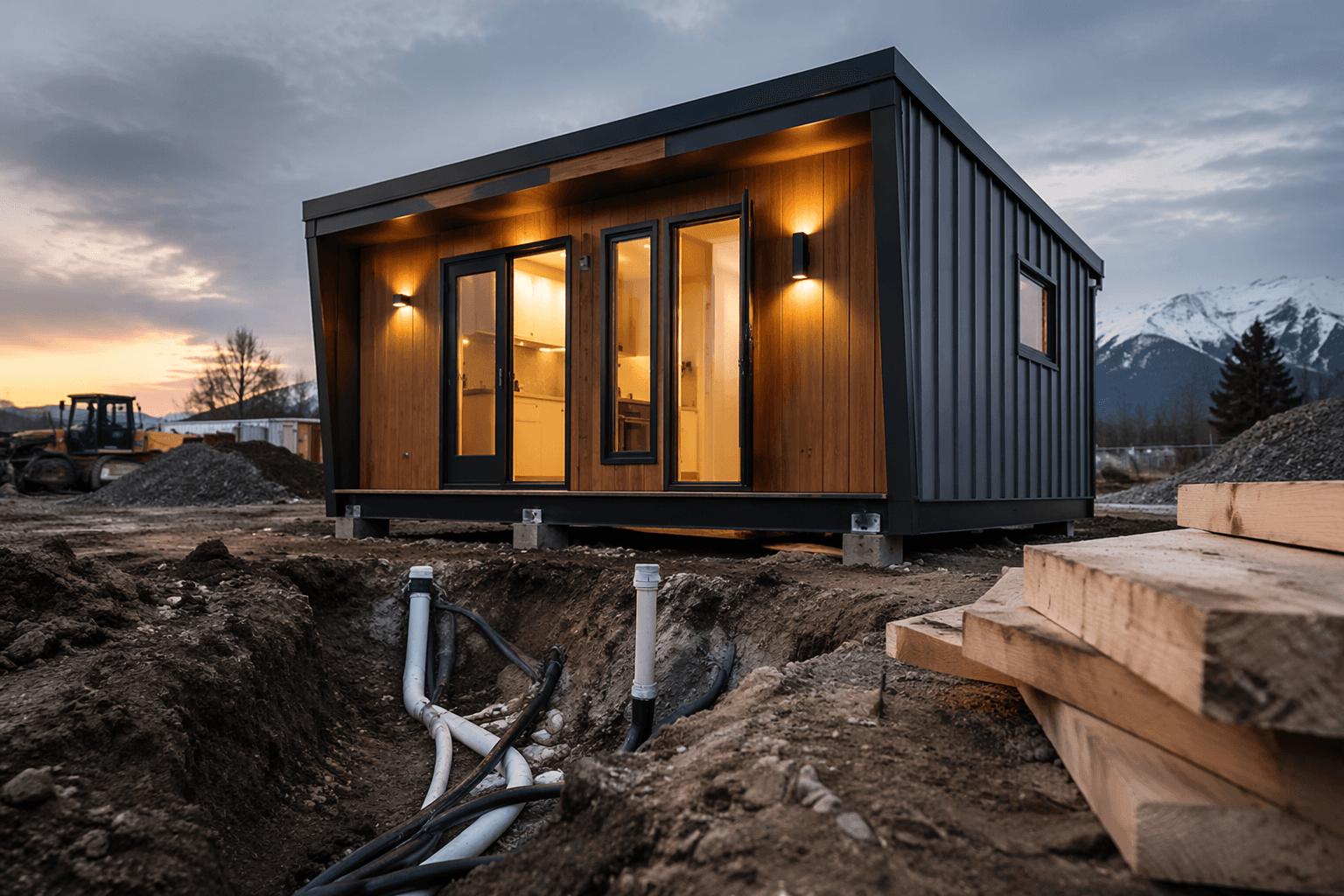
California's 2026 ADU Laws Shift Focus to Enforcement and Local Accountability
SB 543's new 15-day completeness clock means California cities must now respond to your ADU application or lose control of the approval — and that's just the start of 2026's enforcement push.

California's 2026 ADU updates shifted focus from expanding eligibility to enforcement: faster permitting timelines, stricter accountability for local agencies, and expanded flexibility for JADU owners and coastal properties. Six major bills took effect, most on January 1, 2026. For anyone who has watched a permit application vanish into a city's inbox for months without a word, the most consequential change is a simple clock.
Before SB 543, local agencies could sit on ADU applications indefinitely, claiming they needed more time to determine whether a submission was "complete." That era is over. Effective January 1, 2026, SB 543 requires every local agency to issue a completeness determination within 15 business days of receiving an ADU application. If the agency misses that deadline, the application is automatically deemed complete and the existing 60-day approval clock begins immediately. If the application is incomplete, the agency must provide a written list of every missing item and explain how to correct each one. On resubmittal, the agency can only review items it previously flagged. It cannot raise new objections.
ADU applicants are now also provided a statutory right to appeal incompleteness determinations to a local agency's planning commission or governing body. That right had no statutory basis before SB 543. According to the California Department of Housing and Community Development, over 50 local governments had incorrectly applied state ADU and JADU laws, resulting in inconsistent permitting timelines across the state. SB 543 was authored by Senator Jerry McNerney specifically to close those gaps.
The bill also tightened the measurement rules that have tripped up projects for years. SB 543 clarifies that statutory references to "square footage" relate to an ADU's "interior livable space." The bill clarifies that the maximum size for a by-right detached ADU refers to interior livable space only. Exterior wall thickness, low-ceiling attic areas, and stairs are excluded from the calculation. For anyone building at the 800-square-foot state-exempt limit, that exclusion translates to real, usable floor area. Fee limitations previously imposed on ADUs now also apply to JADUs. Additionally, ADUs and JADUs that are less than or equal to 500 square feet of interior livable space are exempt from school fees.
SB 543 also settled a question that contractors and homeowners had been arguing over lot by lot: local agencies must allow both one attached and one detached ADU, plus one JADU, on a single-family lot, as well as internal and external ADUs on multifamily lots. That combination, a garage conversion plus a new detached build on the same property, was previously a gray area in many jurisdictions.
Local enforcement teeth come from two directions. Under SB 9 (2025), also effective January 1, 2026, any local ADU or JADU ordinance not submitted to HCD within 60 days of adoption is automatically void. If a city does not respond to HCD noncompliance findings within 30 days, the ordinance is void as well. In both cases, state default ADU rules, which are more permissive than most local ordinances, apply in their place.
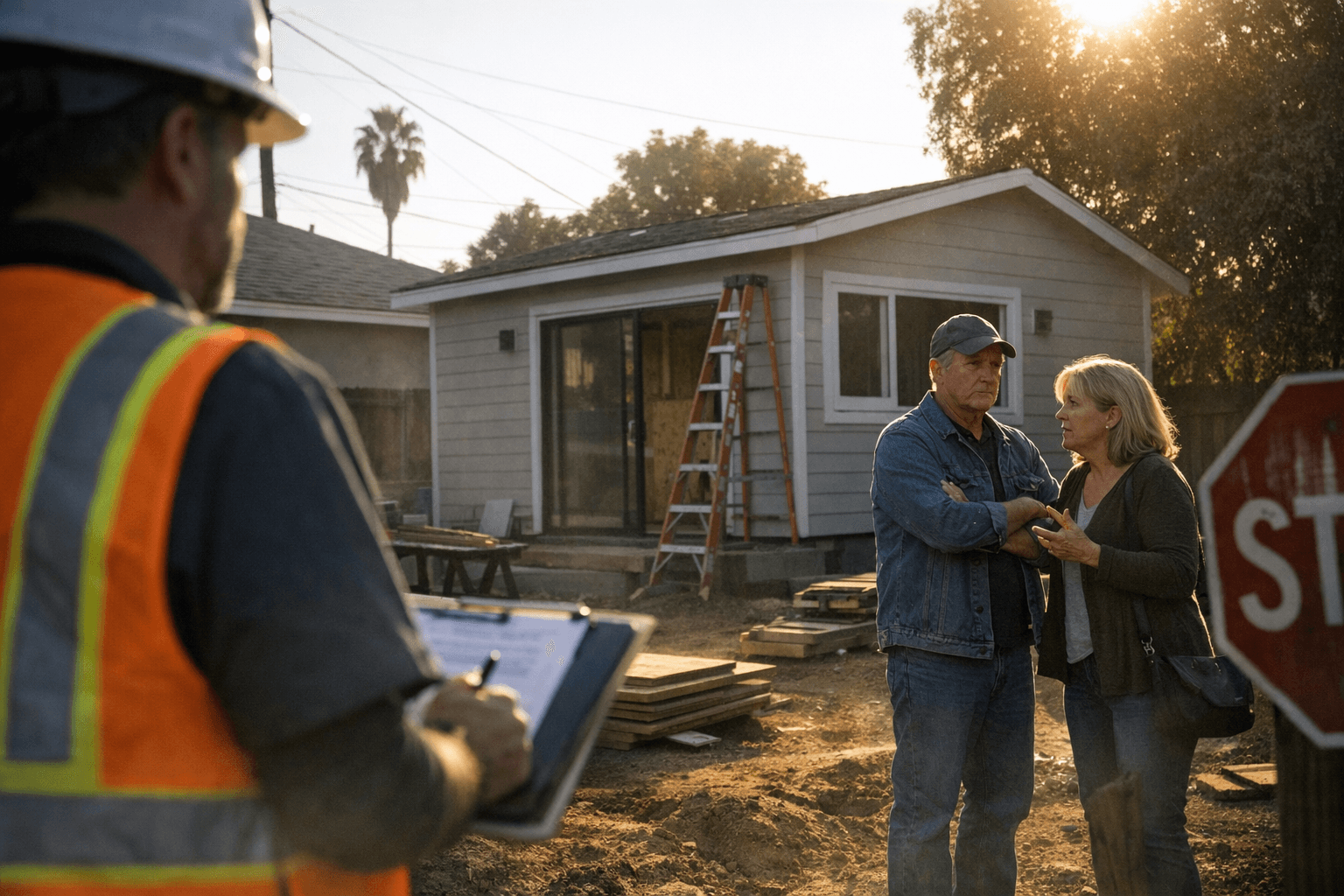
AB 462, authored by Assembly Member Josh Lowenthal, addressed a different category of friction entirely. While state ADU law had required local agencies to approve or deny standard ADU applications within 60 days since 2019, that clock never applied to Coastal Development Permits, the additional permit required for properties within the coastal zone. CDPs operated without a deadline, and in many cases could be appealed to the California Coastal Commission, adding months or years to a project. AB 462 now imposes a strict 60-day approval deadline for CDPs on ADUs, running concurrently with standard ministerial review, and eliminates the ability to appeal ADU permits to the California Coastal Commission.
AB 462 took effect October 15, 2025, earlier than the other 2026 ADU laws, because it was enacted as an urgency statute. The legislation was declared necessary "because of the devastating effect of the wildfires in the County of Los Angeles," highlighting its dual purpose of housing production and disaster recovery.
That disaster-recovery angle is the other major piece of AB 462. Historically, state law prohibited a local agency from issuing a certificate of occupancy for an ADU before one was issued for the primary dwelling. AB 462 creates a narrow exception for detached ADUs when all of the following conditions are satisfied: the governor has declared a state of emergency for the county on or after February 1, 2025; the primary dwelling was substantially damaged or destroyed by an event referenced in the state of emergency proclamation; and the ADU has been issued construction permits and passed all required inspections. For homeowners whose primary home burned down, that meant they could not legally occupy a brand-new ADU while waiting for the primary dwelling reconstruction to finish, which can take 18 to 36 months. AB 462 breaks that logjam.
For homeowners sitting on older unpermitted units, AB 2533, effective January 1, 2025 and still in force through 2026, allows legalization of ADUs built before January 1, 2020 without extra impact or connection fees, provided no new utility connections are required. Garage conversions and backyard studios built before that cutoff are the most common candidates.
The barriers are lower, the timelines are enforceable, and the penalties for agency delay now fall on the government, not the applicant. For anyone planning a backyard build in California this year, that is a fundamentally different permitting landscape than existed 12 months ago. Submit a complete package, know the 15-business-day clock is running, and understand that a city's silence now works in your favor.
This article was produced by Prism’s automated news system from verified source data, official records, and press releases, then run through automated quality and moderation checks before publishing. The system is built and supervised by the people who set the standards it runs under. Read our full AI policy.
Did this article answer your question?