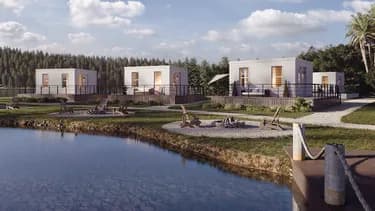
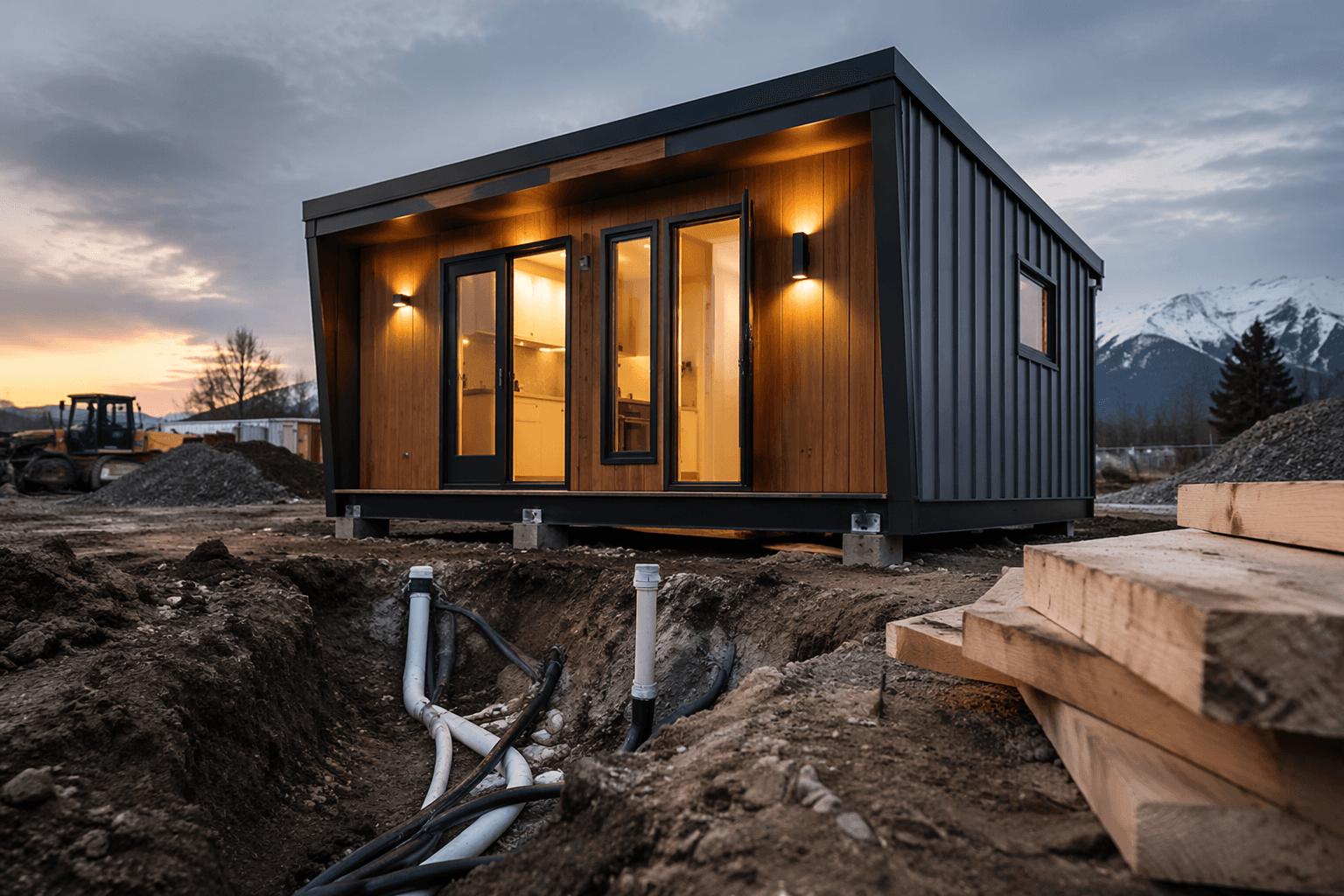
Casagaea’s Porto tiny house aims for full-time family living
Casagaea’s Porto pushes tiny-house design toward full-time family use, with 34.2 to 35.6 square meters, two lofts, and sleeping for six.

The Porto is Casagaea’s clearest bid yet to make a tiny house feel like a real home, not a weekend hideout. Built on a double-axle trailer and measuring 7.8 meters, or 25.7 feet, in its standard form, it is sized to move but laid out to support daily life for more than one person. Casagaea says the model is designed for living, renting, or investing, and the scale makes that claim worth taking seriously.
A tiny house built around full-time routines
What stands out first is usable space. Casagaea lists the Porto’s interior at 34.2 square meters, or 368 square feet, with the broader usable area ranging from 34.2 square meters to 35.6 square meters. That is enough room for a layout that behaves less like a sleeping pod and more like a compact apartment, especially when the same surfaces and circulation paths are asked to do more than one job.
The central living room gives the Porto a proper social core instead of forcing everything into a single multipurpose box. Nearby, the dining table doubles as a desk, which is exactly the kind of detail that separates a weekend cabin from a full-time setup. In a home this size, every flat surface has to earn its keep, and Casagaea seems to understand that meal space, work space, and catch-all storage zone often collapse into one.
Kitchen and bathroom: where the model tries to win over skeptics
The kitchen is one of the Porto’s strongest arguments for everyday livability. Casagaea includes an induction cooktop, an oven, and a fridge/freezer, with a dishwasher available as an option. That combination matters because a full-time household needs more than a decorative kitchenette, and this one looks prepared for actual cooking rather than just reheating.
The bathroom is similarly serious. It is accessed through a wooden sliding door and includes a glass-enclosed shower, a vanity sink, and a toilet, with an optional washer/dryer. In tiny-house terms, that is generous, and it directly addresses one of the biggest complaints buyers have about smaller models: the bathroom ends up feeling like a compromise. Here, the room reads more like a compact residential bath than a token wet cell.
Loft living without the usual tiny-house gymnastics
Sleep space is where the Porto stretches hardest toward family use. Casagaea and related coverage say the house sleeps up to six people, using two loft bedrooms plus a sofa bed for guests. Each loft can fit a double bed and includes its own storage unit, which helps the sleeping areas function like real bedrooms instead of crawl-in bunks.
The circulation design matters just as much as the bed count. A lower walkway connects the two lofts through a storage-integrated staircase, a move that reduces some of the awkwardness that usually comes with overhead sleeping spaces. Loft access is often the moment a tiny house starts feeling like a climb rather than a home; the Porto appears to have been designed to soften that tradeoff. That will matter most to buyers who want a family-friendly layout, not just a clever sleeping arrangement.
Storage, exterior use, and utility setup
The storage story is woven through the house instead of being bolted on at the edges. The staircase itself is storage-integrated, and the lofts each include their own storage unit, which helps the floor plan do more with less. In a home this size, that is not a bonus feature, it is the difference between a space that stays orderly and one that immediately feels crowded.
Outside, the Porto uses engineered wood and includes an outdoor table for serving food or drinks. That detail adds a small but useful spillover zone, especially when the interior is fully occupied. Casagaea also says the model can be configured with off-grid functionality, which broadens its appeal for buyers who want more flexibility in placement or use.
Casagaea describes its tiny houses as ready to move in, fully equipped, insulated for all seasons, and customizable. The company also says it offers turnkey delivery, made-to-measure builds, a showroom or factory visit, and full support from design to delivery. With more than 25 years of woodworking and carpentry experience, it is clearly positioning the Porto as a polished product, not a one-off experiment.
Towability, placement, and the legal reality
The Porto’s towable base is a major selling point, but it also keeps the usual tiny-house questions in play. Casagaea’s FAQ says licensing depends on the location and local regulations, and that some tiny houses require licensing while others may not. That means the Porto is not a plug-and-play answer everywhere, especially in places where foundation type, intended use, and terrain can change the permitting picture.
Portuguese guidance from 2025 adds another layer: permissions can depend on foundation type, intended use, and terrain, while wheeled tiny houses may be treated under caravan-style road rules. For anyone looking at the Porto as a long-term solution, those distinctions matter as much as the floor plan. A compact home is only useful if it can legally sit where you want it to sit.
Who the Porto is for, and who should pass
The Porto makes the most sense for buyers who want a full-time tiny house with real household functions built in. It fits people who need space for sleeping, cooking, working, and hosting, and it is especially compelling for small families, couples expecting regular guests, or buyers who want rental or investment potential alongside personal use. Its 34.2 to 35.6 square meters, two lofts, and optional off-grid setup give it more range than the average tiny cabin.
It is less convincing for anyone who wants the smallest possible footprint or a simpler, lower-complexity towable home. If you do not need six sleeping spots, two lofts, a full kitchen, and a bathroom with washer/dryer potential, the Porto may be more house than you actually need. Casagaea’s own lineup shows that smaller options exist too, including the Algarve, which the company lists at up to 20.5 square meters for up to two people.
That broader range says a lot about where the Porto sits in the market. It is not chasing the minimalist fantasy of tiny living. It is chasing the harder goal: making a compact home that can handle ordinary life without constantly reminding you that it is compact.
This article was produced by Prism’s automated news system from verified source data, official records, and press releases, then run through automated quality and moderation checks before publishing. The system is built and supervised by the people who set the standards it runs under. Read our full AI policy.
Did this article answer your question?