Chicago's Five-Year Homelessness Blueprint Includes Tiny Homes and Dedicated Funding
Chicago's new 2026-2031 homelessness blueprint names tiny homes as part of its housing strategy, but neither Mayor Brandon Johnson nor the plan itself specify unit counts, site locations, or dedicated funding streams.
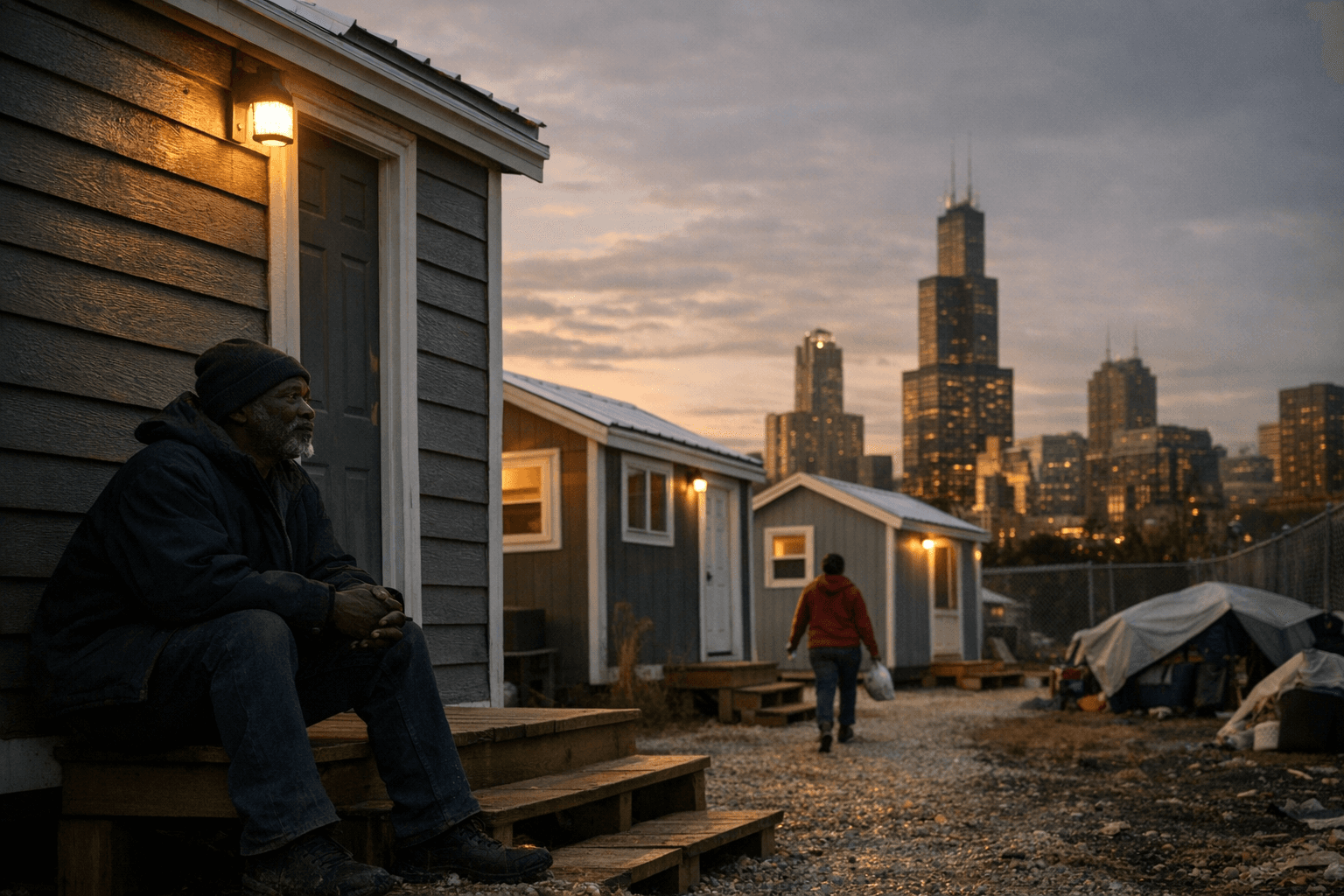
Mayor Brandon Johnson released Chicago's Five-Year Blueprint on Homelessness on March 31, 2026, a 2026-to-2031 strategy that names tiny homes among its housing interventions and sets the goal of making homelessness in the city "rare, brief, and nonrecurring." The plan arrived the same week Johnson eliminated the chief homelessness officer role, raising immediate questions about who owns the work going forward.
The blueprint sets 22 goals across seven focus areas: emergency services, housing, health, education, employment, systems alignment, and community cohesion. Tiny homes fall under the housing pillar, but the document does not answer the four questions that matter most for anyone tracking implementation: how many units, sited where, built by when, and backed by what specific revenue. Neither Johnson nor the report provide clear answers as to where funding would come from for initiatives.
The accountability problem starts at the top. Sendy Soto, who served as Chief Homelessness Officer, will transition from her role upon the completion and launch of the blueprint, with her final day at the city having been April 2. To support continuity and the blueprint's implementation, Jonah Anderson, First Deputy Mayor for Health and Human Services, will assume a dual appointment as Director of the Mayor's Office of Homelessness. That dual role, with no single official solely accountable for homelessness, is the clearest friction point between the plan on paper and results on the ground.
Soto's position was funded through a three-year foundation grant, but the mayor told reporters that Soto finishing the work in two years is a good thing. Johnson referenced the Mayor's $1.25 billion Housing and Economic Development Bond as part of the broader financial infrastructure, but that bond covers affordable housing, homeownership, and homelessness infrastructure broadly, not tiny homes specifically.
The blueprint's development was shaped over 12 months through the leadership of the Mayor's Office of Homelessness and Chief Homelessness Officer Soto, who drew feedback and input from more than 4,000 residents across all 77 community areas. The draft was formally released at a Subject Matter Hearing before the Committee on Housing & Real Estate on January 14, 2026, which launched a public comment period.
The blueprint is grounded in the Functional Zero for All framework developed by Community Solutions, a nonprofit that guides cities toward measurable, lasting reductions in homelessness. That framework requires real-time data, coordinated intake, and consistent housing flow. For tiny homes to register as meaningful throughput in that system, Chicago will need site approvals, zoning clearance, and an operator with actual capacity. None of that infrastructure appears in the blueprint as written.
The plan represents an intent, not a construction schedule. Until Anderson's office publishes unit targets, designated parcels, and a dedicated revenue line for tiny home development, the blueprint's housing pillar remains a commitment without a contract.
Know something we missed? Have a correction or additional information?
Submit a Tip