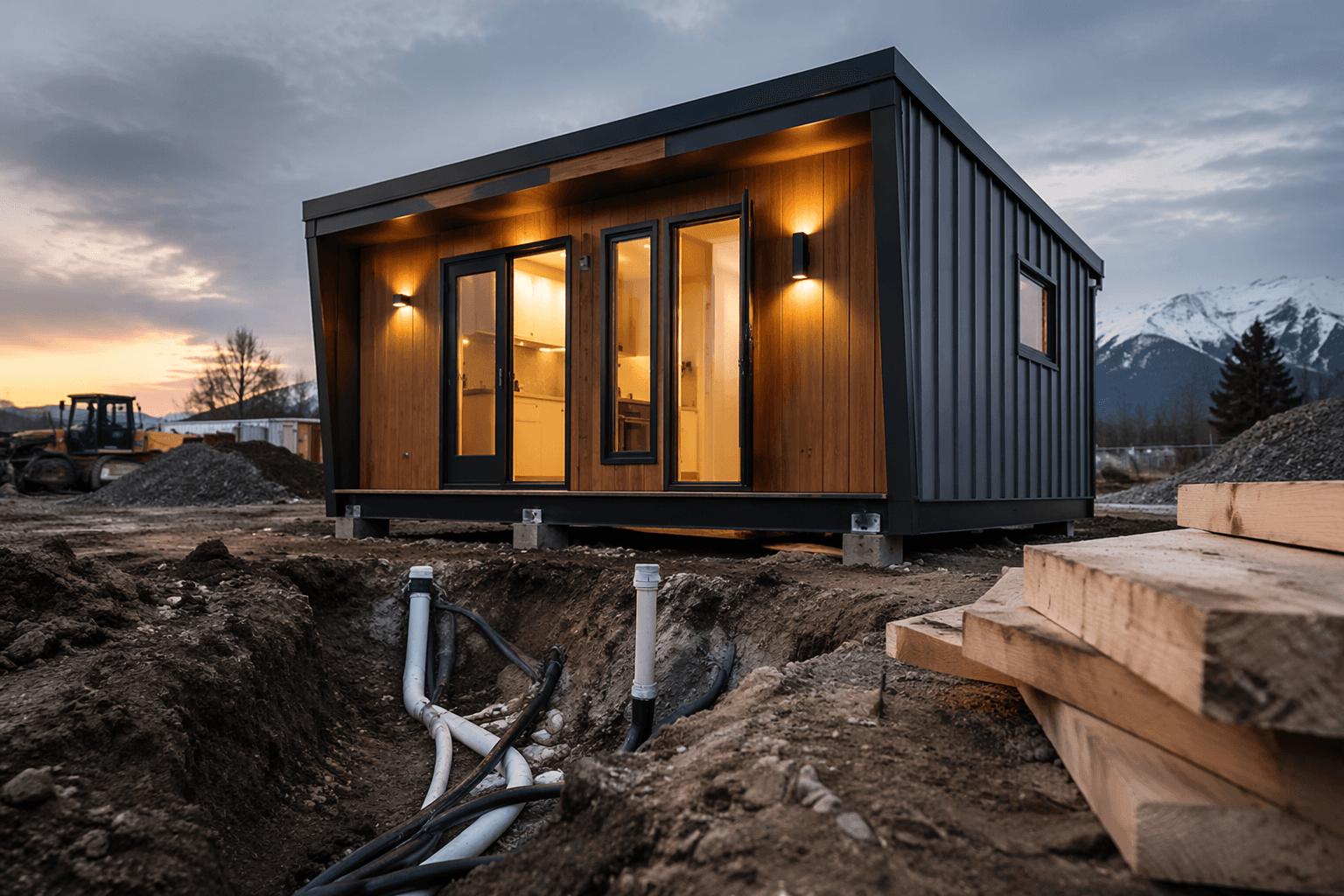
Coastal Retreat Tiny House Proves Smart Design Delivers Comfort for Two
The Coastal Retreat tiny house shows two people can live genuinely comfortably small — if the design does the heavy lifting.
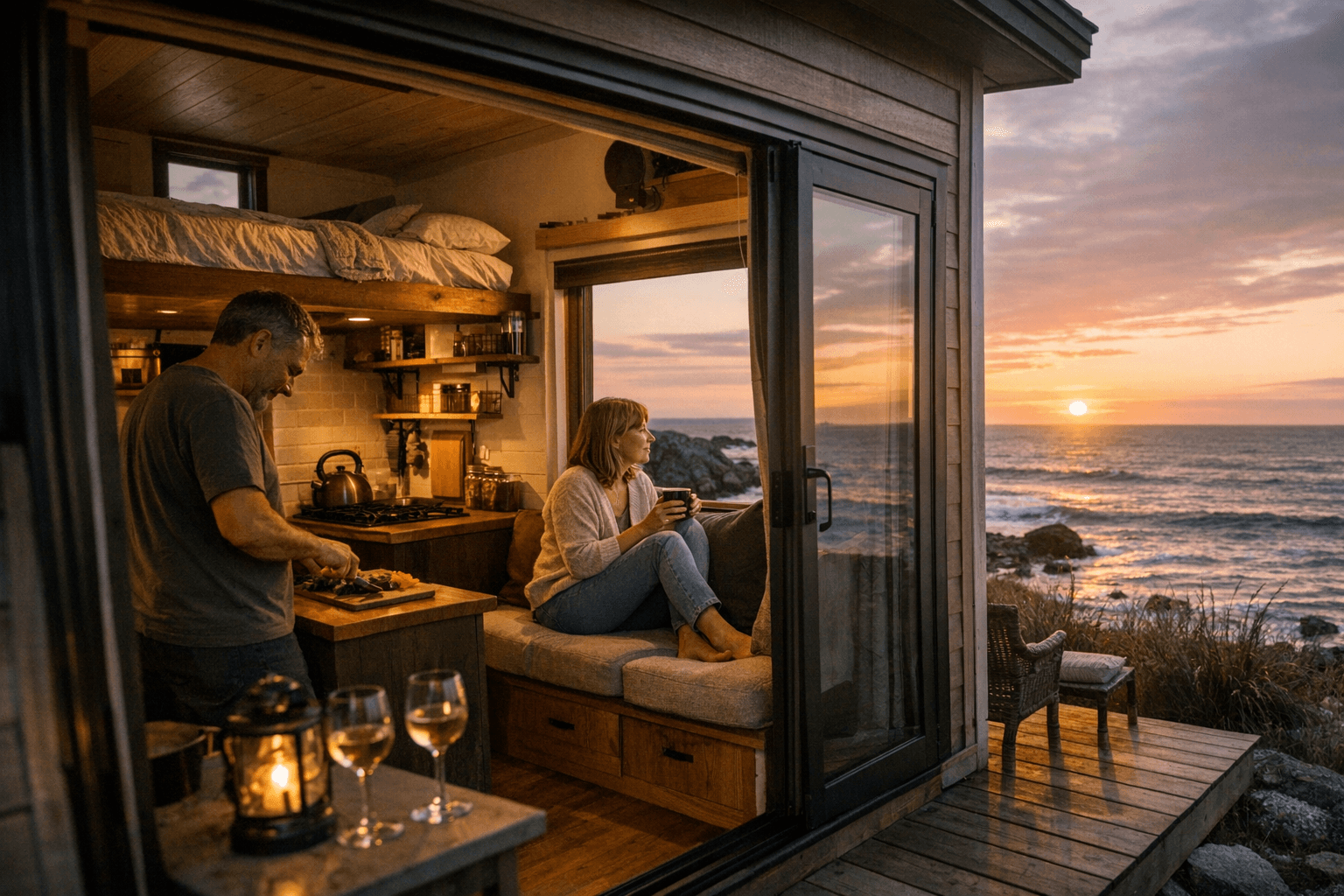
There's a persistent myth in the tiny house world that going small means going without. The Coastal Retreat, a recently completed tiny house spotlighted by New Atlas, pushes back hard on that idea. It's being held up as a working proof of concept: that deliberate, careful design can produce a living experience that doesn't feel like a compromise, even for two people sharing the space full-time.
That's a harder problem than it sounds. Designing for one person in a tiny house is already a puzzle. Designing for two, whether that's a couple, a pair of travel partners, or two nomads splitting costs and square footage, means every inch has to pull double duty without making the space feel like a shared storage unit with a bed in it. The Coastal Retreat appears to have cracked that.
Why "comfortable for two" is the real design challenge
Solo tiny house living has a well-established playbook at this point. You size your loft for one, your kitchen for one cook, your bathroom for one person's morning routine. The moment you add a second person, every assumption gets stress-tested. Closet space, counter space, the ability for one person to make coffee while the other is still asleep without waking the whole house, these aren't small details. They're the difference between a tiny house that works as a long-term home and one that drives couples apart by month three.
The Coastal Retreat is framed specifically around solving that two-person equation. It's not a solo retreat with a pull-out option tacked on. The design appears to have been built around the reality of two people actually living there, not just visiting.
Design as the deciding factor
What makes the Coastal Retreat worth paying attention to isn't a single flashy feature. It's the framing itself: this is a home where the design is doing the work, not the occupants' willingness to suffer through inconvenience in exchange for lower rent or a simpler lifestyle. That's an important distinction in the tiny house community, where there's sometimes a tendency to romanticize the difficulty of living small rather than engineer around it.
The New Atlas feature presents the home as evidence that comfort at small scale is an achievable outcome, not a lucky accident. That positions the Coastal Retreat alongside a growing number of builds that prioritize livability metrics: storage that's actually accessible, natural light that makes a small room feel larger, sleeping and living zones that give two people some psychological breathing room even when they're a few feet apart.
For anyone currently in the planning or build phase of a tiny house meant for two, that's the core lesson here. The question to ask at every design decision isn't "does this fit?" but "does this work for two people on a Tuesday morning when neither of us has had coffee yet?"
What "nomad-ready" actually means in practice
The Coastal Retreat is aimed at couples or pairs who are committed to living small, people willing to put in the effort that the lifestyle genuinely requires. That's a specific audience. Tiny house living, especially for two, isn't a passive experience. It demands ongoing intentionality about what you own, how you move through the space, and how you share it with another person.
But "effort" in this context shouldn't mean fighting your own home. The best tiny house designs reduce the friction of daily life rather than add to it. A well-placed hook, a slide-out pantry, a bathroom door that swings the right direction, these micro-decisions compound into a home that either supports or undermines the lifestyle. The Coastal Retreat, based on how it's been presented, lands on the right side of that line.
The "coastal" framing also signals something about the intended use context. Coastal environments are demanding on structures: humidity, salt air, and temperature swings that punish poor material choices and inadequate insulation. A tiny house that's genuinely comfortable in a coastal setting has cleared a higher bar than one designed for a mild inland climate. If the build quality holds up to that environment, it's likely to perform well almost anywhere.
The broader signal for the tiny house market
The timing of the New Atlas feature matters in a small way. Tiny house coverage in mainstream outlets tends to swing between breathless enthusiasm and skeptical reality-checks. A piece that grounds its enthusiasm in design specifics, in how a home actually functions for two people, rather than in aesthetic photos or cost-savings claims, reflects a more mature conversation about what tiny house living can realistically deliver.
The Coastal Retreat isn't being sold as an escape fantasy. It's being presented as a solved design problem. That's more useful to anyone seriously considering the lifestyle, because it suggests the comfort isn't contingent on a particular view or a particularly agreeable partner. It's built into the structure itself.
For couples or pairs who've been sitting on the fence about whether a tiny house can genuinely serve two people long-term, the Coastal Retreat is a data point worth examining closely. Smart design, applied consistently across a small footprint, does deliver. The proof is in the build.
This article was produced by Prism’s automated news system from verified source data, official records, and press releases, then run through automated quality and moderation checks before publishing. The system is built and supervised by the people who set the standards it runs under. Read our full AI policy.
Did this article answer your question?