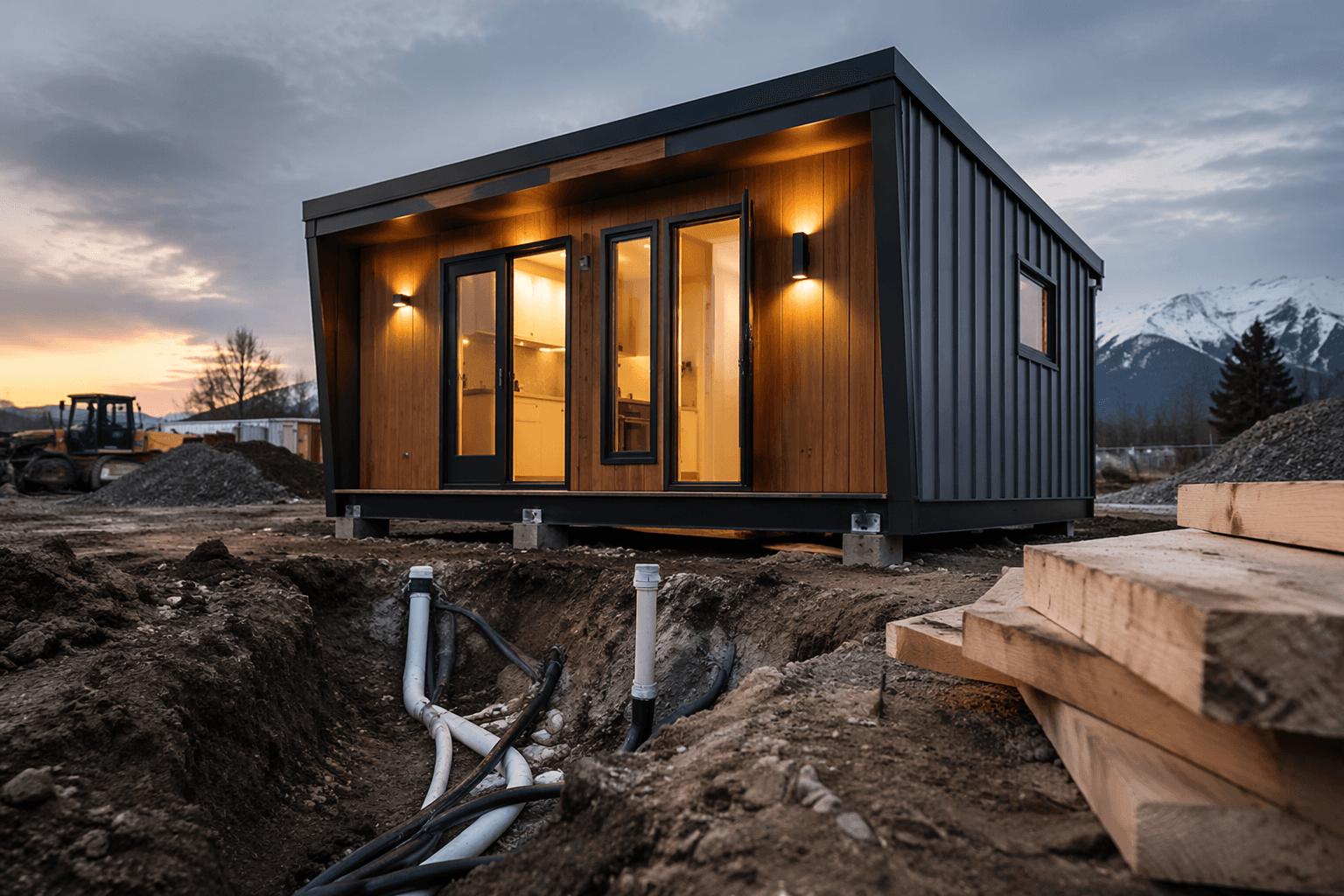
Craft House’s Justine tiny house favors one-level living and full-time comfort
Justine trades lofts for single-floor comfort, bringing a real bed, dishwasher, and year-round livability to a compact tiny house.
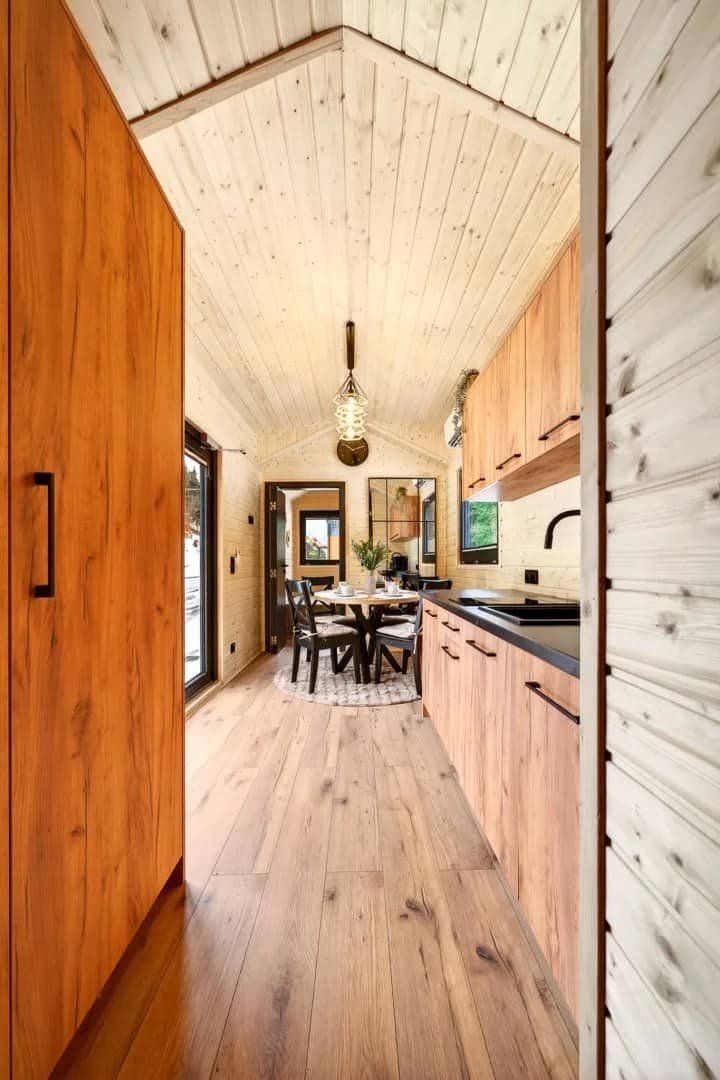
Craft House’s Justine takes a clear swing at one of tiny housing’s oldest compromises: the loft. By keeping the entire plan on one level, the 27.5-foot build makes daily movement simpler, creates better headroom where it counts, and pushes the design toward full-time comfort instead of maximum sleeping capacity.
One floor changes the tiny-house equation
Loft-heavy layouts dominate the category because they stack function into a small footprint, but Justine shows the other side of that equation. A stair-free plan removes the climb, clears the circulation path, and makes the interior easier to use day after day, especially if the home is meant to be lived in rather than occasionally visited.
That tradeoff comes with a cost: you give up the extra sleeping volume and storage tricks that a loft can provide. What you gain is a more conventional living experience, with standing room in the bedroom, easier access to the bath, and less of the constant up-and-down that can make tiny houses feel more like a project than a home.
A compact shell with real-house cues
Justine sits on a double-axle trailer and measures about 27.5 feet long, or 8.4 meters, by 8.2 feet wide, or about 2.5 meters. The exterior uses heat-treated pine and aluminum, a combination that gives the house a warm but modern look without drifting into the rustic-cabin styling that many tiny homes lean on.
Large double glass doors open the front of the home to daylight and outdoor views, which helps a single-floor plan feel bigger than its footprint suggests. Craft House’s listing places the model at 199,000 PLN, identifies it as a mobile home with a gable roof, and says it is approved for road traffic and intended for year-round use.
The kitchen is built for actual cooking
The biggest surprise inside is the kitchen, which is far more complete than the bare-bones galley setups that still show up in many tiny homes. Justine includes a sink, induction cooktop, oven, fridge-freezer, and a dishwasher, which is a rare luxury in this size range and even more unusual in a European tiny house.
That appliance package matters because it changes how the house functions on an ordinary weekday. Instead of treating meals as a compromise, the kitchen supports regular cooking and cleanup, while underfloor heating reinforces the sense that this is meant to work through cold seasons, not just as a fair-weather retreat.
Sleeping and bathing without the ladder
The bedroom is where the one-level layout pays off most clearly. With no loft overhead, the space has enough headroom to stand comfortably, and the plan leaves room for a wardrobe and a cleaner walk-through path than a ladder-based layout would allow.
Tiny House Talk also notes that Justine includes a real 160 × 200 cm bed, which pushes the model closer to a compact conventional bedroom than a niche sleeping nook. That same coverage describes the bathroom as a complete unit with a glass-enclosed shower, flushing toilet, sink, and hidden utility storage that conceals a stacked washer and water heater.
For buyers used to tiny homes where laundry becomes an external chore, that hidden utility closet is a meaningful shift. It keeps the essentials inside the envelope of the house without forcing the main living space to absorb the clutter.
Built to move, but designed to stay
Craft House says Justine can be customized with different materials and configured for full off-grid operation, so the base model is only part of the story. The company presents it as a mobile home meant for year-round use, which lines up with the practical details in the build: road approval, underfloor heating, and a layout that reads like a permanent residence rather than a novelty unit.
The company’s broader project map also stretches beyond one-off showpiece builds, with modular and mobile homes listed in Poland, Austria, Germany, France, and Ireland. That matters because Justine sits inside an established European tiny-house business, not a one-off concept designed only to look good in photos.
Why this layout is catching attention
The stair-free approach is part of a wider design shift in tiny houses. A June 2026 design writeup framed this kind of single-level plan as a better fit for seniors and for anyone who wants to avoid stairs, and Justine makes that idea tangible with a full kitchen, a proper bed, and a bathroom that feels finished rather than improvised.
That is the real value of Justine: it shows how a tiny house can give up the loft and still gain something important in return. By trading maximum sleeping capacity for access, headroom, and everyday ease, Craft House has built a compact home that feels less like a compromise and more like a deliberate choice.
This article was produced by Prism’s automated news system from verified source data, official records, and press releases, then run through automated quality and moderation checks before publishing. The system is built and supervised by the people who set the standards it runs under. Read our full AI policy.
Did this article answer your question?