Craft House’s Off-Grid tiny home promises real energy independence
Craft House’s Off Grid pairs solar, gas, and a wood cook stove in a 6-meter tiny home that aims for real off-grid living, not just the look.
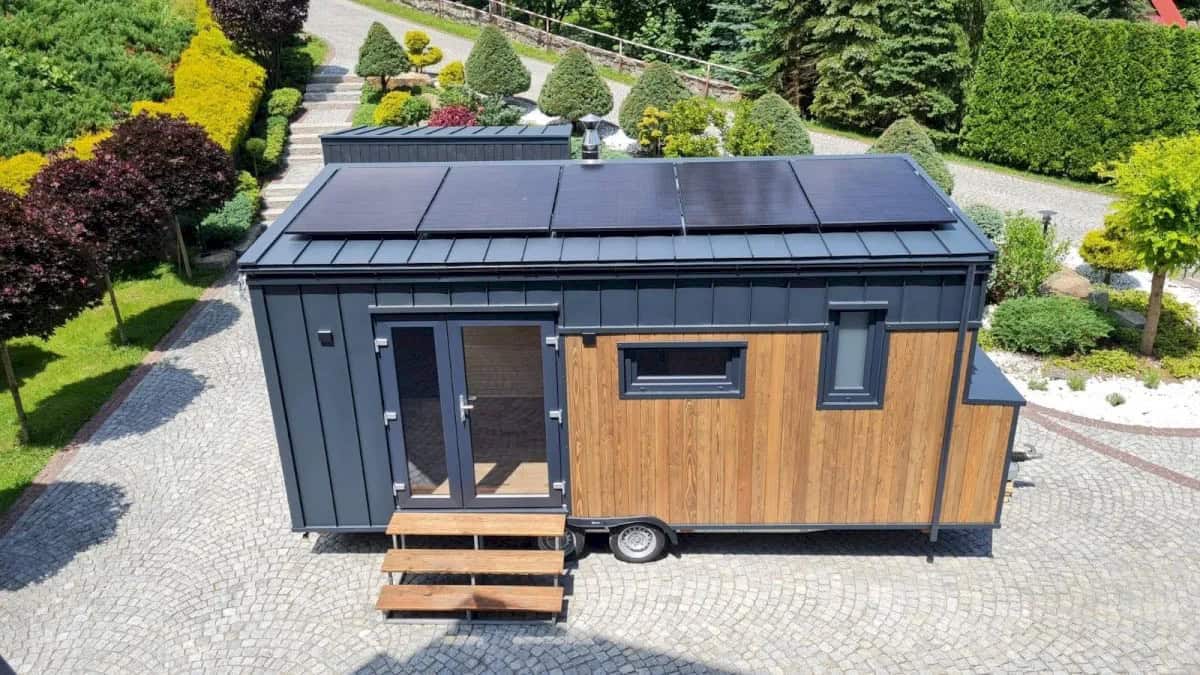
The strongest off-grid pitch in tiny houses is not a mood, it is whether the home keeps working when the hookup disappears. Craft House’s Off Grid leans hard into that test with a 6-meter compact home on a dual-axle SYMA trailer, rooftop photovoltaics, and a wood-burning cook stove built into the concept. That combination puts daily living, not just visual style, at the center of the design.
The off-grid promise, checked against daily life
This model is aimed at buyers who want mobility, remote placement, or a backup home that can stand on its own. That matters because tiny-house owners do not just need a smaller footprint, they need a setup that can handle cooking, heat, water, and power without depending on a perfect grid connection. Craft House’s Off Grid tries to answer that with a mix of solar, gas, and wood, which is exactly the kind of redundancy that separates an off-grid aesthetic from a setup you can actually live with through bad weather.
The roof is shaped to carry photovoltaic panels, and the solar system is paired with a technical box that holds the heater, gas cylinder, and water pump. Add the wood-burning cook stove described in the model coverage, and the logic becomes clear: the house is built so that dinner and warmth do not have to hinge on a single power source. In tiny-house terms, that is the difference between decorative self-sufficiency and real resilience.
A compact shell with real numbers attached
Craft House lists the Off Grid as 6 meters long and 2.5 meters wide, with 10 square meters of ground-floor usable area plus a 2.6-square-meter bathroom. That puts the home squarely in tiny-house territory, but the layout still tries to protect everyday comfort instead of shaving space for the sake of minimalism alone. The home sits on a SYMA trailer, and the dual-axle setup reinforces its road-ready identity.
The exterior uses a charcoal standing-seam shell and thermo-pine siding, while the interior is finished in Scandinavian spruce. Those material choices give the house a look that is clean and modern, but also durable enough to read as an all-season build rather than a campsite cabin. The single-pitched roof also helps the solar-ready profile, which is a practical move in a compact home where every surface has to earn its keep.
What the standard specification actually covers
The standard Off Grid package is not bare bones. Craft House includes a fully finished kitchen with a sink, gas cooker, oven, fridge, and high-strength plywood furniture, plus a bathroom with a toilet, washbasin, electric radiator, gas water heater, mirror, and fan. Those are the details that decide whether a tiny house feels like a livable home or just a shell with fixtures.
- Photovoltaic panels support the electrical side of the house.
- The technical box groups the heater, gas cylinder, and water pump into one service core.
- The kitchen package gives the home real cooking range, not just a plug-in hotplate.
- The bathroom spec adds the kind of utilities that matter most when temperatures drop or hookups fail.
That mix is important because off-grid living is not only about generating power. It is also about how the house handles heat, water, and food preparation when the weather turns or the site is remote. The Off Grid’s appliance list shows that Craft House understands those daily pressure points.
The upgrade list makes the weather question even sharper
Craft House also offers a set of extended equipment options that lets buyers push the home further toward year-round use. The extras include a fireplace, composting toilet, shower, smart air conditioning, terrace, garden furniture, and window blinds. New Atlas also highlighted optional battery-linked solar panels, a wood-burning cookstove, a composting toilet, a shower, and a folding dining-work table, which together point to a home designed for flexible use rather than a one-size-fits-all package.
That matters because tiny-house buyers often have to choose between a stripped-down mobile shell and a more complete setup that can cope with changing seasons. The Off Grid appears to sit in the stronger camp: the base spec covers daily essentials, and the options let the owner decide how far to go on independence, comfort, and weather control. A fireplace or wood cook stove changes winter use. A shower and composting toilet change how viable the home feels off the grid for longer stretches. Smart air conditioning and window blinds speak to summer comfort and passive control.
A market-ready home, not a concept piece
Craft House lists the Off Grid at 160,000 PLN, and New Atlas also placed it at PLN 160,000, or about US$44,000. That pricing keeps the model in the realm of an actual purchase, not a speculative design study. New Atlas described it as a one-floor home for two, which fits the layout and reinforces the sense that this is meant for practical occupancy, not just display.
Craft House’s broader footprint also helps explain the model’s appeal. The company says its modular and mobile homes can be found in Poland, Austria, Germany, France, and Ireland. That spread suggests a builder already serving buyers across a wide European market, where mobile homes and off-grid setups have to perform in different climates and different regulatory environments.
The real test for any off-grid tiny home is still the same one at the start: whether it works when the weather turns and the grid is not there to help. Craft House’s Off Grid does not just gesture at that problem. With solar, gas, wood, a compact service core, and a trailer-built shell, it is designed to answer it.
This article was produced by Prism’s automated news system from verified source data, official records, and press releases, then run through automated quality and moderation checks before publishing. The system is built and supervised by the people who set the standards it runs under. Read our full AI policy.
Did this article answer your question?