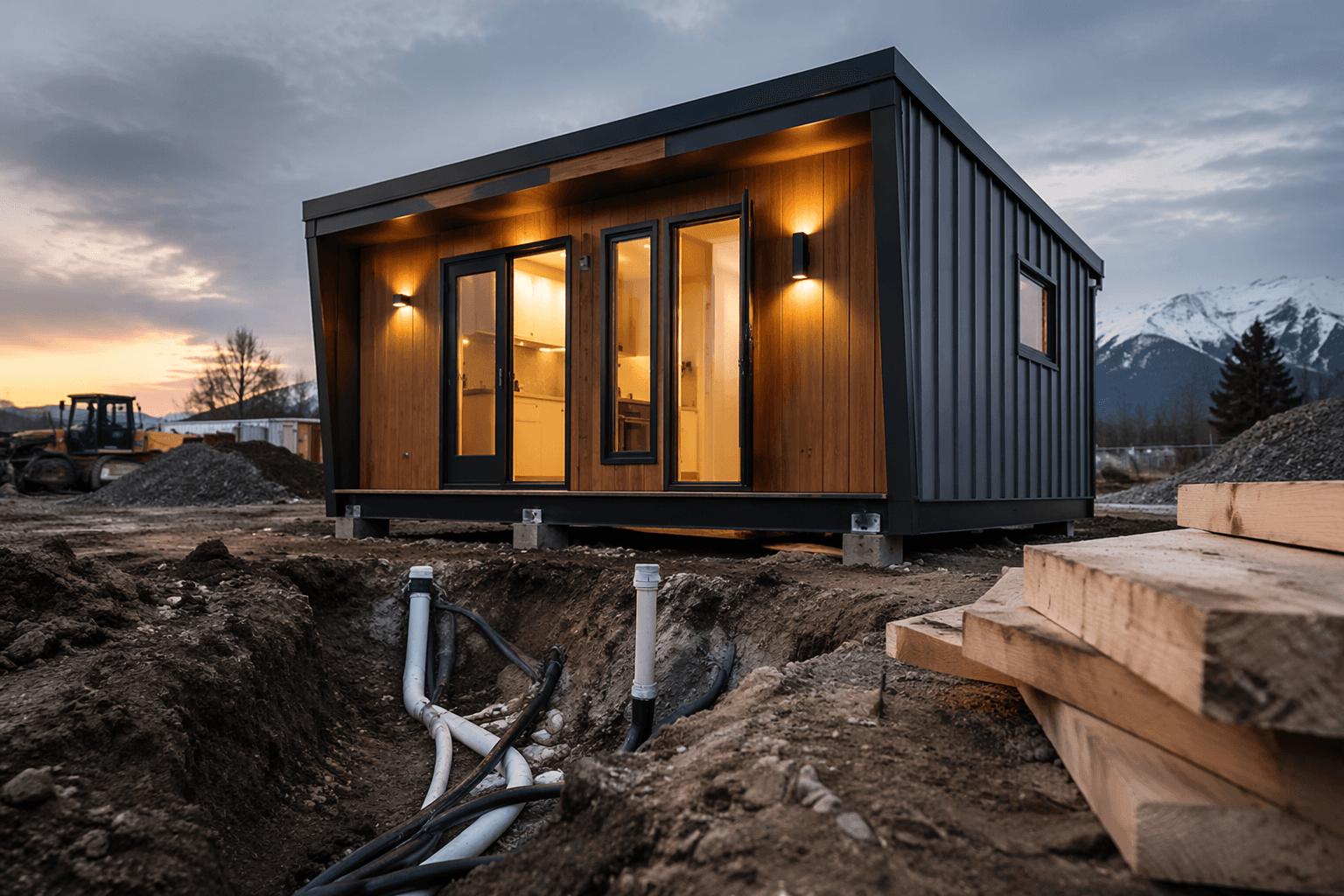
Disabled woman thrives in tiny house with downstairs bedroom, despite leak
Janis’s 28-foot tiny house proves a downstairs bedroom can make independent living work for a disabled owner, even as a leak exposes the upkeep behind the dream.

Janis’s tiny house is compelling because it looks like real life, not a showroom fantasy. She has lived independently in her 28-foot home for seven years, and the layout centers a downstairs bedroom that makes the house usable in a way a loft would not. That single design choice turns the home from a cute compact build into something far more practical: a place built around access, not just appearance.
Why the downstairs bedroom changes everything
For Janis, the main-floor bedroom is not an upgrade. It is the feature that makes the house viable. In a tiny house community that often celebrates ladders, sleeping lofts, and dramatic vertical space, her setup quietly points to a different standard: a floor plan should fit the person who lives there. A bedroom on the main level reduces the daily burden of climbing, reaching, and adapting to a layout that was never designed with a disabled owner in mind.
That is why her story has resonated beyond one home tour. It sits within a broader group of tiny-house stories built around main-floor bedrooms, and that pattern matters. Accessible design is no longer a side conversation in the movement. It is becoming one of the clearest signs that a tiny house can support long-term living instead of just a short-term experiment.
Independence is the real luxury
The most important detail in Janis’s story is that this is the first home she has lived in by herself. That makes the house more than shelter. It is a marker of autonomy, the kind that many glossy tiny-house videos imply but rarely explain. Her independence is not presented as a polished lifestyle aesthetic. It is lived, practical, and tied to a floor plan that lets her stay in control of her own space.
That framing is especially important for disabled owners and anyone thinking about aging in place. A tiny house can be deeply empowering when it supports self-sufficiency, but only if the layout actually works for the body living inside it. Janis’s house shows that compact living can be a path to freedom when the design choices are honest about mobility, daily routines, and what a person needs to function without constant help.
The leak is the part the glossy tours skip
The headline’s reference to a big leak gives the story its most grounded edge. Tiny-house media often leans into polished wood, clever storage, and the romance of living small. Janis’s home cuts through that gloss by acknowledging that a compact house still has to be maintained, and that water intrusion can become serious quickly when there is so little room to absorb the problem.
In a larger house, a leak can be contained, ignored for a while, or spread out over more space. In a tiny house, the same issue can dominate the entire living experience. Every wet surface, every damaged corner, every repair becomes harder to avoid because the footprint is so small. That is the part future buyers need to understand: tiny living is not maintenance-free living, and the smaller the house, the faster a problem can take over daily life.
What actually works in a tiny house like this
Janis’s home offers a clear lesson for anyone evaluating a tiny house for accessibility or long-term use. The successful parts are not the flashy ones. They are the design decisions that reduce friction and make the home easier to live in every day.
- A downstairs bedroom matters when stairs or ladders are not realistic.
- A compact layout works best when it is built around the owner’s body, not a trend.
- Independence becomes more sustainable when the home is easy to navigate without constant adaptation.
- Maintenance has to be treated as part of the tiny-house reality, especially where leaks and water intrusion are concerned.
The story also makes clear that accessibility and resilience belong together. A house can be beautifully arranged and still fail its owner if it is difficult to use. A house can be modest and still feel liberating if it allows someone to move through life on their own terms.
What future buyers should inspect before calling a design practical
Janis’s experience offers a useful checklist for anyone drawn to a tiny house because it looks efficient. The floor plan should be judged first, because the difference between a loft-based setup and a downstairs bedroom can determine whether the home is genuinely livable. A buyer should also pay close attention to how the house handles water, because leak issues in a tiny footprint are not minor cosmetic annoyances. They can quickly affect comfort, routine, and the ability to stay in the space without disruption.
The deeper lesson is that practicality is not measured by how well a tiny house photographs. It is measured by how well it supports the person inside it over time. Janis has spent seven years proving that a small home can do that, but her leak also shows the tradeoff plainly: the same tight footprint that can support independence can also magnify maintenance problems when something goes wrong.
Janis’s house closes the gap between the tiny-house dream and the tiny-house day-to-day. The downstairs bedroom is what makes the dream livable; the leak is what keeps the story honest. Together, they show the standard that matters most in tiny living: not perfection, but a home that fits the owner’s life well enough to stay worth the work.
This article was produced by Prism’s automated news system from verified source data, official records, and press releases, then run through automated quality and moderation checks before publishing. The system is built and supervised by the people who set the standards it runs under. Read our full AI policy.
Did this article answer your question?