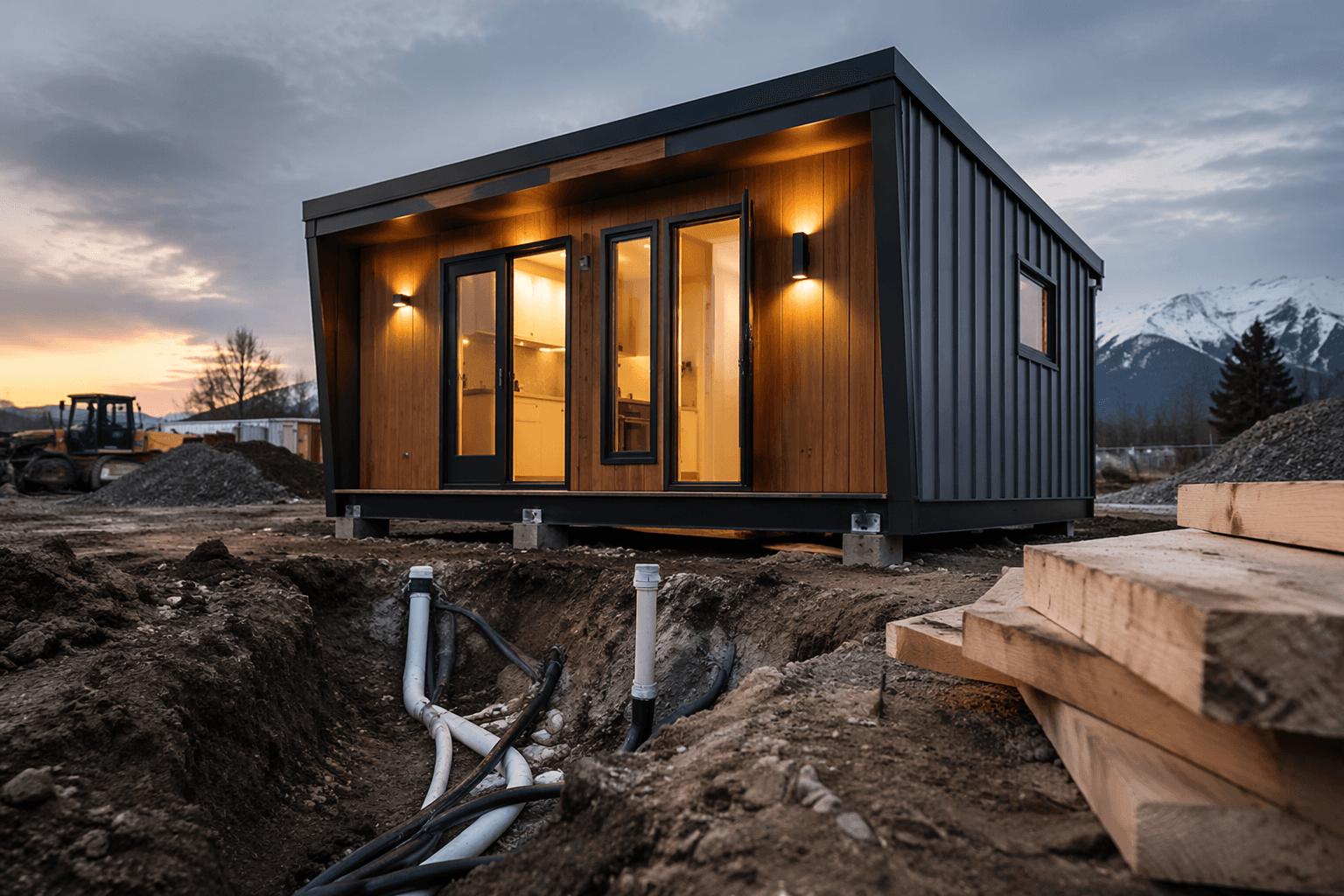
Family-Ready Harmony Tiny Home Packs Three Bedrooms Into 423 Square Feet
Three bedrooms in 423 square feet only works if every inch earns its keep. Harmony’s family-first plan shows how storage, privacy, and shared space can make tiny living feel real.
A tiny house built as a family test
Harmony is the kind of tiny house that forces a harder question than most builds: can a family of four actually live here, or does the three-bedroom count hide the usual tiny-house compromises? At 34 feet long, 8.5 feet wide, and 423 square feet inside, it is compact enough to stay road-legal without the special permitting headaches that wider builds can trigger, yet ambitious enough to try to support full family life on a triple-axle trailer.
That matters because Harmony was not cobbled together after the fact. Teacup Tiny Homes created it for a family in Southern Alberta, and the design grew out of a larger family-sized idea from the start. The original Ellie plan was also built around a family of four, which gives Harmony a different feel from the many tiny homes that simply shrink a conventional layout instead of rethinking how a household actually moves through the day.
Why the backstory changes the design
The family behind the original Ellie was not chasing tiny-house novelty for its own sake. They had lived in a 3,500-square-foot house, then decided they were not using much of that space and were carrying too much clutter. Their goal was a simpler, more minimal lifestyle, with money redirected toward travel and time outdoors instead of possessions, plus the freedom to take their home on the road.
That history explains why Harmony reads less like a design stunt and more like a practical answer to family-scale downsizing. Teacup Tiny Homes says it has been operating since 2016 and positions its 8.5-foot-wide tiny homes on wheels as road legal in North America, while its park models and modular dwellings sit in different code categories. In other words, this is not just an isolated showpiece, but part of a broader transportable housing approach that is meant to function in the real world, not only in renderings.
How the floor plan makes 423 square feet work
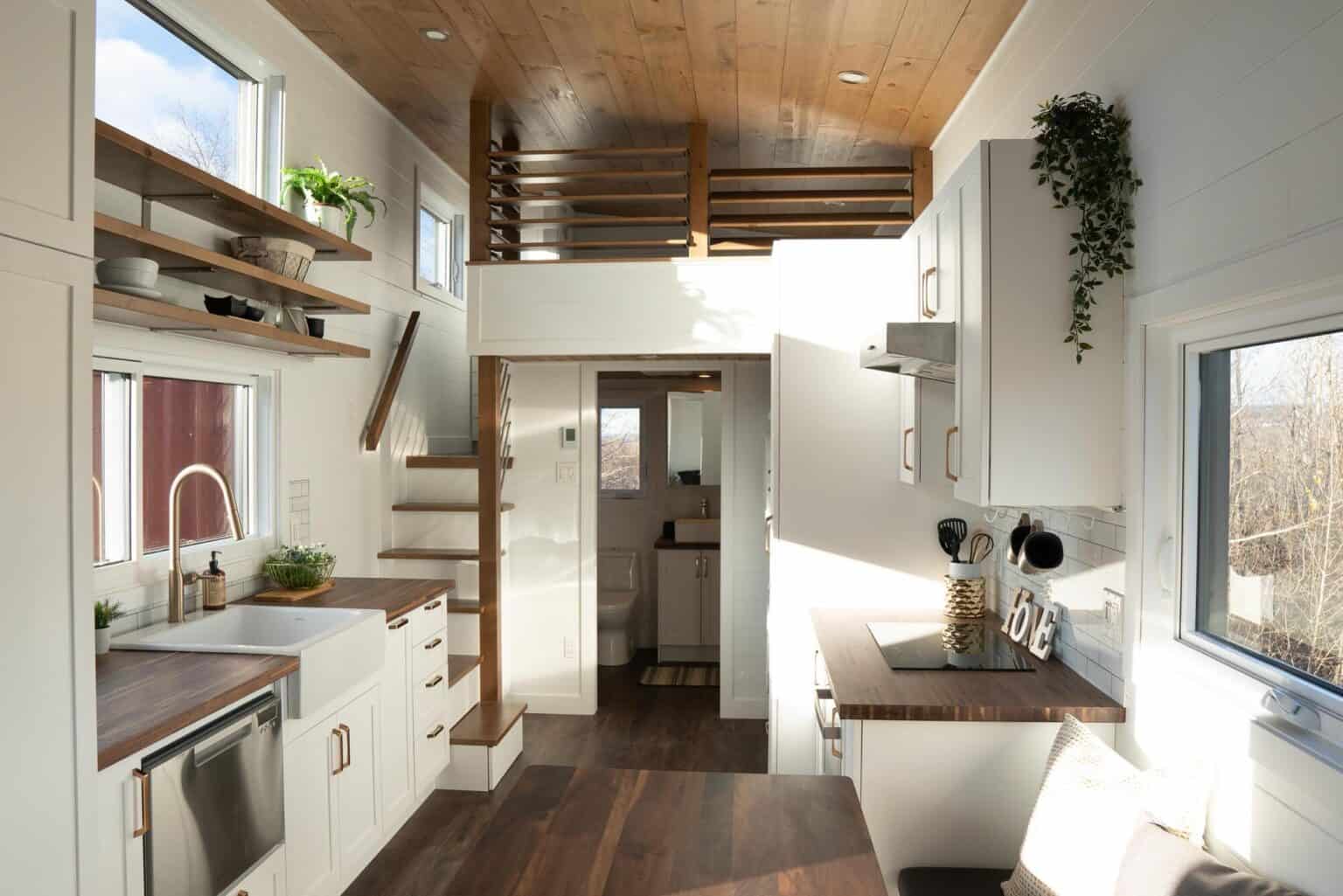
The first thing Harmony gets right is the main living space. Instead of trying to squeeze every function into separate micro-zones, the ground floor centers on a large shared area with a sofa, an electric fireplace, and space for a TV. That choice sounds simple, but it is the difference between a tiny house that feels like a hallway with furniture and one that can actually hold a family evening.
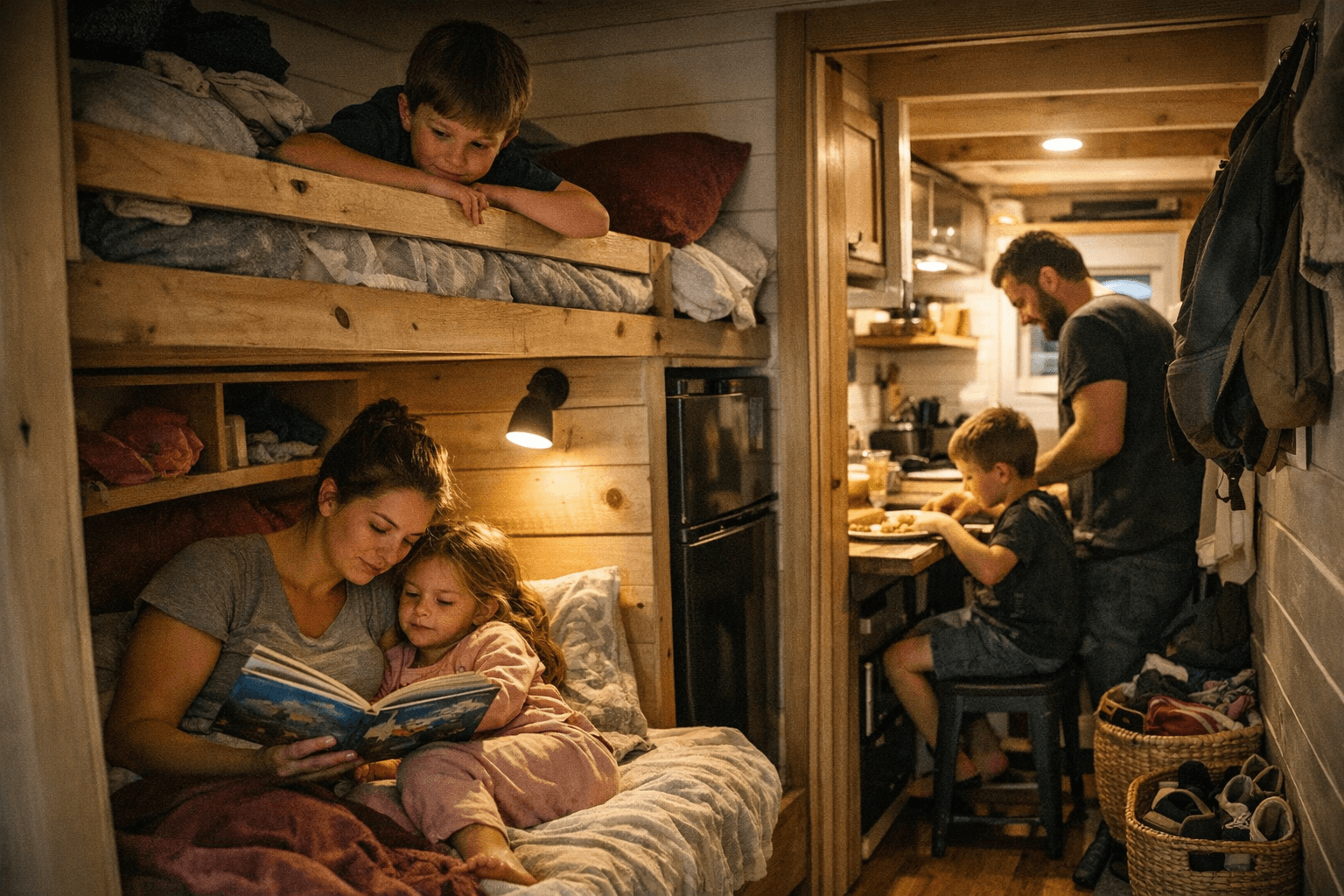
The bedroom plan is where the house really earns its name. There is a downstairs master bedroom with standing headroom and built-in storage, then two loft bedrooms above, each large enough for a double bed or two singles. The lofts also have sliding doors, which is a small detail with big consequences in a tiny home, because privacy is usually the first thing to disappear when square footage gets tight.
That bedroom arrangement makes Harmony especially interesting for family life. A tiny house with one bed and one loft can work as a retreat or an accessory dwelling, but three bedrooms in 423 square feet pushes the design into a different category. It asks whether the common areas can stay calm enough for daily living when the sleeping spaces are already doing so much of the spatial heavy lifting.
The kitchen is the real tell
The kitchen is where Harmony stops feeling like a vacation cabin and starts looking like a home built for repeated use. It includes a double sink, oven, four-burner cooktop, fridge/freezer, dishwasher, and a pull-out pantry, along with a lot of cabinetry. That is a serious appliance lineup for a tiny house, and it signals that the home is meant to handle regular meals, cleanup, and storage rather than just a long weekend.
For a family, that matters just as much as bedroom count. A tiny house can promise sleeping space on paper and still fail in the routines that fill a day, from breakfast cleanup to lunch prep to dinner dishes. Harmony’s kitchen suggests Teacup Tiny Homes understood that if the house is going to support children and adults under one roof, the cooking zone has to carry real household weight.
Bathroom and climate choices push it toward full-time living
The bathroom keeps that same full-living standard. Harmony includes a walk-in shower, vanity sink, and composting toilet, and it can even be fitted with a bathtub. That last option is especially telling, because tubs are one of the first fixtures to disappear in small homes, even though they can be important for family use, bath time, and day-to-day comfort.
Climate control also shows that this is meant to be lived in through more than one season. Harmony uses underfloor heating, ceiling fans, and forced air systems, a combination that points to year-round occupancy rather than fair-weather use. In a family tiny house, comfort is not a luxury detail. It is part of whether the home works as a real base for waking, cooking, cleaning, sleeping, and repeating the cycle again the next day.
What Harmony says about where tiny homes are headed
Harmony makes the strongest argument tiny-house design has made in a while for family-scale downsizing. It does not pretend that shrinking a home is painless, but it does show that the old tradeoff between tiny living and family function is becoming less absolute when designers prioritize storage, privacy, and usable common space from the beginning.
That is the real takeaway here. A three-bedroom tiny house only means something if the rooms do not crowd out the rest of life, and Harmony shows how carefully chosen details can keep that from happening. In this case, the bedroom count is not a gimmick. It is the starting point for a home that tries to make family life fit, without turning it into a compromise every time someone opens a door, cooks dinner, or tries to find a quiet corner.
This article was produced by Prism’s automated news system from verified source data, official records, and press releases, then run through automated quality and moderation checks before publishing. The system is built and supervised by the people who set the standards it runs under. Read our full AI policy.
Did this article answer your question?