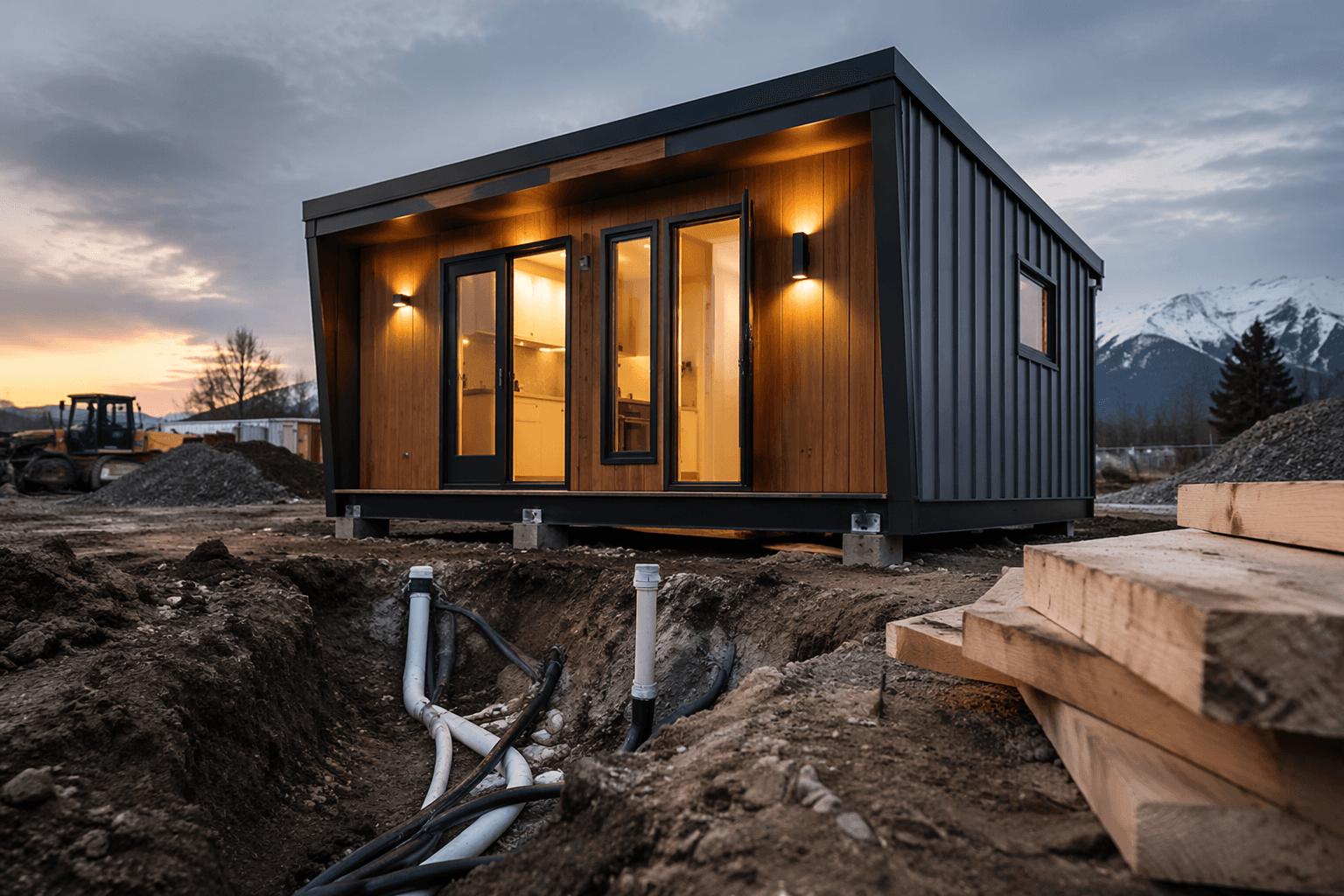
How to design a tiny house bathroom that feels spacious
A tiny house bath feels bigger when every fixture earns its footprint. The best choices come down to circulation, cleaning, storage, and visual calm.

A corner sink tucked into an awkward angle can keep more open floor area in the middle of a tiny-house bathroom. In compact living, the bath has to be planned with the same care as the kitchen or loft ladder, because oversized fixtures can choke circulation and make the whole house feel tighter. The layout has to account for scale, storage, and flow, then choose fixtures that do more than one job.
Start with the room’s actual job
The first decision is not style, it is use. A tiny bath has to handle daily routines without wasting inches, so every piece should justify its footprint. That means looking at how you move through the room, where the door swings, and whether one fixture blocks another when you are standing, turning, or reaching for storage.
This is where tiny-house bathrooms diverge from standard ones. A full-size vanity, a deep tub, or a bulky toilet can overwhelm the room fast, even if the plan looks fine on paper. Designing the bath from scratch around compact living leaves room for real movement.
Choose a sink that gives floor space back
Sink size is one of the biggest decisions in a tiny house bath because it affects both circulation and visual openness. A corner sink is a practical answer when the room has an awkward angle or a wall segment that would otherwise go unused. By tucking the basin into that dead space, you keep more open floor area in the middle of the room, which makes the bathroom easier to cross and less claustrophobic.
The other question is whether the sink needs to carry storage too. A vanity with built-in storage can replace a separate cabinet, which is a major advantage when there is nowhere to put a freestanding piece. That kind of multi-functionality consolidates daily essentials into one footprint.
Treat the shower as the room’s largest visual object
The shower usually dominates a tiny bathroom, so its footprint has to be chosen with care. If it is too large, it swallows the room. If it is too small, it can feel restrictive and awkward to use. The goal is to land on a shower that supports the way you live without taking over every sightline.
For some builds, a shower that doubles as a bathtub offers the best balance of flexibility and space efficiency. That kind of dual-purpose fixture makes sense in a tiny home because it replaces two separate features with one unified zone. It also keeps the bathroom from being defined by a single oversized box, which helps the room feel more open and less segmented.
Pick a toilet for both footprint and cleanup
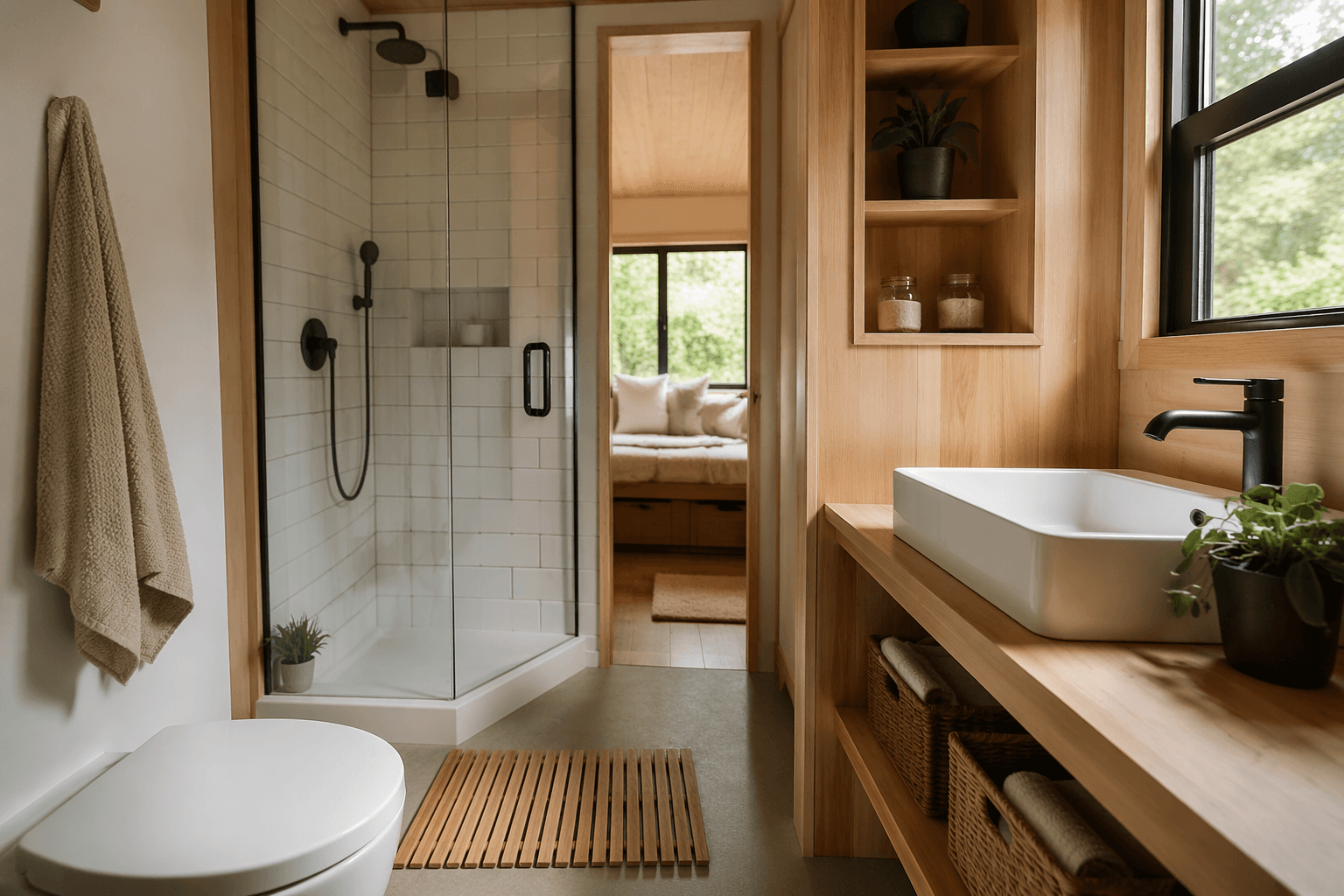
Toilet type matters more in a tiny house than it does in a conventional home because the fixture sits in the most constrained part of the floor plan. Compact toilets made for small bathrooms are specifically meant to solve that problem. Some wall-mounted models go a step further by lifting the bowl off the floor, which frees up visible floor space and makes cleaning easier underneath.
In a room this small, grime shows quickly and every edge is easy to reach, so a toilet that reduces floor clutter can noticeably lower maintenance effort. A wall-mounted option also supports the broader goal of making the bathroom feel lighter, since more of the floor remains visible.
Use finishes to keep the room visually quiet
Style consistency is not decoration here, it is spatial strategy. Because a tiny bathroom has so little visual room, mismatched fixtures and hardware can make it feel even smaller and more chaotic. Keeping the sink, shower trim, toilet, and hardware in the same visual language helps the eye move through the room without interruption.
That does not mean the bathroom has to be bland. It means the finishes should work together so the room reads as one coherent space rather than a collection of competing parts.
Build around storage instead of adding it later
Storage is what separates a bathroom that works from one that constantly feels in the way. In a tiny house, the best storage is built into the fixtures themselves, especially vanities that hide everyday items without asking for another cabinet. That keeps the room cleaner-looking and prevents toiletries, towels, and supplies from occupying precious open surfaces.
The broader lesson is that every storage decision should preserve usable space. A room that can hold what you need but still has clear floor area will always feel easier to live with than one packed with separate furniture pieces.
This article was produced by Prism’s automated news system from verified source data, official records, and press releases, then run through automated quality and moderation checks before publishing. The system is built and supervised by the people who set the standards it runs under. Read our full AI policy.
Did this article answer your question?