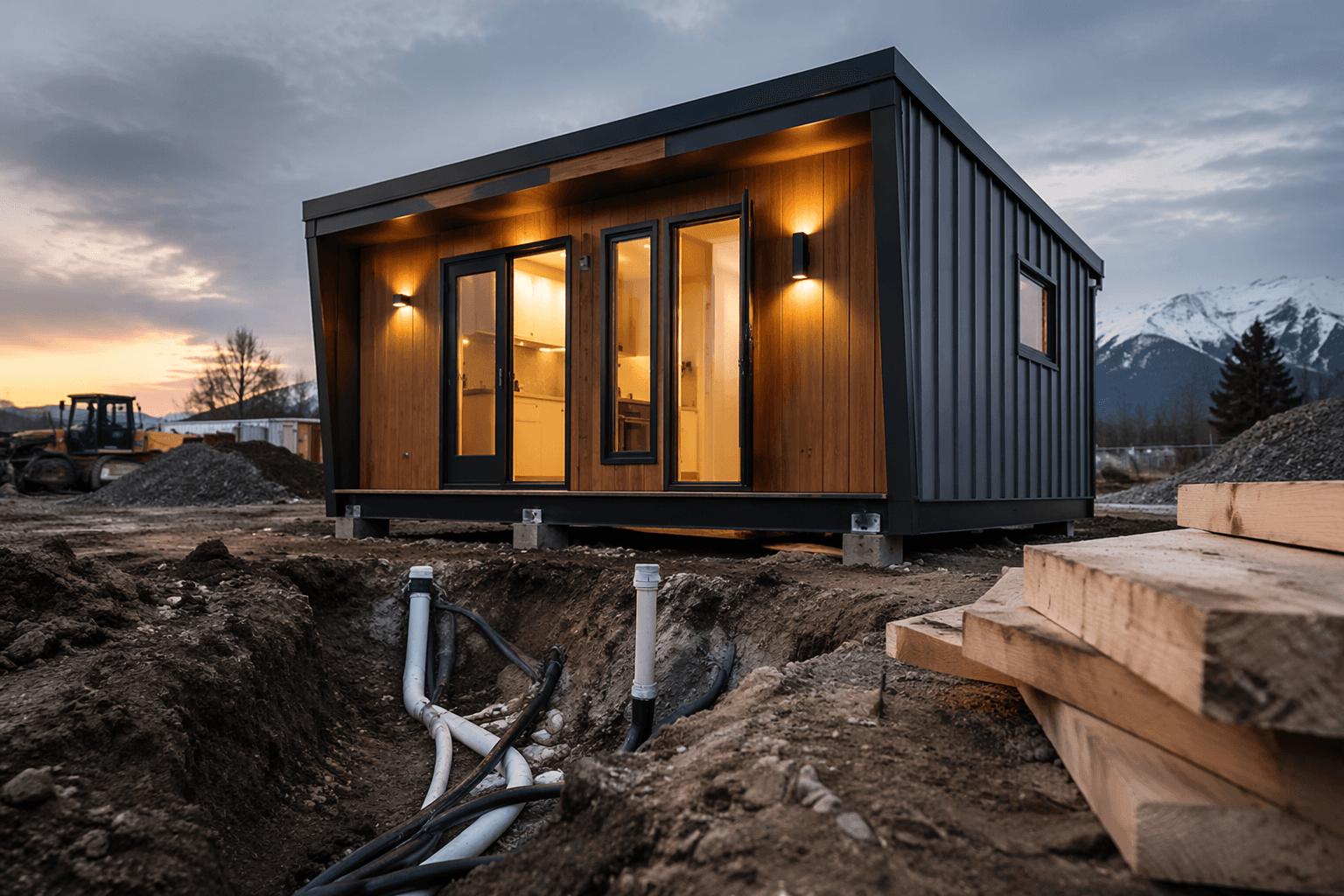
Leela tiny house uses two lofts to fit four in 288 square feet
Two lofts and a disciplined main floor let the Leela sleep four without crowding the living space. At 288 square feet, the real trick is what stays downstairs.
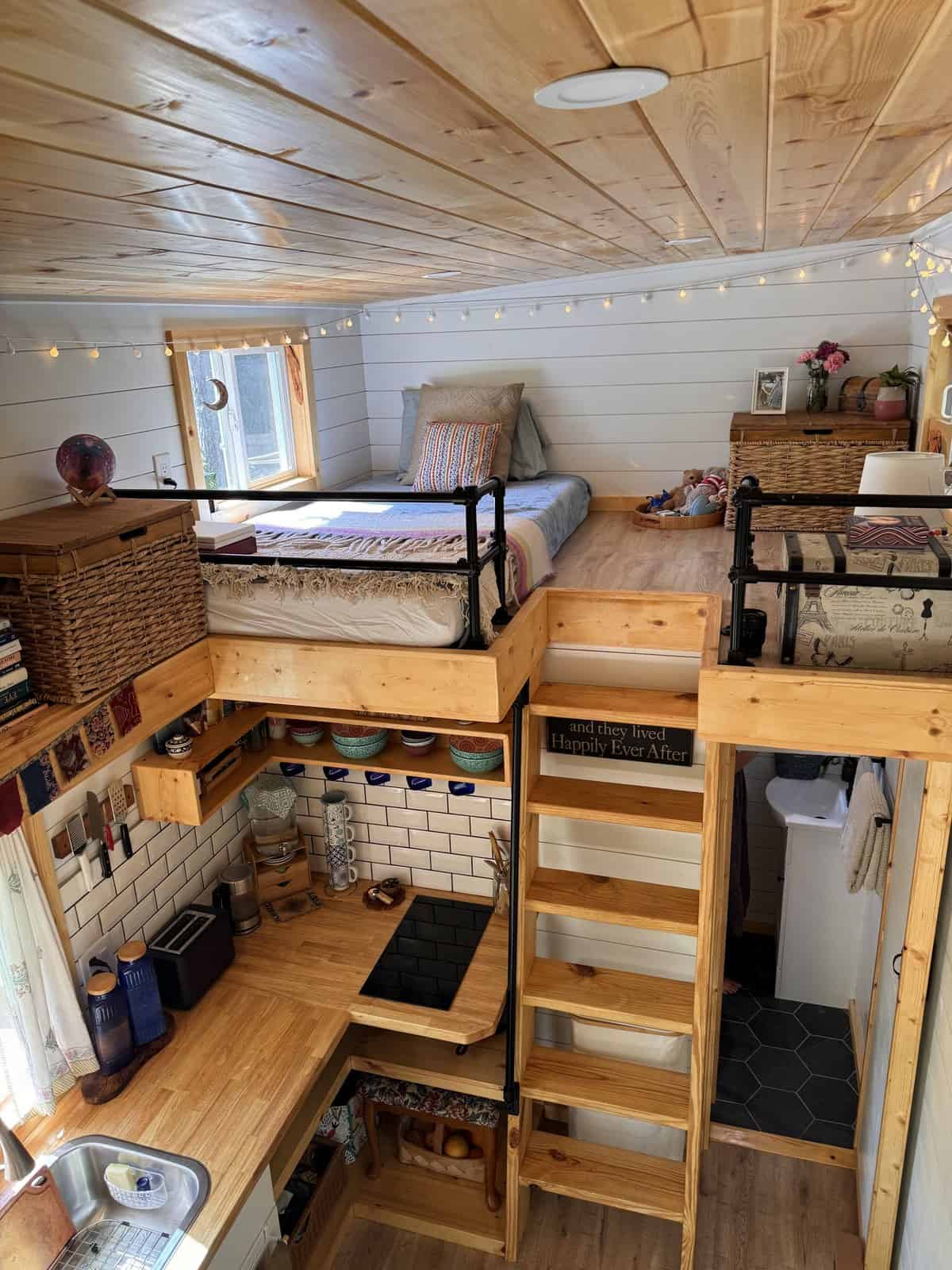
The Leela makes a 20-foot tiny house feel bigger by pushing the sleeping zone up and leaving the ground floor to do real work. Built by Simplify Further Tiny Homes near Lake Butler in North Central Florida, the 20 x 8-foot home on wheels uses two queen-sized lofts, one reached by open stairs and the other by ladder, to sleep four in 288 square feet. The lesson is plain: in a tiny house this size, livability comes from vertical-space discipline, not from squeezing in more furniture.
What the footprint actually gives you
The Leela’s numbers tell the story before the styling does. Simplify Further lists the home at 20 x 8 feet, 288 square feet total, and 13 feet 6 inches tall, with loft dimensions of 7 x 8 feet and 7 x 5 feet. That is enough room for two proper sleeping areas above and a main floor below that can stay open instead of being swallowed by beds.
The starting price is listed at $50,000, which places the model in the realm of a finished, move-ready tiny home rather than a stripped-down shell. For buyers comparing compact layouts, the important takeaway is not just the price tag, but what that price buys: two sleeping lofts, a full kitchen, a roomier bath, and storage that supports daily use rather than weekend-only occupancy.
Why the two-loft plan works
The Leela’s biggest design move is also its most practical one. Instead of relying on a single loft or a downstairs bedroom, it stacks two queen sleeping lofts and frees the main floor for circulation, cooking, and sitting. One loft is reached by open stairs, which makes regular use easier, while the second is accessed by ladder, a familiar tradeoff in tiny-house design where every square foot counts.
That arrangement matters because the home is meant to serve both short-term rental guests and long-term occupants. A layout that looks charming for a weekend stay has to work harder when it becomes someone’s everyday address, and the Leela answers that with separate sleeping zones and a ground floor that can remain functional throughout the day. In practical terms, the lofts do the heavy lifting, while the main level stays available for life below.
The main floor is where the livability lives
The kitchen is where the Leela stops feeling like a novelty and starts acting like a real home. Simplify Further fits in butcher block, a drop-in sink, a two-burner electric cooktop, open shelving, and a substantial stainless fridge, which gives the kitchen the basics for actual cooking and grocery storage instead of just quick reheating. That is a major difference in a home meant for longer stays.
The living area follows the same logic. A bench and fold-down desk let one room shift between eating, working, and reading without forcing extra furniture into the path of movement. The layout sequencing is simple but effective: sleep upstairs, cook and sit downstairs, and keep the central space open enough that the house does not feel like it is fighting itself.
Storage is not an accessory here
The under-stairs closet is one of the most important details in the entire build. Storage is usually where tiny houses either succeed quietly or fail fast, and Simplify Further specifically says the closet is intended to support long-term living. That makes it more than a leftover pocket under a stair run; it is part of the home’s daily usefulness.
The bathroom follows the same practical standard. The Leela includes a roomier bath with a shower, vanity, flush toilet, and storage, which gives the model a more settled feel than a bare-bones wet bath would. In a 288-square-foot house, that kind of bathroom choice changes how long the home can comfortably function without feeling improvised.
Style that softens the edges without wasting space
The Leela does not go minimalist for its own sake, and that is part of its appeal. The interior uses a bohemian look, string lights, a pine ceiling, and warm woods, giving the home a softer atmosphere than the stark, utility-first look that still dominates a lot of tiny-house interiors. The styling helps the home feel welcoming, but it is not the reason the plan works.
That distinction matters for buyers trying to separate genuine livability from clever staging. The warm finishes make the space pleasant, but the real design wins are structural: two lofts, a usable kitchen, a proper bath, and storage placed where it does not steal floor space. In other words, the decor makes the house feel inviting, while the layout makes it usable.
Why the builder’s setup matters
Simplify Further Tiny Homes says the Leela was designed with the builders’ creative freedom, and that custom approach shows in the finished plan. The company describes itself as a family-owned builder based in Lake Butler, Florida, and says it has built and delivered more than 100 tiny homes nationwide. It also says the Leela is certified by NOAH as an RV, a detail that matters in a category where mobility, code compliance, and placement rules can shape where a tiny house can actually go.
The company says its NOAH certification is tied to ANSI 119.5, fire safety, and electrical codes associated with park model RV standards. It also says it can deliver anywhere in the United States, which broadens the market well beyond North Central Florida. Add in its three Best in Show and Best Tiny Home wins at the Florida Tiny Home Festival, and the builder is clearly positioning the Leela as part of a larger, proven production line rather than a one-off showpiece.
The Leela’s best argument is right there in the structure: a 20-foot footprint can hold four people only if the sleeping, storage, and living zones are sequenced with care. The styling may catch the eye first, but the lofts, closet, bath, and kitchen are what keep the house from feeling like a clever stunt.
This article was produced by Prism’s automated news system from verified source data, official records, and press releases, then run through automated quality and moderation checks before publishing. The system is built and supervised by the people who set the standards it runs under. Read our full AI policy.
Did this article answer your question?