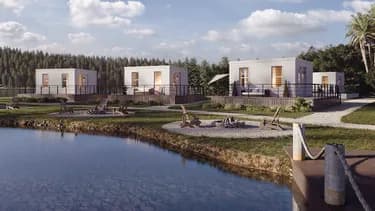
Marie tiny house uses Japandi warmth to feel bigger inside
Marie leans on spruce, light and smart storage to make 21 square meters feel calm, while a full kitchen and heat pump keep the tiny footprint practical.

Marie wins its biggest trick before you ever notice the footprint: spruce walls, pale wood, and a Japandi calm that makes 21 square meters feel settled instead of squeezed. Tiny House BAR-TOF has packed the build with storage, multipurpose furniture, and all-season systems, so the mood stays cozy without turning the plan into clutter.
Japandi warmth that does real work
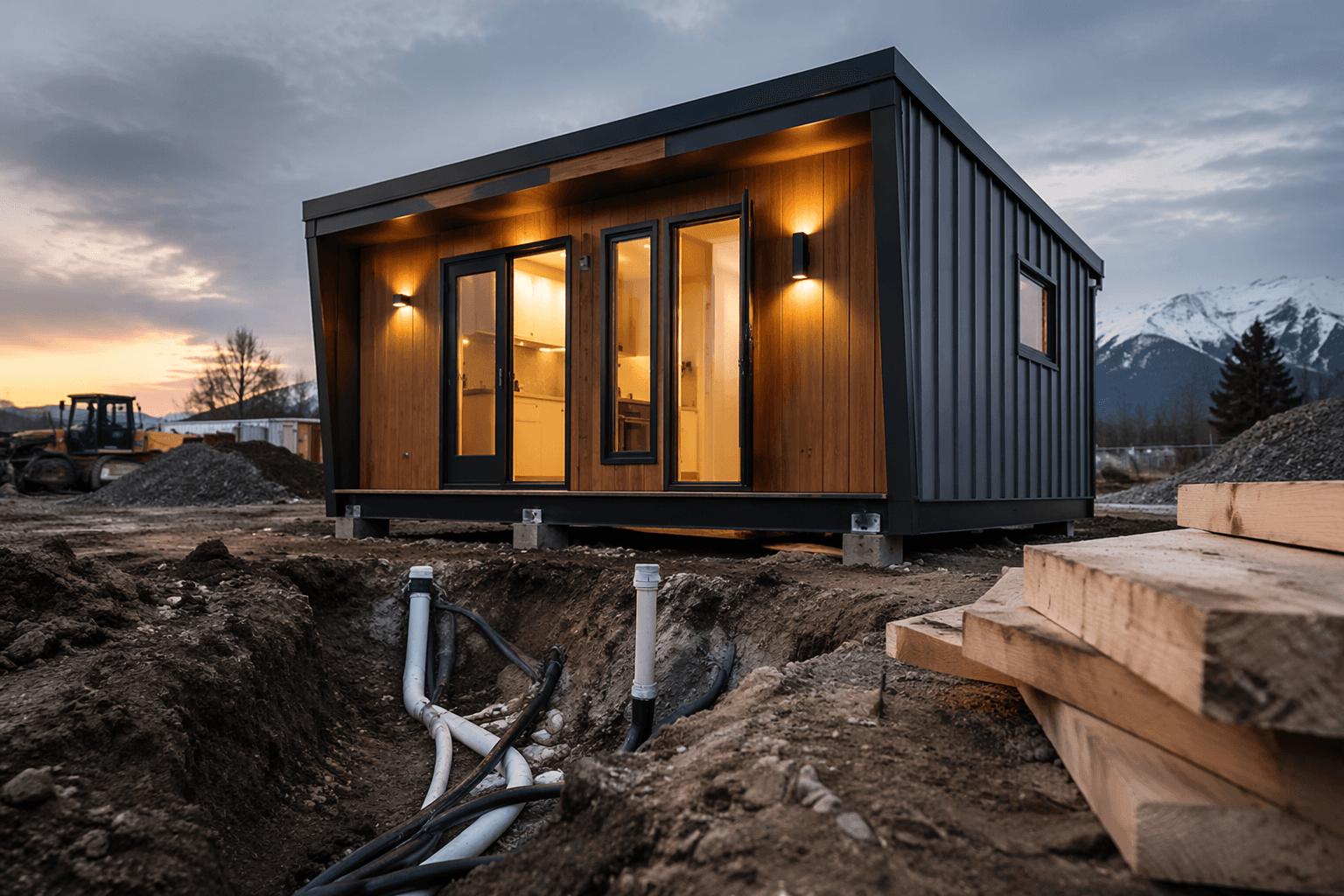
The Marie’s interior is built around a spruce-clad shell and a Japandi-inspired palette, which gives the house a soft, wood-forward character instead of a glossy, high-contrast one. That matters in a tiny house, because the visual field is doing as much work as the floor plan. Pale wood surfaces bounce light through the open plan, while the darker standing-seam exterior details keep the outside from feeling flat or flimsy.
That balance is what makes the house read as calm rather than cramped. The design leans into texture, grain, and clean lines, so the eye keeps moving and the room feels less boxed in. In a small build like this, that is not decoration for its own sake, it is part of the livability strategy.
A footprint that stays open
Marie sits on a double-axle trailer and measures 6.60 meters long, 2.55 meters wide, and 3.95 meters high, with an approximate weight of 3,500 kilograms and a trailer rated to 3.5 tonnes. That is a tight envelope, and the layout has to earn every inch. The house is designed to keep circulation simple, with a storage-efficient plan that avoids the feel of a hallway lined with compromises.
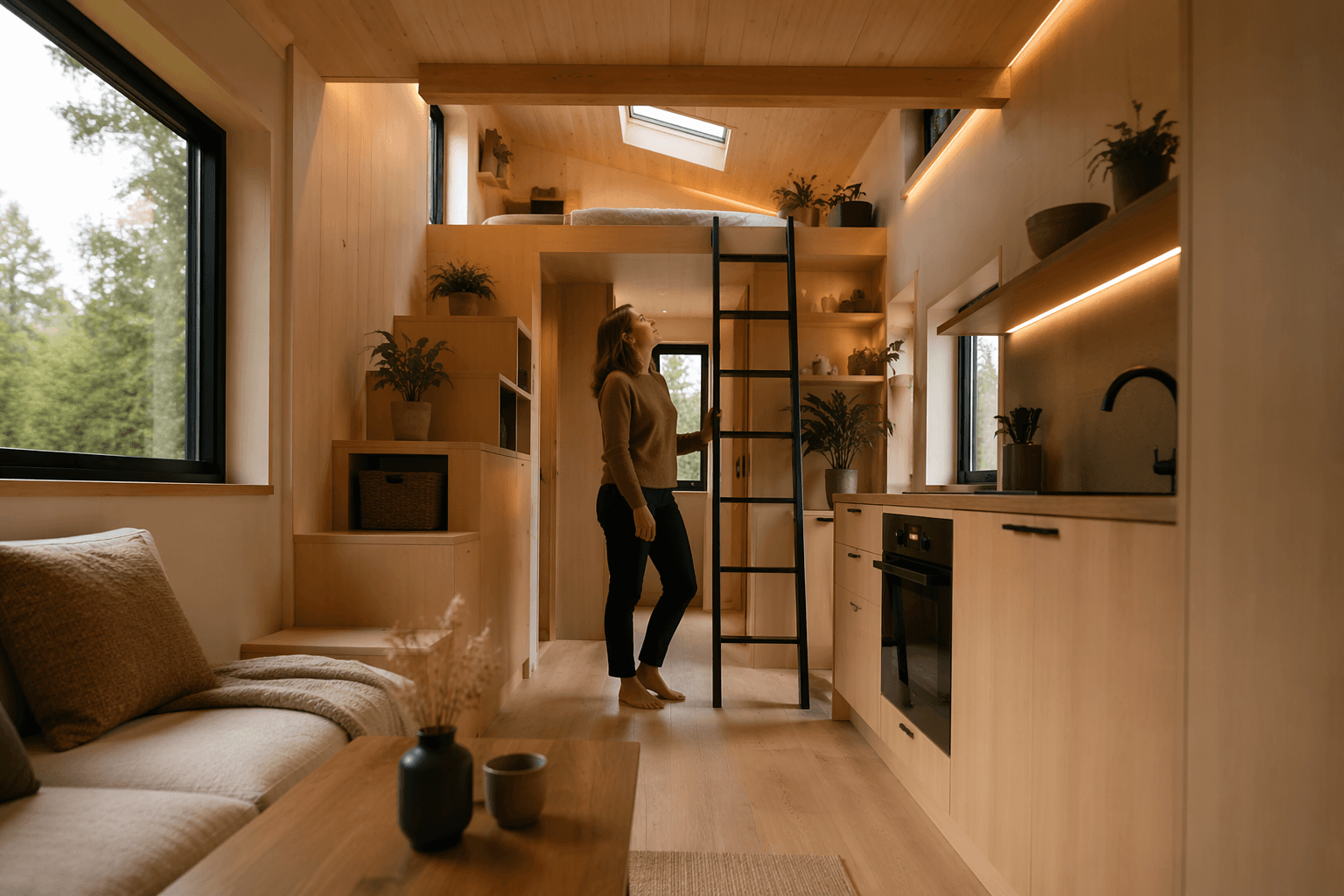
The living room is the clearest example of that thinking. It holds a sofa and a small table, but the arrangement stays tidy and flexible instead of overfurnished, leaving room to move through the space without a constant shuffle of elbows and knees. The result is a tiny house that behaves more like a small apartment, where each zone can shift function without needing to be rebuilt.
Kitchen, bath, and sleep zones that pull their weight
The kitchen is compact, but it is not symbolic. Tiny House BAR-TOF equips it with custom furniture, soft-close cabinetry, a fridge with freezer, a two-ring electric hob, an oven with microwave function, a cooker hood, and protected glass. An optional dishwasher is also available, which tells you the design is aimed at real daily use rather than a weekend novelty.
The bathroom follows the same logic. It includes a large shower, washbasin, standard toilet, and a 30-liter boiler, which keeps the essentials in place without crowding the rest of the floor plan. The sleeping area is set up for two people, with storage cabinets, while the official specification sheet broadens the use case to 2 to 4 sleepers, helped by the sofa with sleeping function and bedding container in the living room.
What makes it feel bigger than the measurements
The Marie does not create space by pretending it has more of it. It uses pale wood, open sightlines, and built-in storage to calm the room, then relies on a few well-chosen furniture pieces to keep the plan from turning chaotic. That is the real style-versus-function lesson here: warmth is carrying utility, not competing with it.
Several small decisions push that effect further. LED lighting brightens the interior without adding visual bulk, double glazing helps the house feel more enclosed and comfortable, and the attic storage area gives the build a place to hide the things that usually make tiny homes look crowded. An optional awning extends living space outside, which is one of the simplest ways to make a compact home feel less like a box.
Built to read as an all-season home
BAR-TOF’s specification sheet makes clear that this is meant to function beyond fair-weather use. The Marie uses PIR panel insulation in the roof, walls, and floor, and includes floor heating plus a 1.8 kW air-to-air heat pump. Those choices turn the house into a year-round residence rather than a display piece, especially when paired with the company’s emphasis on low-maintenance construction and high-quality finishing.
The company also says the Marie can be connected in off-grid-friendly ways, and that it offers a 2-year guarantee, German standards options, and year-round insulation across its builds. That combination matters because a tiny house only feels bigger when it feels dependable. Comfort in a small shell depends on systems that disappear into the background, and the Marie’s heating, insulation, and kitchen package all work toward that goal.
The maker behind the build
Tiny House BAR-TOF describes itself as a family manufactory with more than 15 years of experience in residential and commercial construction, and says it has earned several construction awards. It also says it has delivered tiny houses across Europe, including Germany, Austria, Switzerland, Hungary, and the Czech Republic, and it shows its products at trade fairs in Poland and abroad, including Karlsruhe, Germany. That history helps explain why the Marie feels so resolved: the house is presented not as an experiment, but as part of an established building practice.
The Marie name has also been used before on a different BAR-TOF concept based on the Loft Ruby Edition, which slept four to six people. That earlier version shows how the company has treated the name as a flexible platform rather than a single fixed floor plan, but the current Marie leans harder into the quiet, woodland mood and the tighter 21-square-meter footprint. It is the smaller, calmer expression of the same idea, and that is exactly why it reads as larger inside.
What to borrow from the Marie
If the goal is to make a tiny footprint feel livable, the Marie offers a clear playbook:
- Use one dominant natural material, like spruce, to unify the interior.
- Keep the palette pale so light travels farther through the room.
- Favor multipurpose furniture, such as a sofa with sleeping function and a table that does not overclaim space.
- Build storage into the plan early, with cabinets, bedding storage, and attic space instead of add-on bins.
- Treat systems as design, not afterthoughts, with proper insulation, floor heating, and a compact heat pump.
- Choose appliances that cover more than one job, like an oven with microwave function.
The Marie’s appeal comes from that exact blend of mood and mechanics. It feels warm because the wood is doing visual work, and it feels bigger because every cabinet, appliance, and light surface has been placed to keep the tiny house calm, usable, and complete.
This article was produced by Prism’s automated news system from verified source data, official records, and press releases, then run through automated quality and moderation checks before publishing. The system is built and supervised by the people who set the standards it runs under. Read our full AI policy.
Did this article answer your question?