Mini Domy’s extra-wide tiny house sleeps four with apartment-like comfort
Mini Domy’s LENA XXL sleeps four and leans apartment-like, but its extra width is what really changes the towing and siting equation.

Mini Domy’s LENA XXL is the kind of tiny house that makes the category feel elastic. It still reads as a compact, towable home, but the extra width gives it the feel of a small apartment rather than a stripped-down cabin, and that difference changes everything from daily comfort to where the unit can go. For buyers, the real question is not just how many square feet fit inside, but how far the design can push before it starts behaving like a different kind of home.
A tiny house that feels built around the width
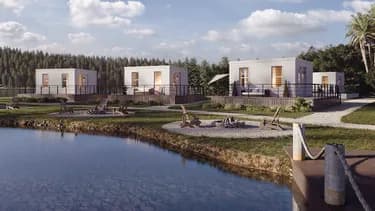
The Mini House 300 x 1100, which Mini Domy identifies as the LENA XXL, is listed with dimensions of 1100 x 300 x 399. Whatever side of the tiny-house spectrum you prefer, the proportions are the point: the wider footprint allows for a layout that avoids the cramped, ladder-heavy feel common in many road-legal builds. Instead of treating every inch as an emergency, Mini Domy uses that width to create a more settled interior that can handle real routines.
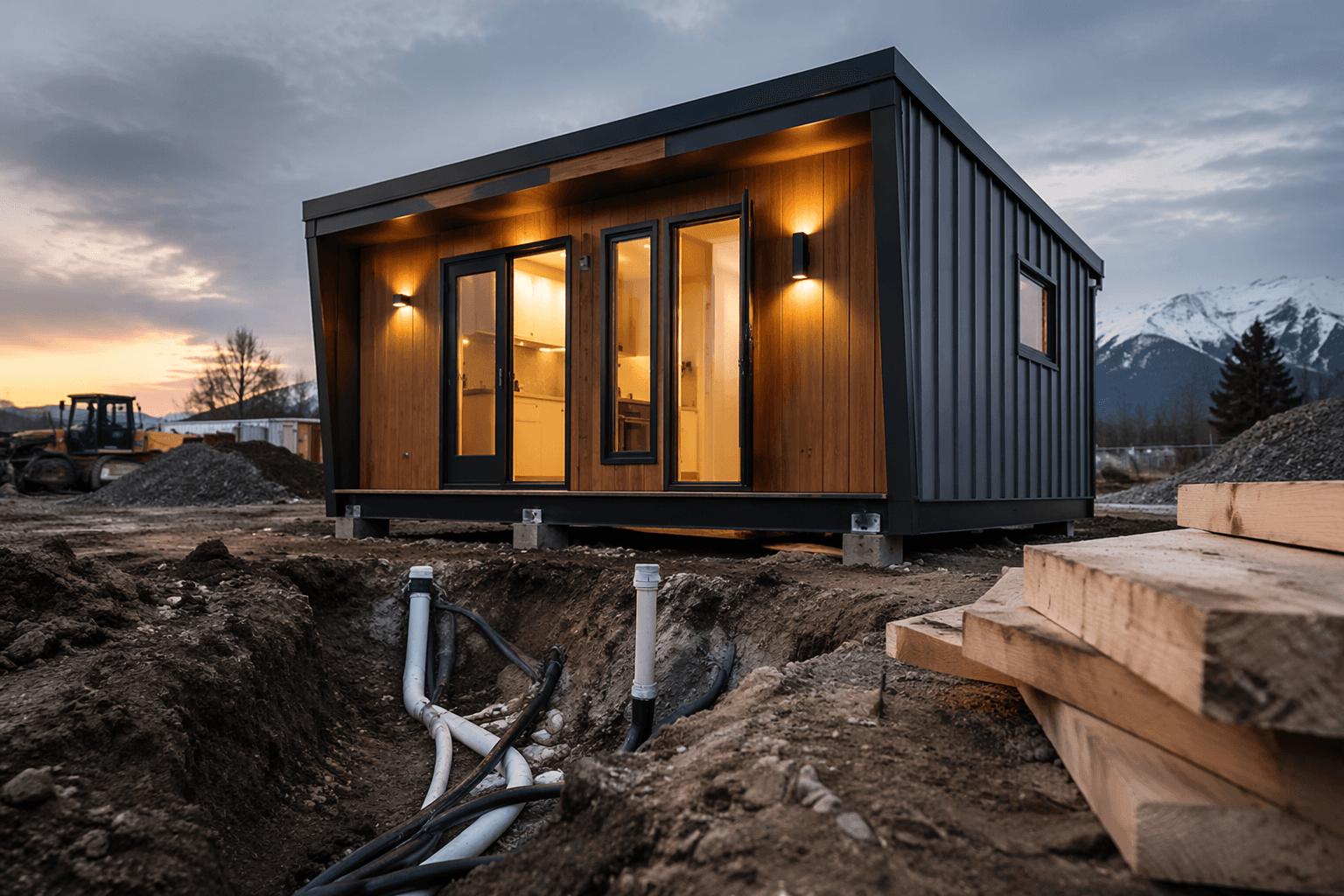
The structure backs that up. Mini Domy says the home uses a steel frame and thermal pine exterior cladding, along with PIR insulation with a lambda value of 0.022 and 8 cm thickness. Add double-glazed plastic windows, underfloor heating, and SMART air-conditioning, and the package starts to look less like a weekend trailer and more like a small residence designed for regular use in a range of climates.
The interior is arranged like a compact apartment
What stands out most is how deliberately the interior is organized. The home sleeps four across two bedrooms, and those bedrooms are connected by a walkway, which is a clever move in a space where circulation usually gets sacrificed first. Each sleeping area also has a lowered standing platform, so dressing and moving around does not require the hunched posture that often defines tiny-house lofts.
The staircase is another strong signal that this build is thinking like a designer, not just a fabricator. Instead of being a simple climb to a loft, it pulls out to reveal hidden storage, which turns a circulation element into part of the storage system. That matters in a compact home because storage is usually the first place tiny-house compromises show up. Here, it is built into the architecture.
The finishes reinforce the same idea. Mini Domy uses Siberian spruce, oak flooring, and bathroom wall panels with a concrete imitation finish, all of which push the interior toward a polished, residential look rather than a camping aesthetic. In the bathroom, the setup is complete but compact: there is a shower, a sink, and a toilet, with a dry toilet option or a standard toilet option depending on the configuration.
A kitchen meant for everyday living
The kitchen is where the house makes its intentions clearest. Mini Domy lists an induction cooktop, a Beko oven, a Samsung refrigerator, and a pull-out 1.5-meter dining table, plus a washer and a Wi-Fi router. A 32-inch internet-connected TV is also part of the package, which makes the home feel geared toward everyday occupancy rather than occasional use.
That combination matters because it signals a change in how tiny houses are being sold and lived in. The old stereotype is that tiny living means giving up kitchen function, indoor storage, and a comfortable place to sit and eat. The LENA XXL pushes in the opposite direction, offering appliances and furnishings that support actual routines, from cooking full meals to doing laundry without heading off-site.
Why the extra width changes the rules
The LENA XXL sits right on the edge of a bigger category question: when does a tiny house start acting more like a small mobile home or park model? That distinction matters because width affects towing, permits, placement, and the kind of site a buyer can realistically use. In the United States, most states require a special wide-load permit if a trailer exceeds 8.5 feet wide, which makes extra-width builds a different logistical proposition from standard narrow tiny houses.
The RV Industry Association defines a Park Model RV as a single living unit primarily designed and completed on a single chassis, mounted on wheels, for temporary living quarters for recreational, camping, or seasonal use. It also says park model RVs have a gross trailer area not exceeding 400 square feet in setup mode, or a transport width greater than 8.5 feet. That framework shows why the line matters: once a build grows wider, it can change not just how it feels inside, but how it is classified, moved, and legally placed.
What this says about tiny-house demand
Mini Domy’s design is part of a broader shift in the tiny-house world. Buyers still want smaller footprints, but many no longer want to live like campers, and builders are answering with wider chassis, more conventional sleeping arrangements, and finishes that feel closer to a small apartment than a minimalist hut. New Atlas has been highlighting a run of extra-wide tiny houses, which suggests this is becoming a visible design direction rather than a one-off experiment.
That is what makes the LENA XXL interesting beyond its feature list. It does not just squeeze more into less. It asks a more useful question for the market: how much comfort can a tiny house carry before its width changes the rules of towing, siting, and regulation? In that sense, the answer is not only found in the floor plan, but in the moment the home stops feeling like a compromise and starts feeling like a different class of compact living altogether.
This article was produced by Prism’s automated news system from verified source data, official records, and press releases, then run through automated quality and moderation checks before publishing. The system is built and supervised by the people who set the standards it runs under. Read our full AI policy.
Did this article answer your question?