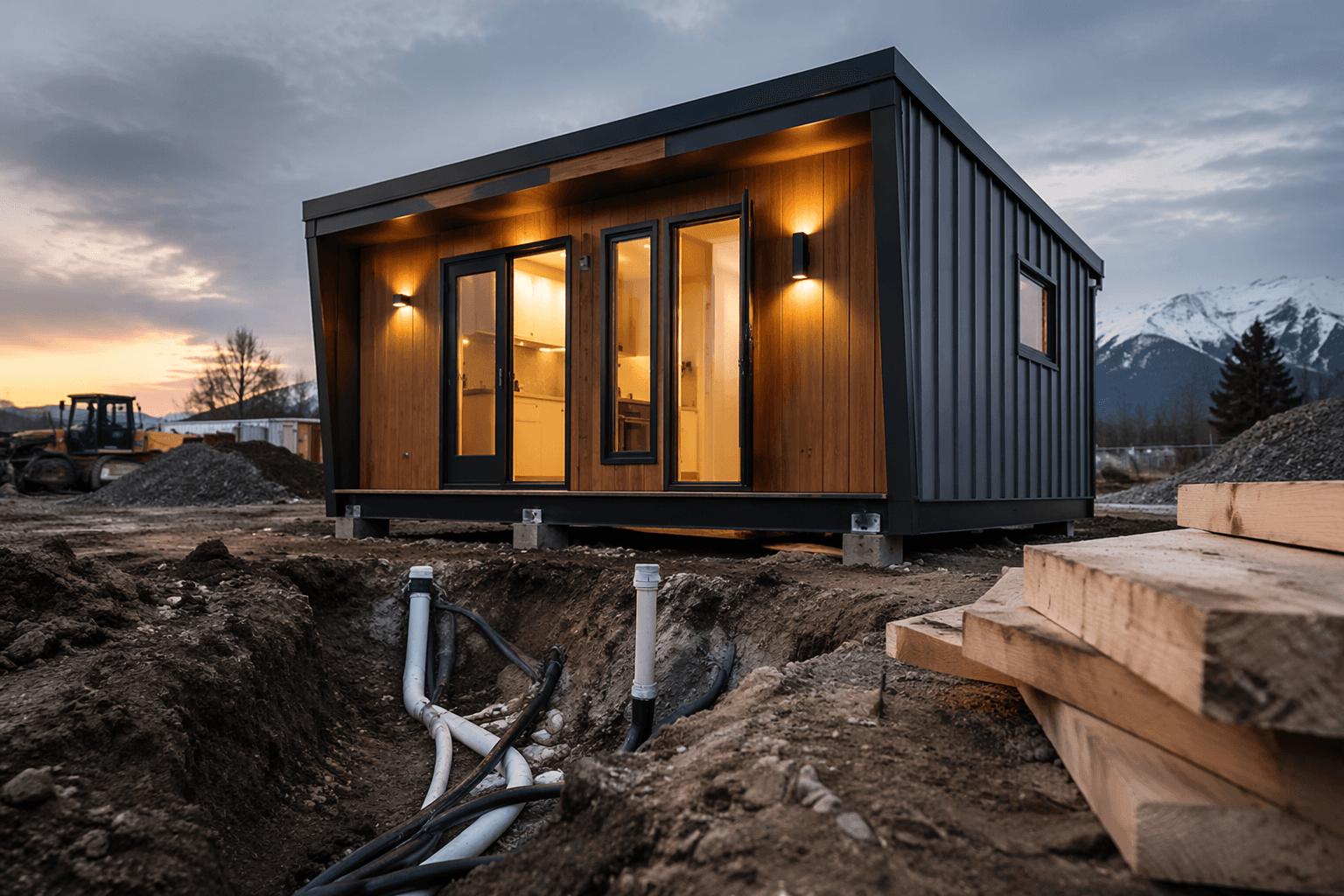
MIT prize goes to reusable microhomes for disaster housing
Uplift Microhome’s 60-square-foot prototype was built in 50 days for about $21,000, then won MIT’s top prize for a disaster-housing model meant to move fast and be reused.
Uplift Microhome is betting that disaster housing should arrive like a tool, not a stopgap. The startup’s prototype is a 60-square-foot microhome built in 50 days for about $21,000, and it is designed to be fully livable, off-grid, forklift-deployable and utility-independent, with its own batteries and water reservoir so it can be dropped into a disaster zone and used again after the first recovery phase ends.
That pitch carried Uplift to the top of MIT’s 2026 $100K Entrepreneurship Competition, where the company was named grand-prize winner after the final event on May 12 in Kresge Auditorium in Cambridge, Massachusetts. MIT said more than 80 applications entered the competition this year, 16 teams advanced to the semifinals and seven finalists pitched onstage, each getting five minutes before judge questions. The competition’s managing director, Celine Christory, has framed the program as a year-long process that starts with a December pitch event, moves through an Accelerate stage in March and ends at Launch, a structure that made Uplift’s win look less like a one-night surprise and more like a product that survived a long technical filter.

The people behind the company are Charlie Nitschelm and Trevor O’Leary. Nitschelm, who is in MIT’s Leaders for Global Operations program, said FEMA-style single-use housing can take an average of four months to deploy after a disaster, while the need for shelter often lasts much longer than the immediate emergency window. That gap is exactly where Uplift is trying to position itself: not as a one-off portable cabin, but as repeatable infrastructure for displacement, recovery and reuse.
The idea lands in a housing crisis that is already measured in the millions. The U.S. Census Bureau estimated nearly 2.5 million Americans had to leave their homes because of disasters in 2023, and earlier Census-based reporting put the figure at 3.4 million in 2022. The U.S. Government Accountability Office has said FEMA’s Individuals and Households Program is generally limited to 18 months after a disaster declaration, and that FEMA delivered rental assistance to about 746,000 households and direct housing assistance to about 5,400 households after the 2017 and 2018 hurricanes, much of it through transportable temporary housing units.

Uplift had already taken first place in the March MIT 100K Venture Competition, beating 95 teams from across the MIT ecosystem, and the company also drew attention at the Governor’s Hurricane Conference in West Palm Beach, Florida. For tiny-house builders watching the disaster market, the interesting part is not just that the home is small. It is that Uplift is treating durability, transport and repeat setup as the real product, which is exactly the kind of logic that could make microhomes useful long after the award season ends.
This article was produced by Prism’s automated news system from verified source data, official records, and press releases, then run through automated quality and moderation checks before publishing. The system is built and supervised by the people who set the standards it runs under. Read our full AI policy.
Did this article answer your question?