Mysa 400 turns a tiny house into a spacious, full-time home
Mysa 400 keeps tiny-house scale at 397 square feet, but its 14-foot width, two bedrooms, and full kitchen push it into full-time cabin territory.
A tiny house with apartment energy
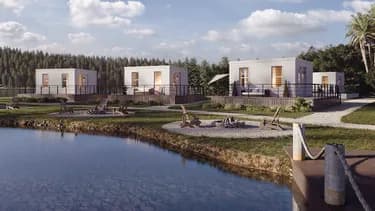
At 397 square feet, the Mysa 400 does something most tiny homes do not: it turns a narrow, towable idea into a roomier, more permanent-feeling home. The 14-foot-by-32-foot footprint, combined with two sleeping spaces, a real kitchen, and a full bathroom, makes this Irontown Modular build feel less like a trailer you can move on a whim and more like a compact cabin or park model designed for everyday life.
That tension is exactly what makes the Mysa 400 interesting. It keeps tiny-house scale, but it gives up the easy mobility that defines so much of the movement. In exchange, it offers a layout that looks built for full-time living instead of weekend use, and that shift changes almost everything about how the home works.
What the extra width changes
The biggest story here is the width. At 32 feet long, the Mysa 400 is not especially unusual in tiny-house terms. At 14 feet wide, though, it breaks away from the standard trailer profile and creates a much more open interior. That extra width is what gives the home its apartment-like feel, with more usable floor space and less of the hallway effect common in narrower units.
Inside, that wider shell pays off immediately. The living room is large enough for a sofa, chair, storage, an entertainment center, and a mini-split AC unit. That is a meaningful difference from the typical tiny-house living area, where one piece of furniture often defines the whole room. Here, the layout reads like an actual living room, not a transition zone.
The broader floor plan also supports a more natural separation between spaces. Instead of forcing every function into a single compact box, the Mysa 400 can hold distinct zones for sleeping, cooking, bathing, and relaxing without making the home feel cramped.
Built for full-time living, not just occasional use
New Atlas frames the Mysa 400 as a roomier version of the Mysa concept, and the full-time living angle is central to that pitch. Most of the 397 square feet sits on the ground floor, which is a practical advantage for everyday use. It means the primary living spaces are easier to access and more comfortable to move through than a design that relies heavily on lofts.
That shift matters in real life. A home like this is easier to furnish, easier to clean, and easier to live in day after day. The ground-floor bedroom has standing headroom and built-in wardrobes, which pushes it further toward conventional-home comfort. Above that, a loft bedroom accessed by a fixed ladder adds flexibility without becoming the only sleeping option.
This is where the boundary question gets real. The Mysa 400 still belongs to the tiny-house world by size, but its livability makes it feel closer to a compact modular cabin or ADU. If mobility is the heart of a tiny house, this model is making a clear trade: it asks you to give up the trailer-first identity in return for easier daily life.
A non-towable tiny house changes the category
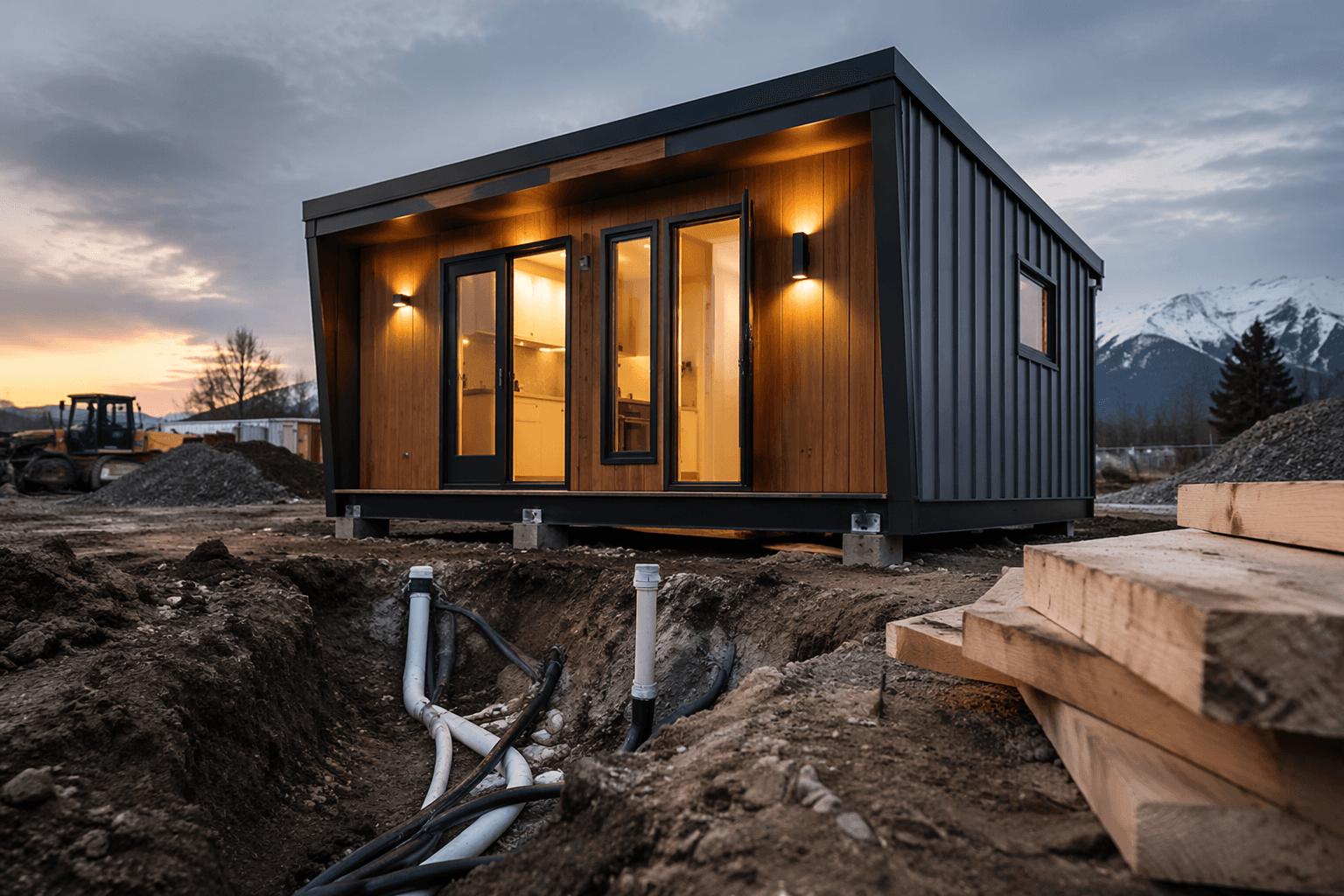
The Mysa 400 is non-towable and must be delivered by truck or crane. That instantly places it in a different lane from the classic tiny house on wheels, where owners can relocate with a vehicle and a tow rig. This is not a unit built around frequent road trips or quick repositioning from one lot to another.
That delivery method also says something about how Irontown Modular is positioning the model. The Mysa line was already moving in this direction, and earlier Mysa 200 coverage established the brand’s fixed-installation approach with truck-and-crane delivery. The Mysa 400 continues that logic rather than reversing it. In practice, that means site planning matters more than highway readiness.
For anyone comparing housing types, this is the key point: the Mysa 400 gives up placement flexibility in exchange for a more stable, more house-like presence. Once set, it behaves less like a towable unit and more like a small permanent structure.
The kitchen, bath, and bedrooms make the case
The kitchen is one of the strongest signs that this home is meant for daily use. It includes a breakfast bar that seats four, an induction cooktop, a microwave, a sink, and a fridge/freezer. That is enough equipment for real meal prep, not just reheating or light vacation cooking.
The bathroom follows the same logic. A glass-enclosed shower, vanity sink, and flushing toilet give the Mysa 400 a level of finish that pushes it closer to a conventional home than a stripped-down tiny shell. Paired with the sleeping arrangements, the bathroom helps the house function as a true full-time residence.
The two-bedroom setup matters too. One downstairs bedroom with standing headroom is a strong practical anchor, while the loft adds a second sleeping space without forcing the entire household into vertical living. For a compact home, that combination is unusually flexible and makes the floor plan feel more mature than the average tiny-house layout.
Materials, light, and the cabin look
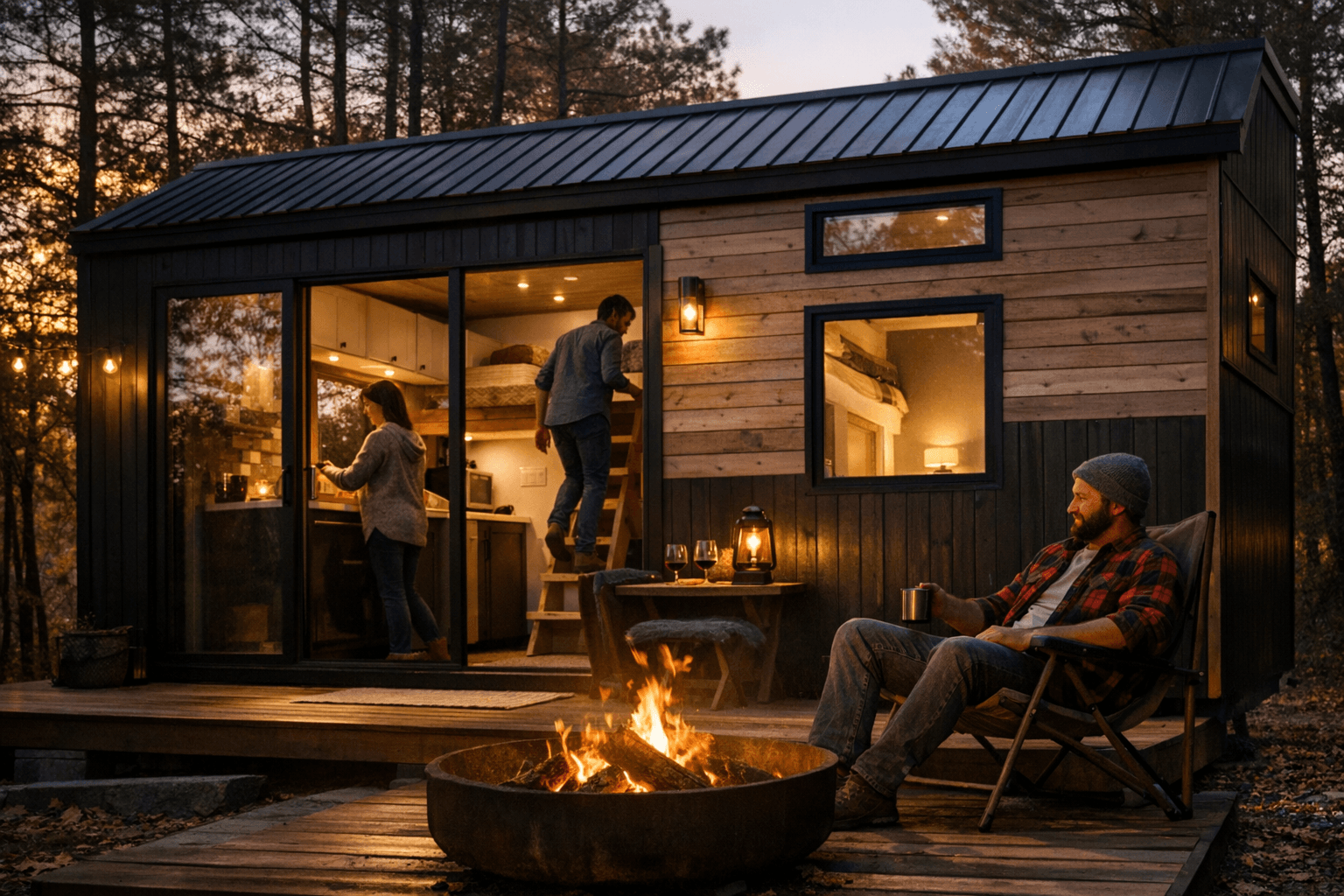
The exterior mixes metal and wood, which helps the Mysa 400 bridge modern prefab styling with a warmer, more cabin-like feel. Trifold doors and a porch open the home to the outside, while numerous windows bring in plenty of daylight. That combination softens the compact footprint and makes the place feel larger than its square footage suggests.
Irontown Modular also offers material and finish options, including rustic and modern finishes. That flexibility helps explain the model’s broad appeal. A rustic package leans into the cabin identity, while a modern finish pushes the home toward a cleaner, more urban ADU look.
The branding fits the concept too. Mysa is the Swedish word for cozy, and that name works because the house is trying to be both snug and spacious. It is cozy in size, but not in the cramped sense. The design tries to make compact living feel comfortable rather than compromising.
Where the Mysa 400 sits in the market
The starting price of $125,000 places the Mysa 400 in a more upscale segment of the tiny-house and park-model market. That price starts to make sense once you factor in the larger footprint, the extra bedroom, the more residential layout, and the fixed-installation nature of the build.
The contrast with the Mysa 200 is sharp. That smaller model starts at $50,700, which shows how much the larger footprint changes the cost structure. The Mysa 400 is not simply a bigger version of the same idea at a small premium. It is a different housing proposition, with a far more developed interior and a more permanent identity.
The comparison with Irontown Modular’s Cabana 400 reinforces that point. Both models are listed at 397 square feet, which suggests the company is building a broader cabin-style and ADU-oriented lineup rather than leaning on one signature tiny house. The Mysa 400 fits into that larger strategy as a polished, livable option for people who want small-house scale without the compromises of a narrow trailer build.
The bottom line
The Mysa 400 keeps the tiny-house mindset alive, but only up to a point. Its size, name, and market placement connect it to the movement, yet its 14-foot width, non-towable delivery, and full-time layout make it read more like a compact modular cabin than a classic mobile tiny home. That is not a weakness. It is the whole point.
For anyone deciding where the line sits between tiny house and small permanent home, the Mysa 400 makes the answer plain: once comfort, width, and site-installed living start taking priority over towing, the category begins to change.
This article was produced by Prism’s automated news system from verified source data, official records, and press releases, then run through automated quality and moderation checks before publishing. The system is built and supervised by the people who set the standards it runs under. Read our full AI policy.
Did this article answer your question?