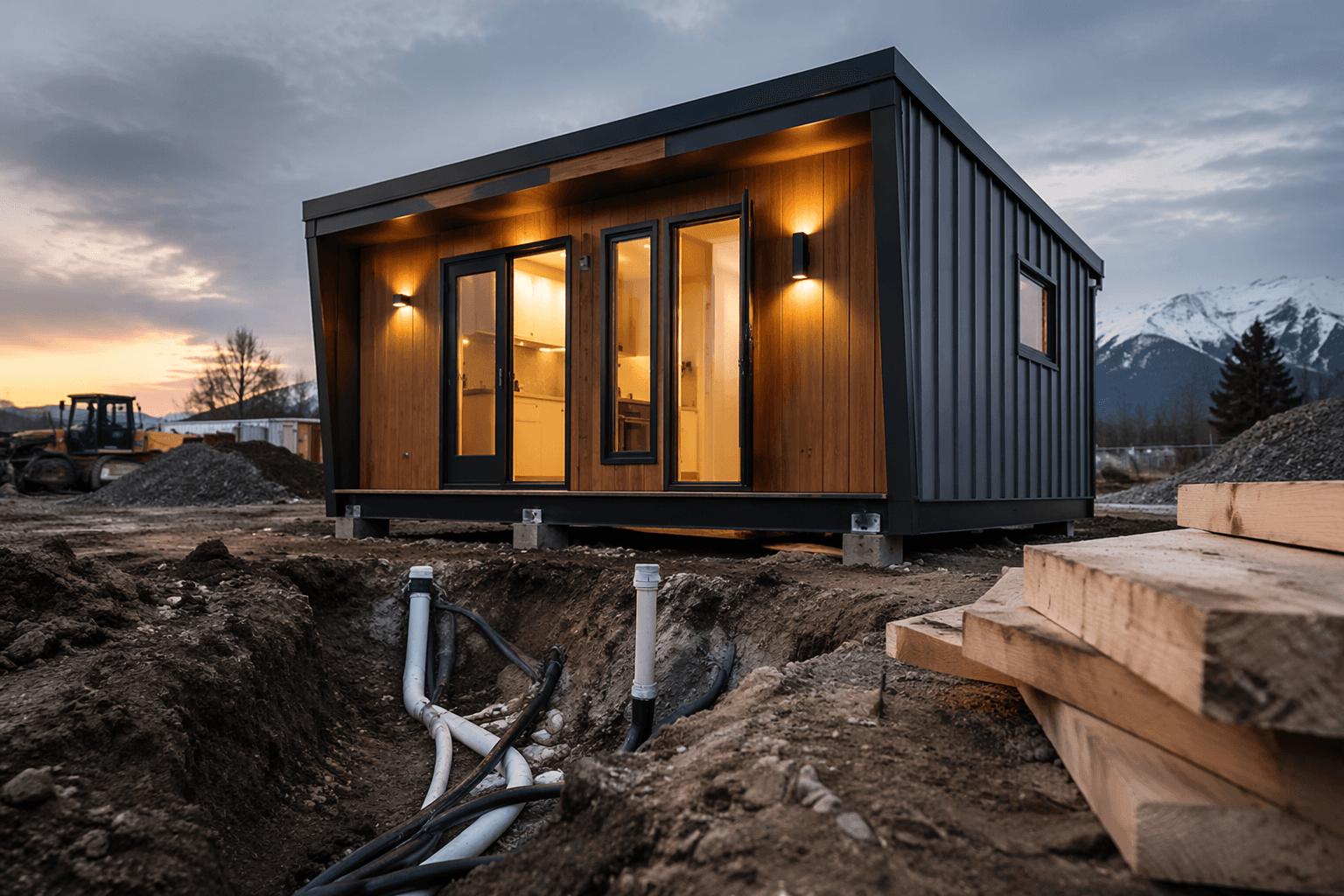
New York funds lead-safe tiny house for families displaced by poisoning
New York is backing Syracuse’s first lead-safe temporary house with $110,000, turning a tiny-home project into poisoning-response infrastructure.

New York is putting $110,000 from a Dollar Tree settlement into Syracuse’s Lead Freedom House, a first-of-its-kind lead-safe temporary housing facility built to keep families out of harm’s way while lead hazards are removed or while children are treated for lead poisoning. The money, announced June 16 by Attorney General Letitia James, will support the house’s operations for three years.
The project sits at 1216 South Avenue and includes two renovated three-bedroom units. A Tiny Home for Good rebuilt the house from the ground up to be lead-safe, including replacing water service lines made of lead. Families for Lead Freedom Now will operate the facility with support from Legal Services of Central New York, turning a small housing model into a direct response to a public-health crisis.
The need is stark in Syracuse. James said more than 80 percent of the city’s housing stock was built before lead-based paint was banned, and Syracuse children account for the vast majority of elevated blood lead cases in Onondaga County. County data show that in 2022, 510 children in Onondaga County had elevated blood lead levels, and 90 percent lived in Syracuse. The county classifies a blood lead level of 5 mcg/dL or higher as elevated, and more than 11 percent of Black children tested in 2021 had elevated levels, compared with about 2 percent of white children tested.

For families, the house is meant to solve a problem that often gets overlooked during abatement: where to go when the unit that made them sick is being torn apart. Residents will get rent-free temporary housing plus case management and support services that can connect them to health care, education, transportation and other resources. Oceanna Fair, a leader with Families for Lead Freedom Now, put the urgency plainly: “After 40 years, we’d like to close this chapter for Syracuse.”
The new funding lands as Syracuse keeps building out housing-based responses to lead exposure. City and county leaders opened a separate $500,000 short-stay residence in March 2026 for families needing emergency shelter after a child tests positive for lead poisoning. Together, the projects point to a broader blueprint: tiny-home-adjacent spaces being used not as novelty housing, but as health infrastructure for families who need a safe place to land while the city works on the buildings that poisoned them.
This article was produced by Prism’s automated news system from verified source data, official records, and press releases, then run through automated quality and moderation checks before publishing. The system is built and supervised by the people who set the standards it runs under. Read our full AI policy.
Did this article answer your question?