Penn Yan tiny house opens a retractable roof for stargazing
A Penn Yan tiny house turns stargazing into the main event, but its real test is whether a retractable roof and glass-heavy layout mean livability or spectacle.
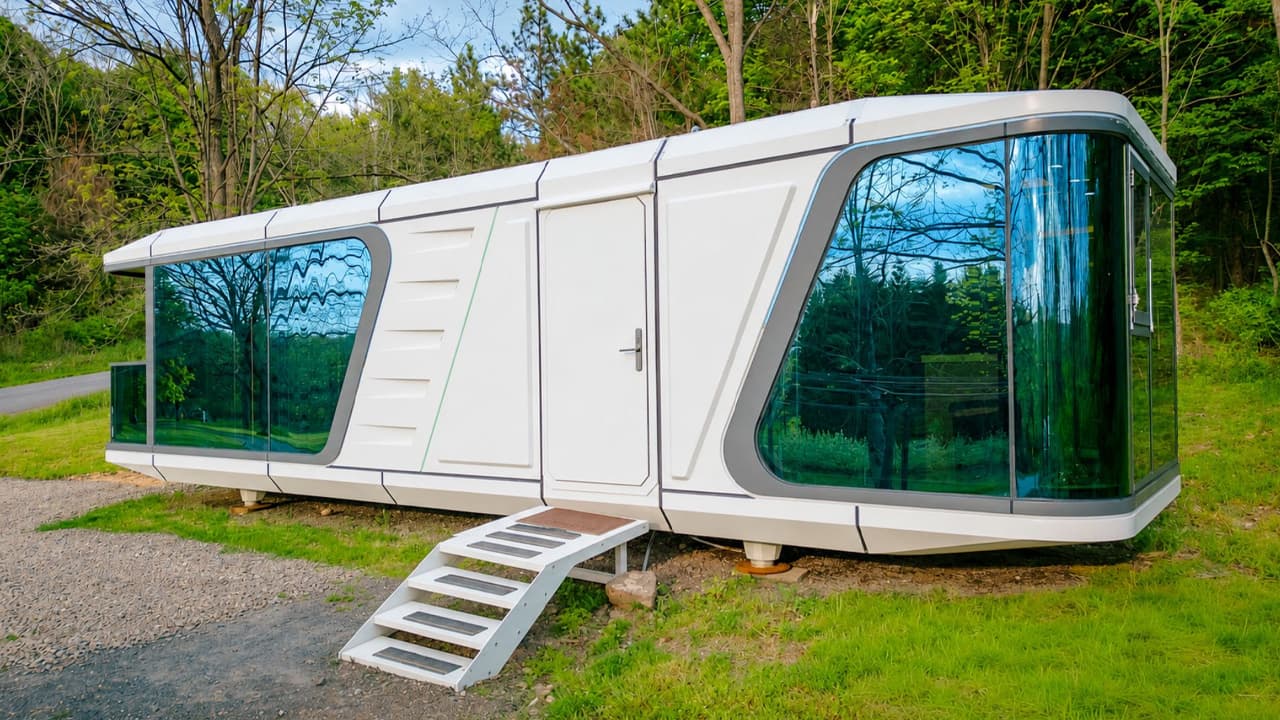
The Space Station in Penn Yan opens with a tiny-house dare: slide the roof back, stay in bed, and look straight into the Finger Lakes night sky. At 38 feet long and 11 feet wide, the steel-and-glass rental is already larger and more theatrical than a standard backyard build, but the retractable roof is what pushes it from compact lodging into destination design.
A roof that does more than pose for photos
The roof is the signature move, yet it is not just a gimmick layered onto a novelty shell. From the bed, guests can open it and watch the stars, which changes the experience from sleeping inside a tiny home to feeling briefly outside while still under cover. That matters in a format where one of the biggest challenges is claustrophobia, because the roof, paired with floor-to-ceiling windows on three sides of the bedroom, gives the interior a sense of height and openness that most tiny homes can only suggest.
It also changes how the home handles the basics. An opening roof can make the bedroom feel less sealed in on mild nights, while the glass-heavy envelope pulls daylight deep into the space during the day. In other words, the feature is not only about spectacle, it is part of a larger attempt to make a small footprint feel breathable, immersive, and less like a box.
Inside the 38-foot shell
The Space Station is built as a smart, hospitality-first tiny home rather than a stripped-down minimalist cabin. Airbnb’s listing describes it as a tiny home in Penn Yan for 2 guests, with 1 bedroom, 1 bed, and 1 bath, and the host shown on the listing is Peter, a Superhost. A separate snapshot from 2025 placed the nightly rate at $189, which puts it squarely in the premium end of the short-term rental market.
The interior pushes that premium angle hard. Smart controls on a tablet handle the lights, curtains, air conditioning, and projector screen, while the home also includes a cinematic projector, ambient LED lighting, Bluetooth speakers, underfloor heating, a hybrid stove, a mini fridge, an oven, and a bathroom with a shower cabin, vanity, toilet, heated bidet, and built-in dryer. A small covered porch connects from the bedroom, and there is also an outdoor lounge and grill for warmer weather, which helps the place work as both a winter hideaway and a summer hangout.
A quick feature checklist makes the design intent even clearer:
- tablet-controlled lighting, curtains, air conditioning, and projector screen
- projector, ambient LED lighting, and Bluetooth speakers
- underfloor heating, hybrid stove, mini fridge, and oven
- bathroom with shower cabin, vanity, toilet, heated bidet, and built-in dryer
- covered porch off the bedroom, plus an outdoor lounge and grill
That mix of tech and comfort makes the Space Station feel closer to a boutique suite than a bare-bones tiny house. It is compact, but it is not trying to disappear.
Why Penn Yan is the right backdrop
The setting explains a lot about why this build works as a rental. Finger Lakes Wine Country places Penn Yan on the north end of the east branch of Keuka Lake, one of the region’s prime spots for exploring the Keuka Lake Wine Trail. The trail itself says it is headquartered in Penn Yan and describes Keuka Lake as the birthplace of Finger Lakes winemaking, with early grape cultivation there tied to 1860.
That matters because the Space Station is not sitting in a random market where novelty alone has to do all the work. The Yates County Chamber of Commerce says it serves as the tourism promotion agency for Yates County and operates a visitor center in Penn Yan, which underscores how much the local economy already depends on visitors who come for tasting rooms, lake scenery, and touring. Airbnb’s own listing language fits neatly into that world, pitching the stay as a match for couples, wine-trail adventures, content creators, and weekend escapes near Keuka Lake and Watkins Glen.
What the market signal really is
The bigger story is not simply that one tiny house has a retractable roof. It is that the Space Station sits inside a market that already supports short-term stays, and it does so with a design language built for sharing, photographing, and remembering. Airbnb’s broader Penn Yan market page shows 30 vacation rentals, house rentals starting at $140 per night, and an average house-rental rating of 4.8, which suggests the area already has healthy demand and a strong baseline of guest satisfaction.
The Space Station leans into the top end of that mix. Its imported-from-China build, which cost about $70,000, its smart-home systems, and its sky-opening roof all point to a product that is meant to justify itself through experience, not square footage alone. That is the real question for the tiny-house world: whether this kind of build is a true evolution in small-space living or a spectacular one-off that works best when the goal is a memorable stay.
Seen from the bed with the roof open, the answer may be both. The roof is the hook, but the surrounding glass, the tablet controls, and the wine-country setting are what make the hook feel complete, and that is exactly why the Space Station reads less like a stunt and more like a sign of where premium tiny-house stays are headed.
This article was produced by Prism’s automated news system from verified source data, official records, and press releases, then run through automated quality and moderation checks before publishing. The system is built and supervised by the people who set the standards it runs under. Read our full AI policy.
Did this article answer your question?