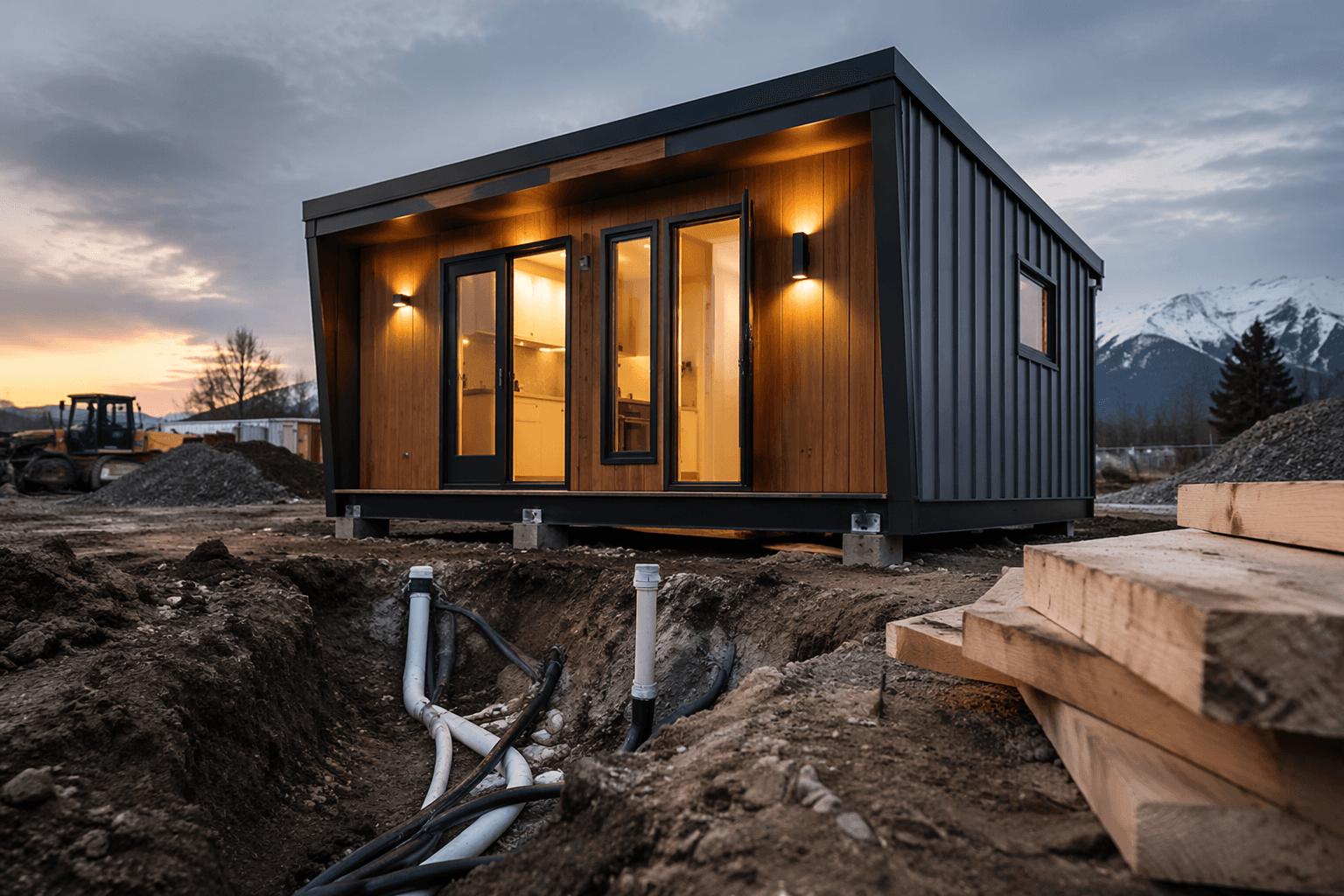
Poland’s Mini House 300 x 600 widens tiny living in 20 feet
Mini Domy’s 20-foot house trades length for width, creating a 247.5-square-foot interior that feels roomier. The catch is a permit-heavy tow profile that favors settled living.
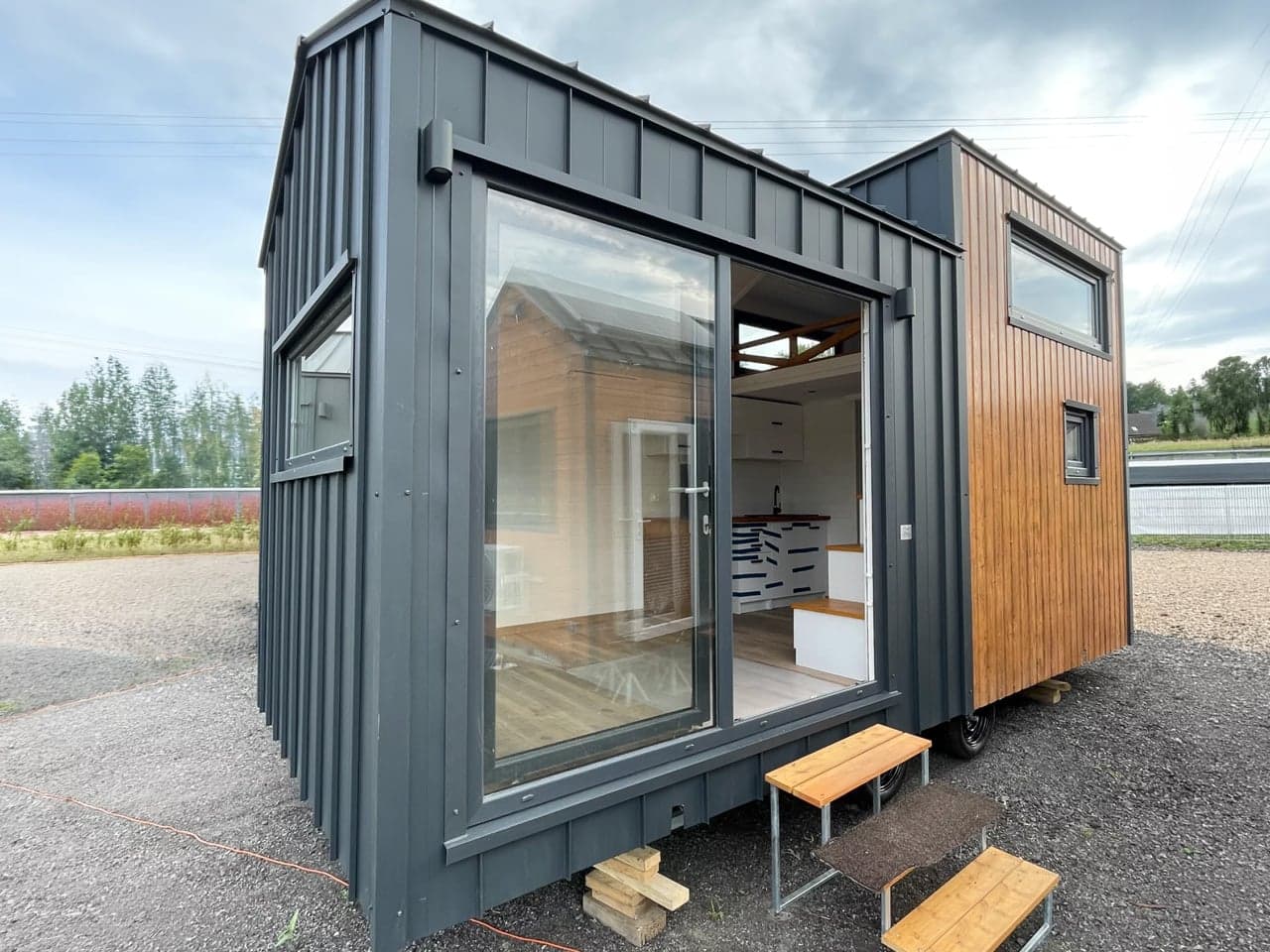
Mini Domy’s Mini House 300 x 600 takes a sharp turn away from the usual long, narrow tiny-house formula. At 20 feet long and nearly 9.8 feet wide, it packs about 247.5 square feet into a shape that feels more like a small studio than a corridor, and that change matters most in everyday movement, furniture placement, and the way the space reads to the eye.
Why the wider shell changes daily life
The first thing the extra width fixes is circulation. In many towable tiny homes, every path runs in a line, so the kitchen, bath, storage, and sleeping loft all compete for the same narrow aisle. Here, the 3.00-meter body gives the main room enough room to breathe, so the space can function as a room rather than a passage.
That shift shows up in the way furniture can be placed. A wider shell gives the layout more flexibility for a table, a chair, or a sofa without forcing everything hard against one wall, which is what usually makes small homes feel cramped before they are truly full. It also changes the emotional read of the interior: when you can stand, turn, and move without feeling pinned between fixed elements, the house feels calmer, even when the square footage is still modest.
Inside, the layout stays simple on purpose
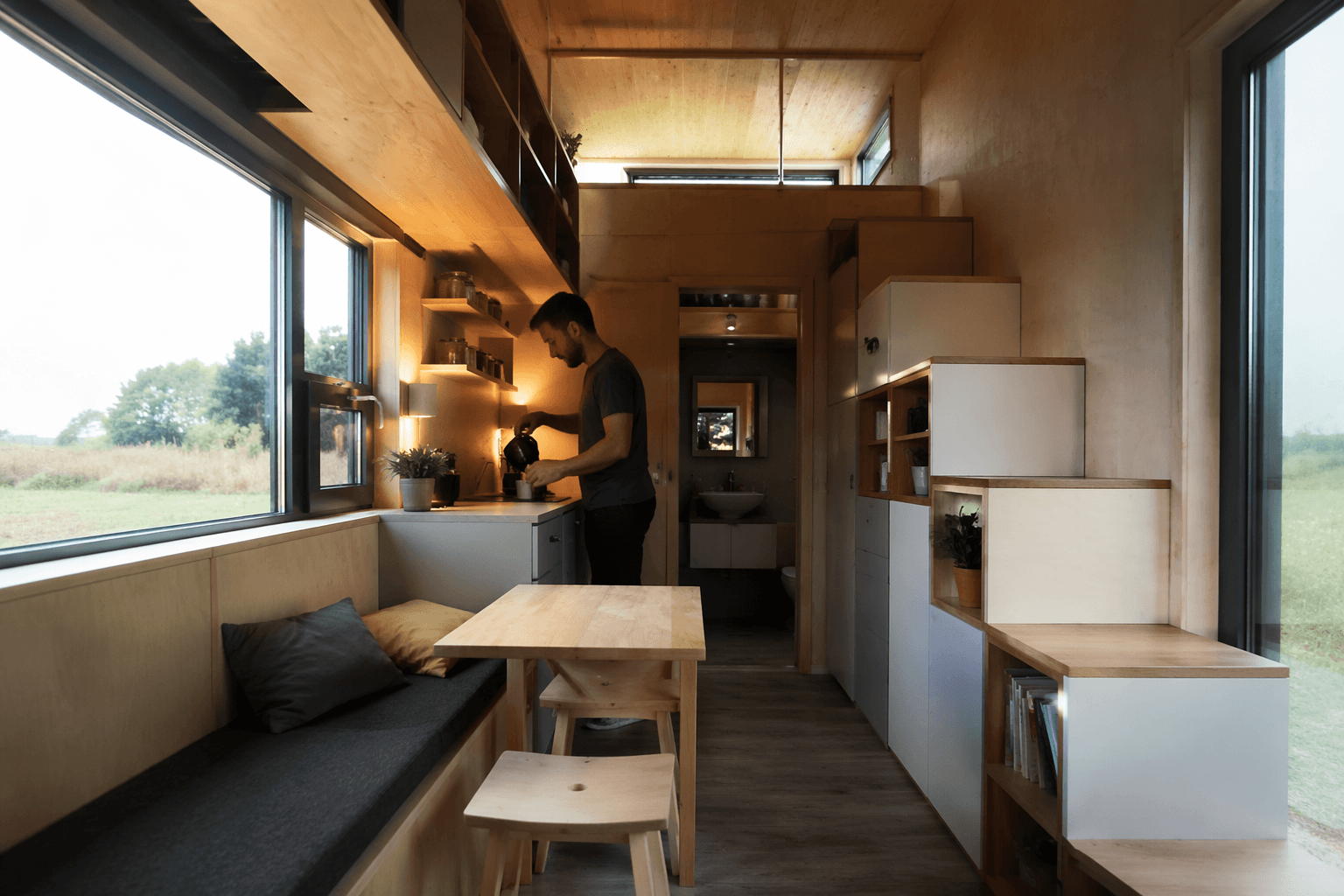
Mini Domy keeps the interior stripped back to the essentials, and that simplicity is part of the point. Double glass doors open the home to the outdoors, the main room is finished in white tongue-and-groove paneling, and the kitchen is pared down to a sink and an induction cooktop, with room left for additional appliances and cabinetry.
The bathroom is compact but complete, with a glass-enclosed shower, a sink, and a flushing toilet. Above the main space, a loft bedroom sits on top of the plan and is reached by a staircase with integrated storage, which saves floor area without turning the interior into a stacked puzzle. In practice, the extra width helps these pieces feel separated enough to work, instead of compressed into one continuous strip.
That is what makes the design more than a styling exercise. The wider body gives Mini Domy room to keep the plan visually clean while still fitting the parts of daily life that matter most, from getting dressed in the morning to moving through the kitchen without blocking the stair, bath, or doors.
The tradeoff is in the tow
Mini Domy lists the MINI DOMEK 300 x 600 at 6.10 m x 3.00 m x 3.99 m, with one loft and 23 m2 of floor area. That dimension set explains both the appeal and the complication: the body sits well above the standard 2.55-meter road-transport width used in European rules, and Polish oversize-transport guidance says loads wider than 3.0 m can require additional controls or permits.
That means this model is not the kind of tiny house built for spontaneous highway wandering. It makes more sense as a stable, roomier unit for on-site living or for moves that are carefully planned in advance. The benefit is comfort; the cost is that owners have to think like transport planners, not just campers.
How Mini Domy frames the model
Mini Domy describes itself as a specialist in tiny houses, mobile homes, and modular homes, and it presents its homes as year-round, energy-efficient living solutions with functional interiors. The company also says its designs answer rising housing prices, a shortage of building plots, and demand for simpler, more ecological living.
The MINI DOMEK 300 x 600 fits that pitch cleanly. Mini Domy says the unit is fully equipped with air conditioning, a kitchen, and a bathroom, and that it is intended for both private and commercial use. That makes it flexible enough for a backyard dwelling, a rental unit, a guest house, or a small hospitality setup, as long as the wider transport profile is part of the plan from the start.
For anyone wanting to see that difference in person, Mini Domy lists a permanent showroom in Głogoczów, on the DK7 route between Kraków and Zakopane. That matters because the key selling point here is not a gadget or a finish, but the feeling of space, and that is hard to judge from a floor plan alone.
Where this fits in the wider tiny-house movement
The Mini House 300 x 600 lands in a market that has been growing in Europe since around 2010, as tiny-house interest has moved from fringe curiosity toward a serious housing alternative. A 2018 survey summary cited by The Tiny House Blog found that more than half of U.S. adults would consider living in a small home at some point, and millennial interest was put at 63 percent.
That broader appetite helps explain why a design like this matters. The question is no longer only how small a house can be, but how well it can live. Mini Domy’s answer is to spend its square footage on width, and that choice makes the Mini House 300 x 600 feel less like a hallway on wheels and more like a compact home with room to inhabit.
This article was produced by Prism’s automated news system from verified source data, official records, and press releases, then run through automated quality and moderation checks before publishing. The system is built and supervised by the people who set the standards it runs under. Read our full AI policy.
Did this article answer your question?