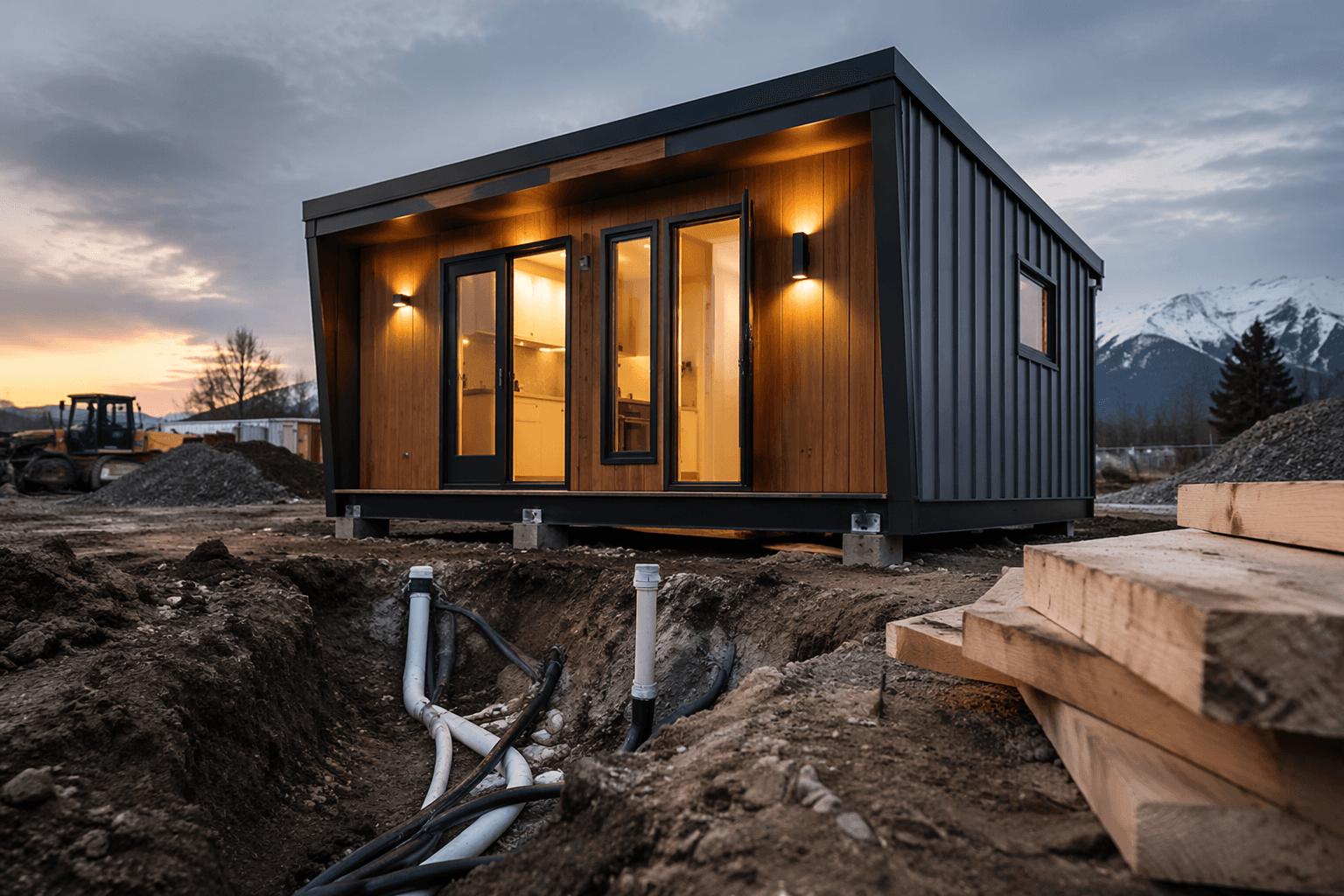
Preowned Tru Form Tiny home packs elevator bed and modern style
A 316-square-foot preowned Terra Urban brings an elevator bed, vaulted ceilings, and a polished modern finish into the used tiny-home market, with pricing anchored near $177,000 new.
A preowned Terra Urban is a rare kind of tiny-house listing: it gives buyers a premium, already-finished home instead of a waitlist. The 316-square-foot model is now in Tru Form Tiny’s inventory, and the builder still prices the new version at about $177,000, which frames the used unit as a serious secondhand purchase rather than a bargain-bin pickup.
The listing at a glance
The draw starts with the numbers. This is a 316-square-foot tiny home on wheels that sleeps up to four, with oversized windows, vaulted ceilings, and the kind of layout that tries to feel architectural instead of cramped. Tru Form Tiny, a family-owned Pacific Northwest builder based in Eugene, Oregon, places the Terra Urban in the premium tier of its lineup, and the preowned listing keeps that positioning intact.
Just as important, this is not an isolated one-off. Tru Form Tiny says it has built more than 300 handcrafted homes on its About page, and a 2026 company profile puts the total above 350 while marking a 10-year milestone. That scale matters for a buyer looking at used inventory, because a secondhand listing only feels reassuring when the builder has enough history to make resale, service, and transport feel like part of the normal ownership cycle.
What the Terra Urban gives you
The Terra Urban’s exterior reads more like modern architecture than a roadside trailer. The design mixes charred wood, white panel siding, gray standing-seam metal, a cantilevered awning, vertical LED light strips, and a raised box that holds the loft while keeping the roofline visually active. For shoppers who have seen too many tiny homes lean too far into rustic styling, this one lands firmly in the contemporary camp.
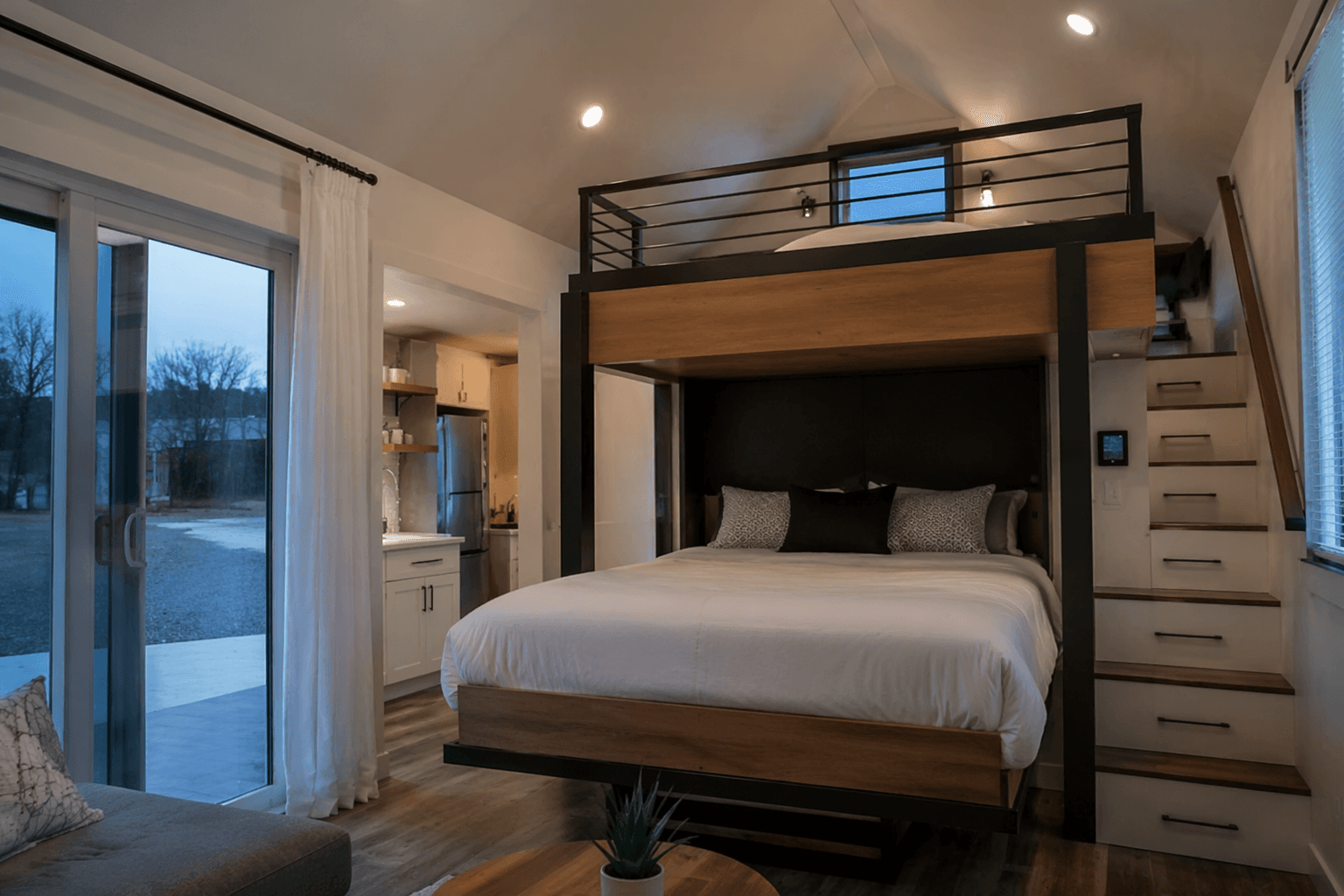
Inside, the home keeps that same polished feel. Vaulted ceilings and a wraparound picture window work with oversized windows and a neutral palette to make the interior feel broader than its footprint suggests. Light wood floors help soften the compact layout, and the kitchen is unusually complete for a home this size, with matte-black cabinetry, a waterfall-edge countertop, a mosaic backsplash, an induction cooktop, an under-counter oven, a deep sink, and an integrated cutting board.
The standout feature is the motorized elevator bed, which lowers over the living room at night and disappears into the ceiling during the day. That gives the Terra Urban a true ground-level sleeping option without giving up the lounge space that so many tiny-house buyers end up wishing they had kept.
Why the preowned angle matters
This listing is more than a pretty build getting recycled into a new owner’s life. It shows a tiny-house market that is starting to behave less like a novelty scene and more like a real equipment market, where inventory can move, hold value, and appeal to buyers who want speed. A preowned Terra Urban from a builder with standardized production, RVIA certification, and custom DOT-approved trailers suggests that tiny homes are becoming easier to resell because they are being built to be moved, documented, and understood by future buyers.
Tru Form Tiny’s sales setup reinforces that shift. The company markets both build-to-order and inventory homes, and it advertises flexible financing options, which is exactly the kind of business structure that supports faster turnarounds. If a buyer can choose between commissioning a custom build and stepping into an existing unit, the secondhand market gets more liquid almost by definition.
There is also a practical housing story behind the brand. In an earlier Terra Urban use case, Tru Form Tiny delivered a 26-foot version to a Napa, California family who needed temporary housing while their primary residence was being repaired, with founder and chief operations officer Jen Carroll personally delivering it. That kind of real-world use helps explain why a used Terra Urban feels credible to buyers: this is not just a display model, it is a format that has already served as living space under pressure.
What to check before buying used
A listing like this rewards careful inspection, especially because so much of its value sits in the moving parts and the finish work. The elevator bed is the first thing to examine, because it is both the signature feature and one of the most mechanically sensitive. After that, the kitchen package and trailer documentation matter just as much as the styling.
Focus on these points:
- Test the motorized bed lift several times and listen for hesitation, uneven movement, or noise.
- Check the vaulted-ceiling area and window lines for any signs of leaks or stress.
- Inspect the matte-black cabinetry, waterfall-edge countertop, and integrated appliances for wear that could be expensive to match.
- Confirm the RVIA certification and custom DOT-approved trailer details, since those affect transport and future resale confidence.
- Review sleeping configuration carefully, because the model is designed to sleep up to four, but the actual comfort of that setup depends on how the loft and elevator bed are being used.
- Look closely at the charred wood, metal siding, and awning connections, since exterior finish work is where premium tiny homes either age gracefully or start to show their miles.
What this says about the market
The Terra Urban’s preowned appearance in inventory suggests the tiny-house category is moving into a more conventional secondhand phase. Premium builds are no longer just bespoke objects that vanish into private ownership; they are becoming assets with resale life, a clearer paper trail, and enough brand recognition that buyers can compare used against new with real confidence.
That is the larger takeaway tucked inside the elevator bed and the modern finish. A 316-square-foot home that once would have been treated like a custom curiosity is now showing up as inventory, with a new-build price anchor of about $177,000 in the background. For shoppers watching the market mature, that is the kind of shift that turns tiny-house buying from a leap of faith into a more legible purchase.
This article was produced by Prism’s automated news system from verified source data, official records, and press releases, then run through automated quality and moderation checks before publishing. The system is built and supervised by the people who set the standards it runs under. Read our full AI policy.
Did this article answer your question?