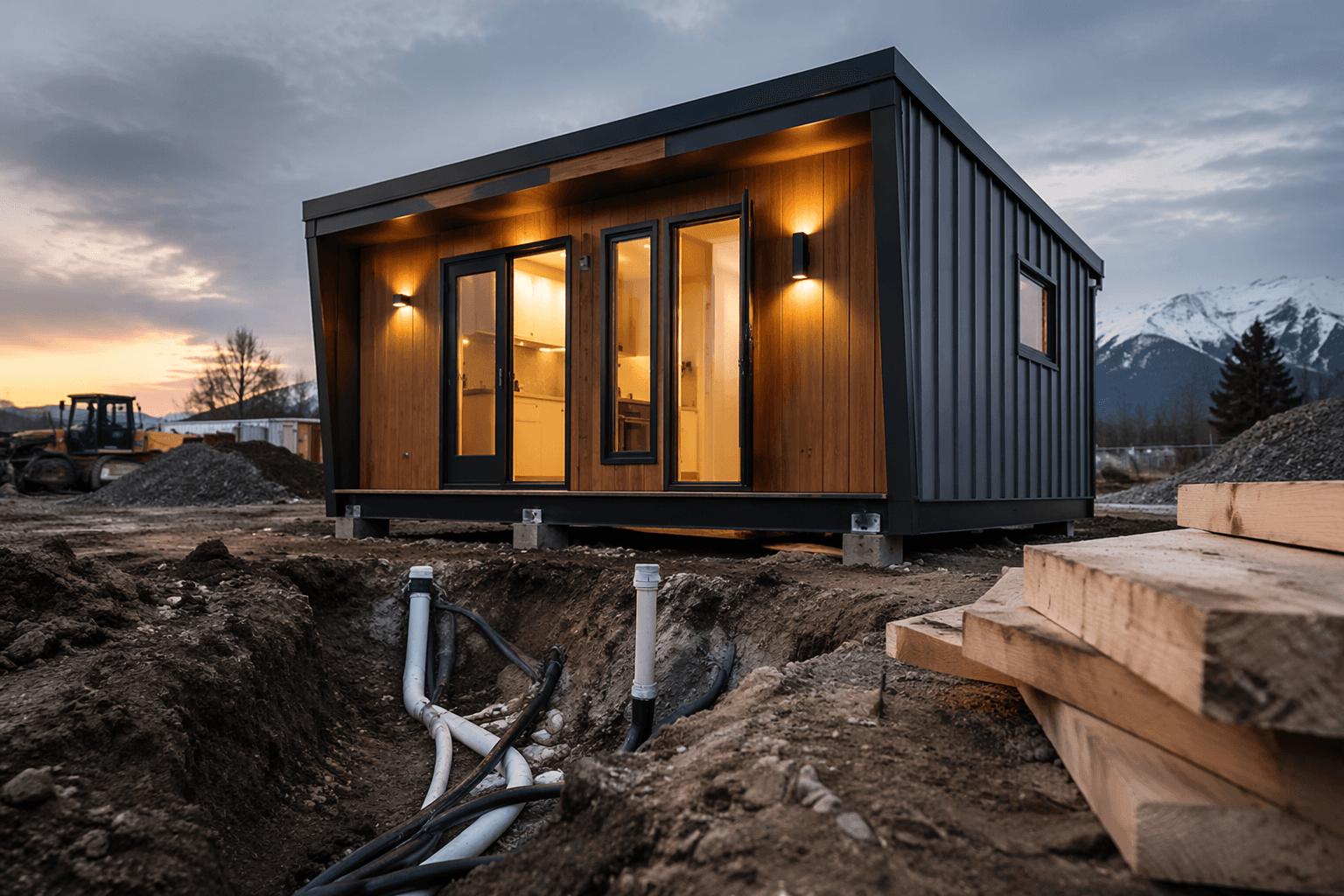
Reclaimed timber tiny home offers three bedrooms and full-time family living
Old Man Pine squeezes three bedrooms into 48 square meters, using reclaimed timber and family-first planning to turn a tiny home into a real full-time house.
A tiny home built for family life
Old Man Pine makes its case quickly: this is not a stripped-back weekend cabin dressed up as a house. It is a 10.3-meter by 2.9-meter tiny home with about 48 square meters of floor space, and its layout is built around the way a family actually lives. Three bedrooms, a cozy lounge, a full kitchen, a separate dining area, and storage throughout give it a very different feel from the one-bed loft plans that still dominate much of the tiny-house conversation.
That shift matters because Old Man Pine is being presented as a model for full-time living, not a novelty. The plan can be configured as either a three-bedroom or a three-bedroom-plus-office layout, which gives it the kind of flexibility compact housing often promises but rarely delivers. In a market where small homes can feel like clever puzzles with too many compromises, this one leans into domestic practicality first.
What the layout gets right
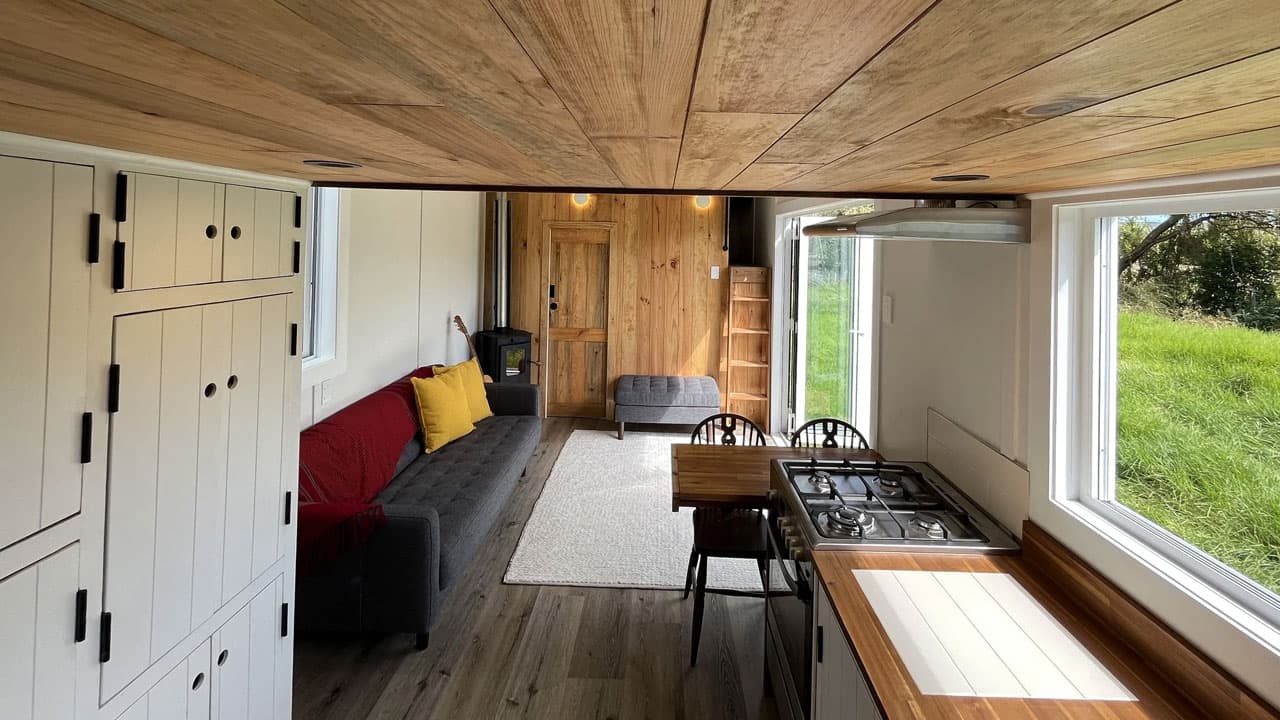
The clearest part of the design is that it treats shared living as a daily reality, not an afterthought. The lounge gives the home a place to pause, the dining area creates a proper mealtime zone, and the kitchen is described as fully equipped rather than decorative. That combination is what helps the house read as family-ready instead of merely space-efficient.
The inclusion of an extendable dining table is a small detail that says a lot about the thinking behind the build. It lets the room work for weekday meals, homework sessions, or a larger spread when guests arrive, without demanding extra square footage all the time. The butler sink and fireplace push the same idea further: these are practical, lived-in features that make the interior feel like a permanent home rather than a minimalist display.
Why the reclaimed timber stands out
Old Man Pine also distinguishes itself through material choice. Tiny Timber Homes says it has its own mill, and Phil’s focus on reclaiming timber gives the build a handcrafted, highly individualized character. That is more than a styling choice. When a builder controls the milling and reuse process, the timber can shape the home’s joinery, storage details, and overall feel in a way that mass-market panelized interiors usually do not.
This is where the reclaimed timber stops being just aesthetic. In a home this size, the quality of the surfaces and the precision of the built-ins matter because every cupboard, bench edge, and corner has to work harder. A custom timber-heavy interior can make storage feel integrated rather than bolted on, and it can also make the home feel less temporary, which is crucial when the goal is full-time occupancy. The result is warmer and more personal than the standardized finishes many compact homes rely on.
Tiny Timber Homes also says no two builds are quite the same, which reinforces the bespoke positioning. Old Man Pine is not presented as a one-size-fits-all shell with optional upgrades. It is part of a custom approach in which reclaimed material, layout choices, and finish details are meant to work together as a complete family home.
How it fits into Tiny Timber Homes’ story
Old Man Pine sits near the top end of Tiny Timber Homes’ lineup at about $145,000 plus GST. That pricing places it in premium territory, but still within the range many buyers would recognize as plausible for a custom tiny build in New Zealand. It is also one of the builder’s largest units, which helps explain why it feels more like a compact house than a downsized cabin.
The company’s own history adds useful context. Its team page says the tiny-house idea grew out of building garden sheds in 2013 before evolving into tiny homes on wheels. That trajectory helps explain the brand’s emphasis on craftsmanship and small-space efficiency. Tiny Timber Homes says it has more than 12 years of experience building small spaces, so Old Man Pine reads as the mature expression of a business that has spent years refining how to make small footprints genuinely livable.
The company’s team page also names Phil, Hannah, Joël, Dr Rosemary Goodyear, Ancuta Iosub, and Atish Sharma among the people behind the operation. That broader cast matters because this is clearly a workshop-minded business, not just a single concept house. Old Man Pine feels like the product of that accumulated shop-floor knowledge.
Why the price and footprint matter now
The timing of this kind of build fits a larger shift in Aotearoa New Zealand housing. Stats NZ says that in the June 2024 year, about 1 in 4 non-owner households spent more than 40 percent of their income on housing costs. It also says average annual housing costs rose 31 percent between the June 2020 and June 2024 years, while average disposable income rose 24 percent over the same period. That gap is exactly the kind of pressure that keeps family-sized tiny homes in the conversation.
Old Man Pine does not solve housing affordability on its own, but it shows what a more serious tiny-home response looks like. Instead of treating compact living as a stopgap for singles or couples, it offers a layout that can actually hold a household, with enough room for sleeping, cooking, dining, and day-to-day storage. In that sense, it belongs to a newer wave of tiny homes that are trying to function like smaller houses, not just clever trailers.
The regulatory reality behind the romance
The legal side of tiny homes in New Zealand is still complicated, and that matters if a build is meant for full-time living. MBIE’s tiny-house guidance was updated in October 2025 and is described as a living document under the Building Act 2004. It also notes that whether a tiny house counts as a building or a vehicle can depend on the facts and the local district plan, which leaves room for real uncertainty.
Selwyn District Council says MBIE has made several determinations since 2016 and ruled that the structures were buildings in every one of those cases. That does not make the category simple; it underlines how much still depends on use, placement, and interpretation. For a home like Old Man Pine, the point is clear: a family-ready layout is only one part of the story. The other part is whether councils and buyers can treat tiny houses as durable, permanent housing rather than decorative mobility.
Old Man Pine lands as a useful marker of where the sector is heading. It combines reclaimed timber, multiple bedrooms, and everyday comforts in a footprint that still qualifies as tiny, and that is exactly why it stands out. In a market that once sold the dream of less, this one is making the case for more life inside fewer square meters.
This article was produced by Prism’s automated news system from verified source data, official records, and press releases, then run through automated quality and moderation checks before publishing. The system is built and supervised by the people who set the standards it runs under. Read our full AI policy.
Did this article answer your question?