Retiree finds freedom and stability in a tiny house with bedroom downstairs
A downstairs bedroom turns Tina’s tiny house into a retirement base camp, balancing freedom, lower overhead, and aging-in-place practicality.

Tina’s tiny house shows why retirement downsizing is not just about living smaller, but about living with more control. Set at Silo Creek RV Resort north of Dallas, Texas, her 320-square-foot home on wheels uses a downstairs bedroom to sidestep one of the biggest drawbacks of tiny living for older adults: the loft climb.
That one design choice changes the whole equation. Instead of treating tiny house life like a novelty, Tina’s setup makes it look like a workable retirement strategy, one that keeps expenses manageable, preserves mobility, and still feels stable enough to call home.
Why the downstairs bedroom matters
In tiny-house circles, lofts get a lot of attention, but they are not always the right answer for later life. A ground-floor bedroom gives the home a more traditional residential feel and makes daily movement easier, especially for someone who does not want to climb into bed every night. AARP has noted that adding first-floor bedrooms is one common aging-in-place modification, and Tina’s layout fits that logic cleanly.
That matters because aging in place is not just a feel-good phrase. The National Institute on Aging defines it as staying in one’s own home and community safely, independently, and comfortably. In a tiny home, that goal starts with the floor plan, and a downstairs bedroom is one of the clearest ways to make the house usable for the long haul.
Freedom, but with a base camp
Tina’s story is compelling because it refuses to pit freedom against stability. The tiny house gives her a secure base without locking her into the overhead of a larger home, and that is exactly why many retirees look at tiny living in the first place. Lower maintenance and more manageable costs can create room in the budget, while a smaller footprint gives the owner more say over how life is organized.
Her earlier setup adds another layer to that strategy. Before settling into the current home, she spent time in an RV while working as a travel nurse, and a work-trade arrangement effectively covered her lot rent. That kind of arrangement shows how tiny-house and RV living can support a more flexible financial life, especially for people who still want the option to move without giving up the feeling of having a home base.
The trade-off is simple, even if the lifestyle is not: the less house you carry, the more intentional every square foot has to become. In a 320-square-foot space, storage is not an afterthought. It is part of the plan, and that discipline is part of the appeal for retirees who want less overhead and fewer possessions to manage.
The park, the parking, and the rules
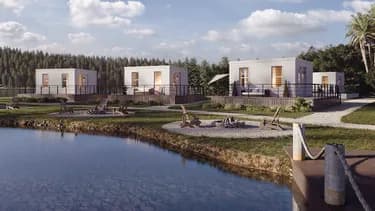
Silo Creek RV Resort is not just a backdrop. For wheeled tiny homes, the legal and community setting can matter as much as the structure itself. AARP has warned that tiny houses often run into zoning and land-use hurdles because wheeled tiny homes are commonly treated as RVs rather than permanent residences, which is why the place you park can shape the life you build.
That is where resort-style communities become important. Tiny House Expedition describes the tiny-house world as including resort-style developments, eco-villages, and backyard co-ops, and it has focused heavily on legal parking options. Tiny-house communities are also growing, with more than a dozen cities becoming officially tiny-home friendly. In that landscape, a resort setting can provide the legal footing, shared structure, and human contact that help prevent downsizing from becoming isolating.
For retirees, that social layer is not trivial. A small house can be peaceful, but it can also feel disconnected if it is parked without a real community around it. Tina’s situation suggests that the right park can soften that risk by offering a place that feels settled without being rigid.
Aging in place without giving up mobility
Tiny houses appeal to many older adults because they can simplify life, reduce living expenses, and increase mobility. AARP said in 2018 that industry estimates put as much as 40% of the tiny-house market in the 50-plus age group, and its later reporting found that more than three-quarters of adults 50 and older wanted to stay in their homes or communities as they age. That is the real backdrop behind Tina’s story.
The important part is that aging in place does not have to mean staying put in a large, expensive house. It can also mean choosing a smaller home that is easier to maintain, a layout that works without stairs, and a community that makes support more accessible as needs change. The National Institute on Aging stresses planning ahead for accessibility, health, and support services, which is exactly why the tiny-house decision should be about more than style.
Tina’s downstairs bedroom is the clearest example of that thinking. It is not just a convenience feature, and it is not just a nod to comfort. It is the detail that makes a tiny house feel like a serious retirement home, one that can support independence without demanding that every future need be solved later.
Tina’s setup captures the promise of tiny-house retirement at its best: a smaller footprint, a safer layout, and a community arrangement that turns mobility into stability instead of the other way around. The downstairs bedroom is the quiet piece that makes the whole plan work.
This article was produced by Prism’s automated news system from verified source data, official records, and press releases, then run through automated quality and moderation checks before publishing. The system is built and supervised by the people who set the standards it runs under. Read our full AI policy.
Did this article answer your question?