Rolling Bear’s Panda Bear tiny home targets solo retreats
Rolling Bear’s Panda Bear treats tiny living like a private retreat, not a family home. The $88,000 starter price buys a lodge-style escape built for writers, artists, and quiet stays.
The Panda Bear does not read like a scaled-down house trying to do everything. It reads like a deliberate answer to one person’s need for quiet, with a 21-by-9-foot footprint, a starting price of about $88,000, and a layout built around solitude instead of square-footage bragging rights. Rolling Bear Tiny Homes is using it to push tiny living into a narrower lane, where retreat, privacy, and atmosphere matter as much as bed count or workspace.
A tiny home built for one kind of life
Rolling Bear places the Panda Bear inside its Lodge Series, specifically under Solo Retreat Lodges, which is the clearest sign that this model is meant to stand apart from the familiar tiny-house categories of family living and remote work. The builder says the home is intended for solo travelers, artists, writers, and other buyers looking for a quiet retreat, and it frames the unit as a place for short or long stays in British Columbia scenery.
That positioning matters because it shows how much the market has split. Rolling Bear’s broader lineup already separates solo and duo nomads, remote-work retreats, family homes, guesthouses, creative studios, and lodge-series homes, so the Panda Bear is not an isolated experiment. It is part of a deliberate catalog built around how people actually use a tiny home, not just how many people it can hold.
Why the price makes more sense as a retreat than as housing math
At about $88,000 to start, the Panda Bear sits above the ultra-budget end of the tiny-house market. Measured against a full-time family home, that number would feel steep; measured against a finished solo retreat with a crafted exterior and a lodge-style feel, it starts to look more coherent. The value here is less about raw capacity and more about buying a specific mood and use case.
Rolling Bear Tiny Homes is based in Surrey, British Columbia, and says its team includes seasoned tradespeople, many with more than four decades of hands-on construction experience, along with Red Seal-certified professionals. That background helps explain why the Panda Bear is presented less like a bare-bones portable box and more like a small, finished cabin. In this niche, buyers are paying for build quality, presentation, and the sense that the home belongs in a forest edge, backyard studio, or rental setting without needing a lot of finishing work.
A lodge look that sells the escape
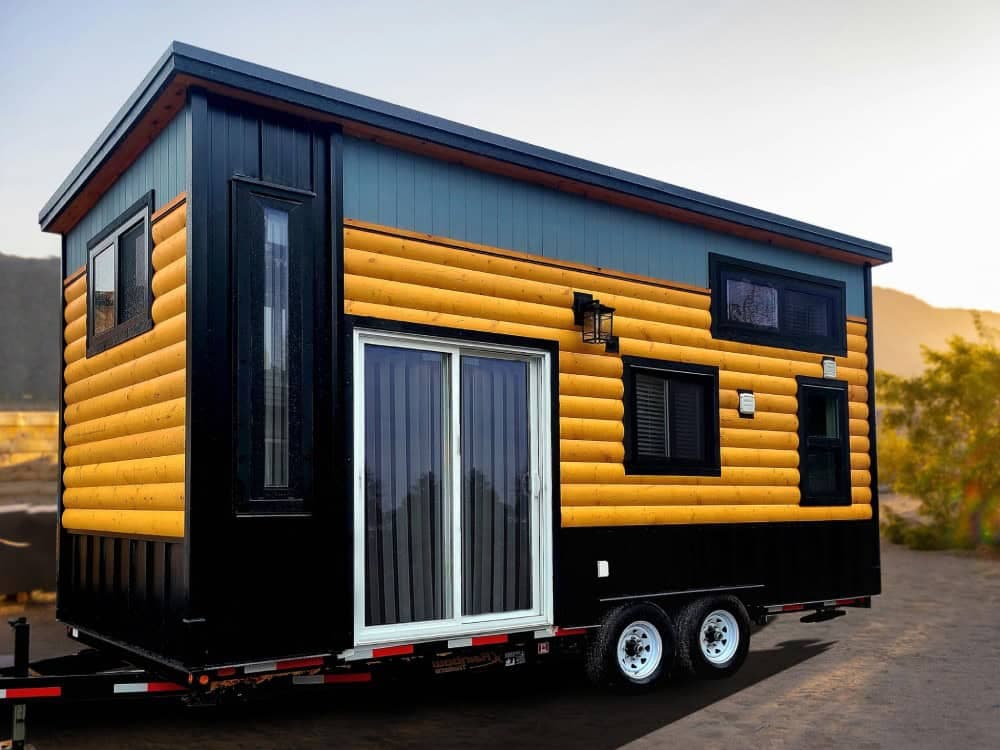
The exterior makes the model’s intention obvious before anyone steps inside. Black board-and-batten, teal panels, and a band of golden half-log siding give the Panda Bear the visual language of a designed cabin, not a standard trailer house. That matters in a retreat model, because the first job of the exterior is to separate daily life from the place you are trying to get away from.
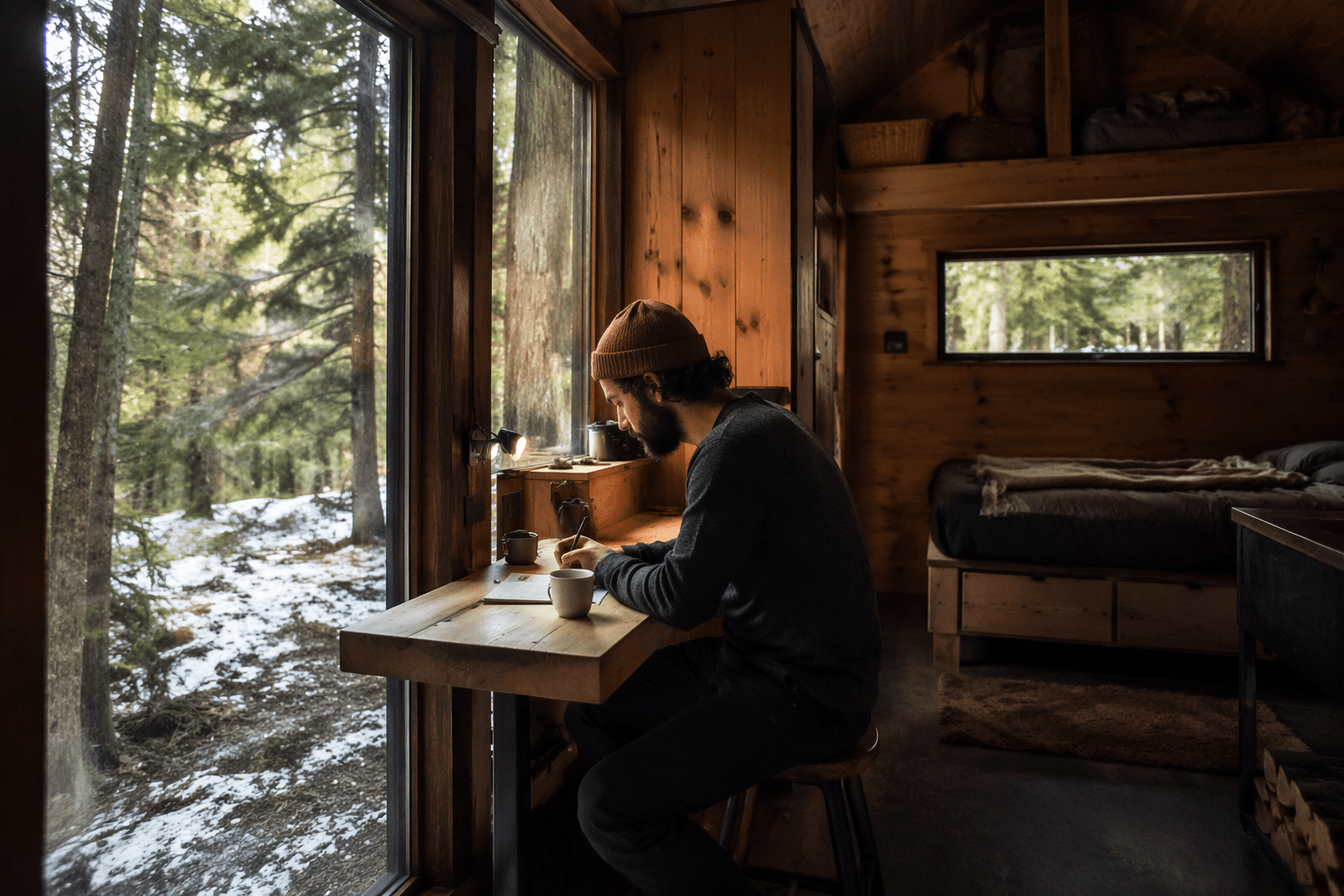
Inside, the tone stays soft and calm. Large windows on multiple walls keep the living area bright, while warm shiplap and a reclaimed wood-tile accent wall add the natural texture Rolling Bear leans into across the Lodge Series. The kitchen stays compact, but it is not stripped down: a butcher-style counter, black composite sink, cooktop, and open shelving cover the basics, and a cedar barn door hides the bathroom so the small plan still feels composed.
Flexible space is the real luxury here
The Panda Bear’s most interesting design choice may be the staircase. Buyers can choose either a spiral iron stair or a boxed cabinet stair, and that decision changes both the mood of the interior and the amount of usable floor space. A spiral stair reads lighter and more sculptural, while the boxed cabinet stair gives up one visual effect in exchange for more storage and a different circulation path.
Up top, the loft is intentionally flexible. It can function as a sleeping area, a studio, or storage depending on how the owner plans to use the retreat, which is exactly the kind of adaptability that matters in a solo-oriented tiny home. For a writer, that loft might become a quiet sleeping perch and the lower level a working room. For a host, it could support a guest-ready suite. For someone looking for a private backyard escape, it simply makes the unit feel more complete without forcing it into family-home expectations.
What the Panda Bear says about the next phase of tiny homes
Rolling Bear’s recent model rollout shows a builder leaning hard into use-case branding. Alongside the Panda Bear, the company has highlighted models such as the Honeycomb Mobile Office, Spirit Bear, Skylar Bear, and Koala Bear, each naming a different way people want to live or work in a small footprint. That spread makes the Panda Bear feel less like a one-off and more like evidence that tiny houses are breaking into distinct niches.
Seen that way, the Panda Bear is really aimed at buyers who want privacy, quiet, and a place that feels like a retreat from the main house or the main city. The model’s lodge styling, its single-person focus, and its British Columbia setting all reinforce the same idea: this is not trying to be all things to all buyers. It is trying to be the right small space for someone who wants to close the door, hear less, and keep the outside world at a deliberate distance.
This article was produced by Prism’s automated news system from verified source data, official records, and press releases, then run through automated quality and moderation checks before publishing. The system is built and supervised by the people who set the standards it runs under. Read our full AI policy.
Did this article answer your question?