Rooftop Terrace Tiny House Blends A-Frame Drama and Livable Luxury
The rooftop deck grabs attention, but Casa Francesca’s bigger story is whether its A-frame glamour still leaves room for real daily comfort.
A rooftop deck that changes the pitch
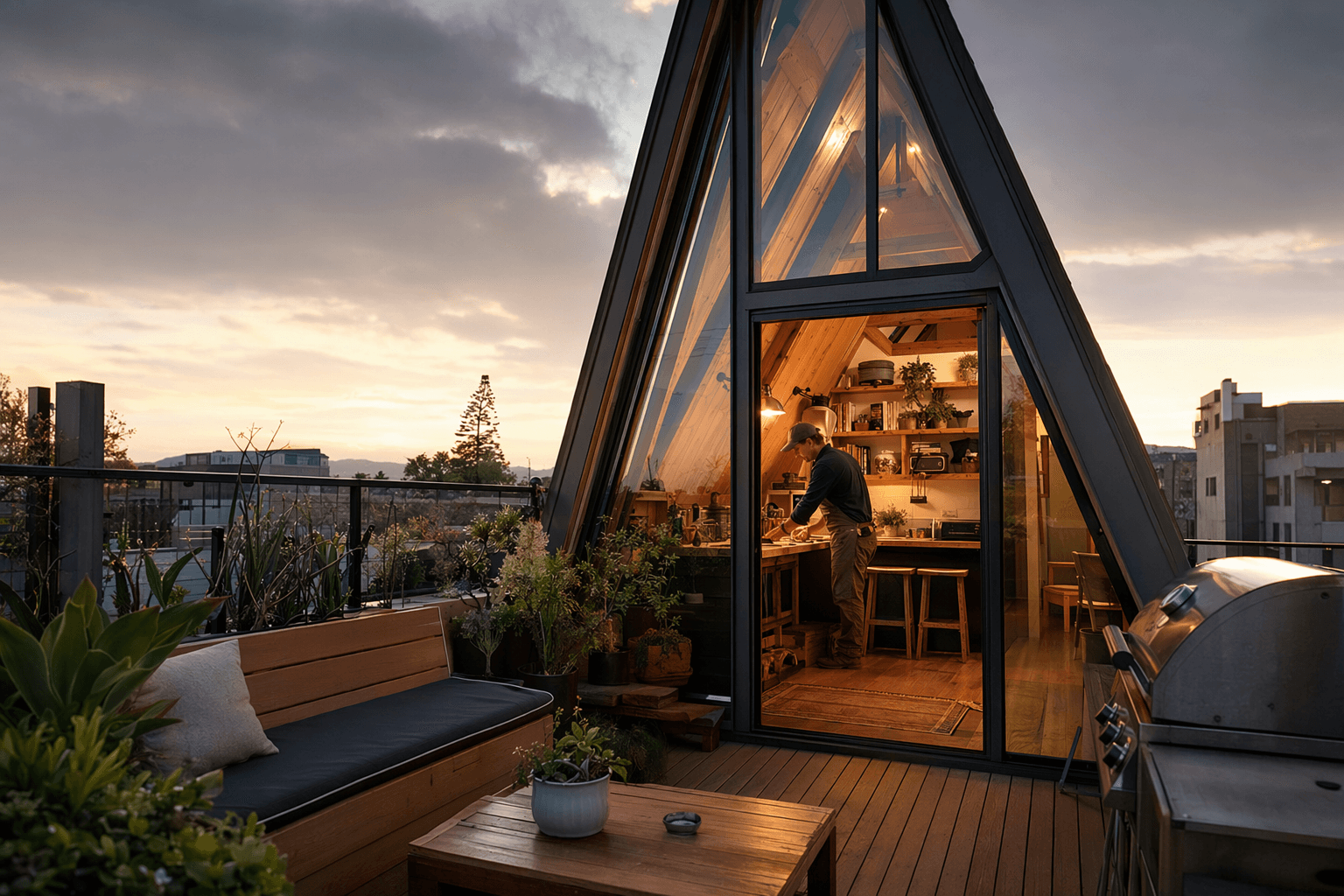
Casa Francesca makes its case fast: a 10-foot-wide, 39-foot-long A-frame tiny house on wheels with a rooftop terrace, a full glass front wall, and enough interior polish to feel more like a boutique retreat than a stripped-down trailer. The deck is the headline feature, but the real question for buyers is sharper: how much everyday livability are they willing to trade for that dramatic silhouette?
Mainefactured positions the model as its signature design, built in limited numbers each year to preserve craftsmanship. That scarcity matters because this is not a mass-market box on wheels. It is a statement build aimed at people who want architecture that photographs well, rents well, and still works for longer stays.
Why the market is paying attention
The timing of the recognition gives the model extra weight. Mainefactured says Casa Francesca earned Grand Champion design and build recognition at EarthX’s Environmental Xperience in Dallas, where tiny homes were part of the April 20-22 exhibit lineup. EarthX’s awards program is built around leadership and innovation at the intersection of capital, influence, and environmental progress, so the win places Casa Francesca in a setting that rewards more than style alone.
That matters because Casa Francesca is clearly being sold as a business asset as much as a home. Mainefactured says it targets investors looking for high-value guests, long-term performance, and return on investment, and its broader model lineup describes the A-frame luxury version with panoramic glass and a rooftop deck as designed for high-end rental performance. In other words, the rooftop terrace is not just a lifestyle flourish. It is part of the revenue story.
What the 10-by-39 footprint actually delivers
The inside layout shows that Mainefactured did not stop at exterior drama. The structure uses a steel frame with R-24 closed-cell spray foam in the walls, ceilings, and floors, which points to durability and thermal performance rather than decorative cabin styling. Two mini-splits help manage temperature, and that kind of climate control is essential if the home is expected to work as a short-term rental or a full-time downsized residence.
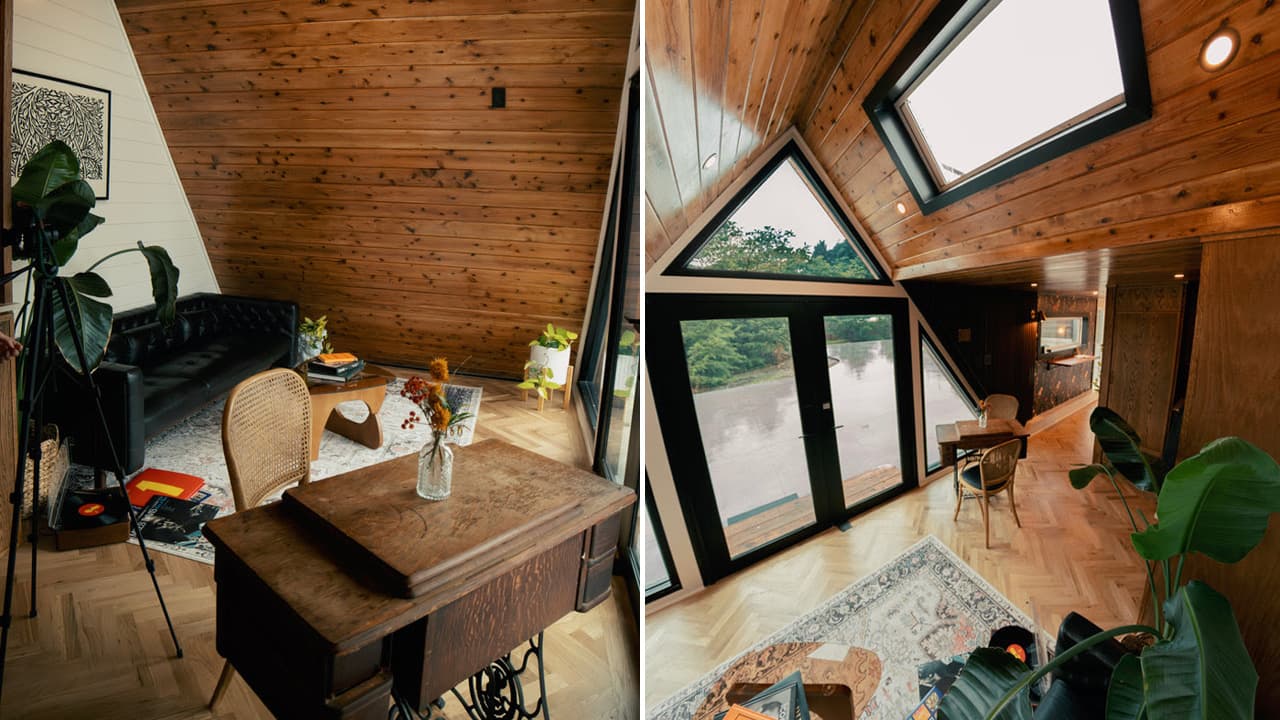
Inside, the finishes are unusually upscale for a compact mobile build. Tall cedar ceilings, handcrafted oak herringbone flooring, custom oak cabinetry, and quartz countertops give the home a polished, residential feel. The front of the house opens with a full glass wall and French doors into the living area, which is one of the biggest reasons the plan feels larger than its footprint.
The main living space can accommodate a convertible couch, a coffee table, drawer chests, an entertainment unit, and a dining setup. That is a meaningful amount of real use in a tiny house of this size, especially for buyers who expect guests, not just overnight stays.
How the interior handles daily living
Casa Francesca also works because the essential rooms are not treated as afterthoughts. The bathroom includes a glass shower door, tankless water heater, closet, sink, toilet, and tiled surfaces, which makes it feel more like a small luxury suite than a cramped utility box. The kitchen includes an induction cooktop, refrigerator, microwave, oven, quartz counters, and room for a washer and dryer, all of which push the home beyond weekend-cabin territory.
The bedroom is another strong signal that Mainefactured was designing for actual occupancy. It can fit a king-size bed, two nightstands, a dresser, and a cabinet. That kind of room count is rare in tiny homes with a dramatic roofline, and it makes the model more attractive to couples who want to downsize without giving up the core comforts of a conventional bedroom.
The real tradeoff behind the roofline
This is where the conversation gets interesting for the tiny-house community. A-frame drama sells fast, and the rooftop terrace extends that appeal by creating an outdoor zone that feels like a private overlook or vacation-rental perk. For the right buyer, that terrace can absolutely expand usable living space, especially when the goal is entertaining, relaxing, or creating a standout guest experience.
But every dramatic design choice brings tradeoffs. In an A-frame, sloping walls can reduce easy storage and make some corners less useful for tall furniture or everyday organization. A roof deck also introduces access questions, because a custom steel spiral staircase adds visual impact but also takes planning, maintenance, and safe use into the equation. Weather practicality matters too: a rooftop terrace is only as useful as the climate and upkeep allow, which means the feature is strongest as an amenity, not as a guaranteed extension of daily floor space.
That is why Casa Francesca lands in a sweet spot for a specific kind of buyer. If the priority is maximum storage and the simplest possible circulation, a boxier tiny house will usually win. If the priority is a memorable roofline, strong curb appeal, and a guest experience that feels high-end from the first glance, Casa Francesca makes a much stronger argument.
Why certification and delivery matter
Mainefactured says the model is NOAH-certified and delivered nationwide, and that certification gives the build another layer of credibility. NOAH RDI describes its certification as a voluntary program that inspects tiny homes for safety, structural, plumbing, electrical, and energy-efficiency standards. For buyers, that kind of third-party review can matter when zoning questions, insurance coverage, or financing are part of the decision.
Mainefactured also says its homes are engineered for long-term performance and built by a Texas-based family of builders and engineers. That positioning fits the product: steel-framed, climate-conscious, and designed to work across the U.S., not just in one niche resort market. The Standard version starts at $179,000, which places Casa Francesca firmly in premium tiny-house territory and reinforces that this is a craftsmanship-driven build, not a budget conversion.
The limited-edition angle
The Founder’s Edition pushes the concept even further. Mainefactured says it includes handcrafted walnut cabinetry, premium fixtures, and a custom steel spiral staircase to the rooftop terrace, plus a numbered brass plaque on each home. That turns the model into a collectible release as much as a dwelling, a move that fits the company’s limited-production strategy and its emphasis on award recognition.
For buyers and investors, that is the final takeaway. Casa Francesca is not trying to hide its ambition behind tiny-house minimalism. It leans into the A-frame fantasy, then backs it with steel construction, certified systems, upscale finishes, and a layout that still supports real living. The rooftop terrace may be the feature that gets the clicks, but the deeper appeal is whether this build can turn architectural drama into a property that actually performs.
This article was produced by Prism’s automated news system from verified source data, official records, and press releases, then run through automated quality and moderation checks before publishing. The system is built and supervised by the people who set the standards it runs under. Read our full AI policy.
Did this article answer your question?