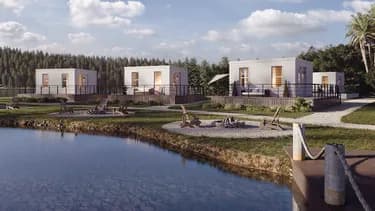
Wider Tiny House Design Makes Vagabond Haven's Smile Feel Apartment-Like
Vagabond Haven’s Smile shows how one extra meter of width can turn a tiny house into a genuinely livable couple’s space without bloating the footprint.
A wider shell changes the whole feel
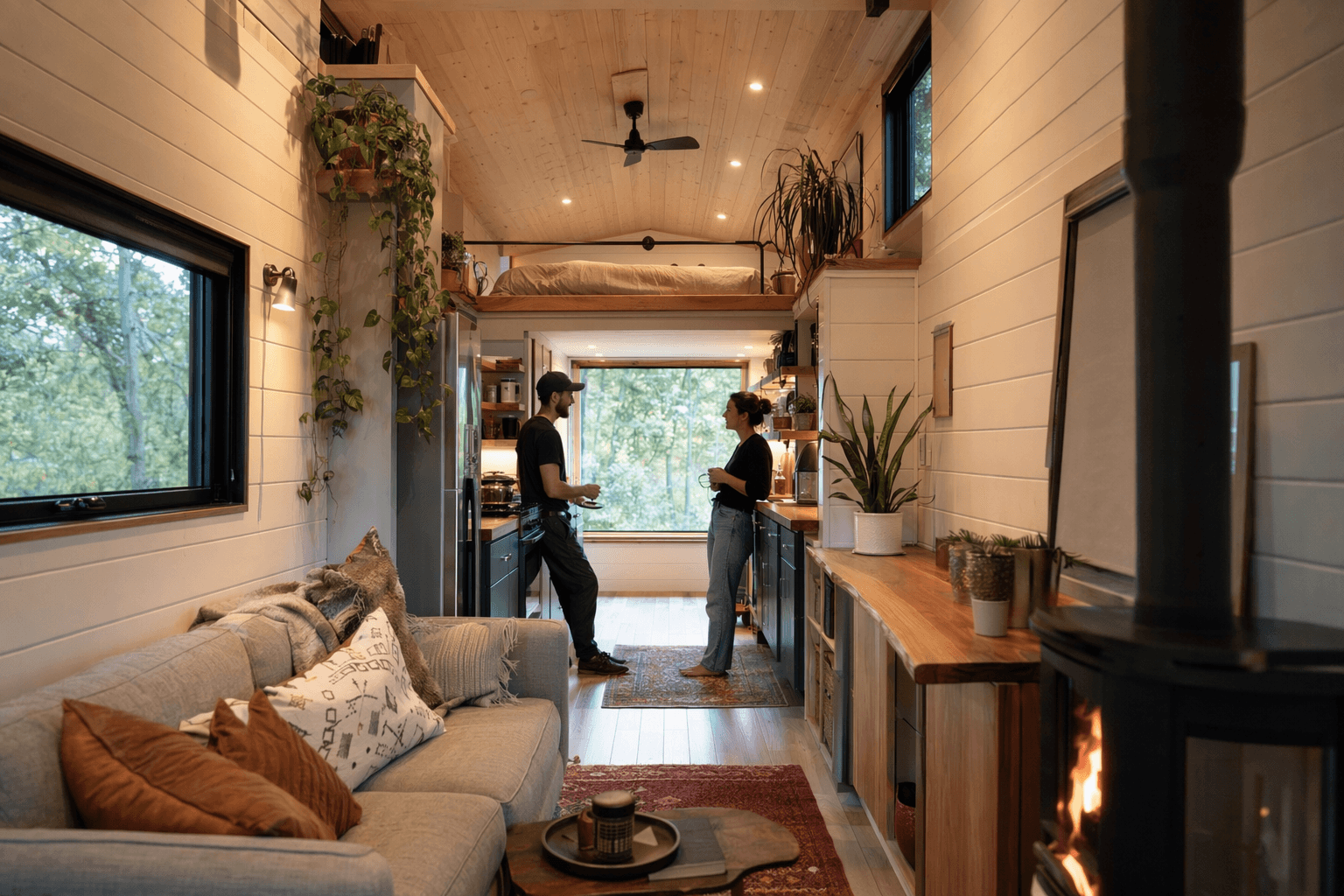
Vagabond Haven’s Smile is a clean case study in what a slightly wider tiny house can do. At 7.2 metres long and 3 metres wide, it stays compact, but that extra width gives the interior the kind of breathing room that makes it feel closer to an apartment than a cramped trailer.
The difference is not just visual. In a tiny house, width affects how two people move, sit, cook, and store daily life. Smile uses its 25 square metres well enough that the plan reads less like a novelty build and more like a small, practical home for two adults who want comfort without giving up the tiny-house scale.
Why the extra width matters for couples
This is the part that matters most if you are designing for real life instead of photos. In a narrower tiny house, every shared zone becomes a negotiation: who steps back, where the chair lands, how often you clip past each other in the aisle. Smile’s 3-metre footprint softens that friction. You get easier circulation, a living room that can hold a large sofa and coffee table without immediately feeling full, and enough leftover room for an entertainment center or extra seating.
That same breathing room carries into the kitchen. Smile’s layout includes an induction cooktop, sink, fridge, cabinetry, and a dining table for four. In practice, that means the kitchen is not just a pass-through galley where one person cooks while the other disappears. It is set up to handle actual use, including sitting down together, prepping together, and not feeling like the room collapses the second you open a drawer.
The interior feels apartment-like because it is organized like one
Vagabond Haven leans hard on height and openness to make the wider footprint work. The Smile uses a 3.2-metre ceiling and an airy layout, which stops the space from feeling boxed in. That vertical volume matters almost as much as the width, because once you spread a tiny home out horizontally, you still need somewhere for the eye to go.
The bathroom sits off the kitchen through a pocket door, and that small planning choice helps the home feel more like a proper compact apartment than a cabin. Inside, there is a shower, sink, and a choice of flushing, composting, or incinerating toilet, plus a washer-dryer. For couples, that combination is the real livability test: if the bath space is useful, the home starts to feel settled rather than temporary.
The loft-style bedroom continues the same logic. A storage-integrated staircase leads up to a double bed under a lower ceiling, which is a smart use of the vertical volume that frees the main floor from clutter. It is not a romantic fantasy loft; it is a practical sleeping zone tucked above the daily living space, and that distinction matters when two people are sharing the house full-time.
Smile is less about mobility and more about placement
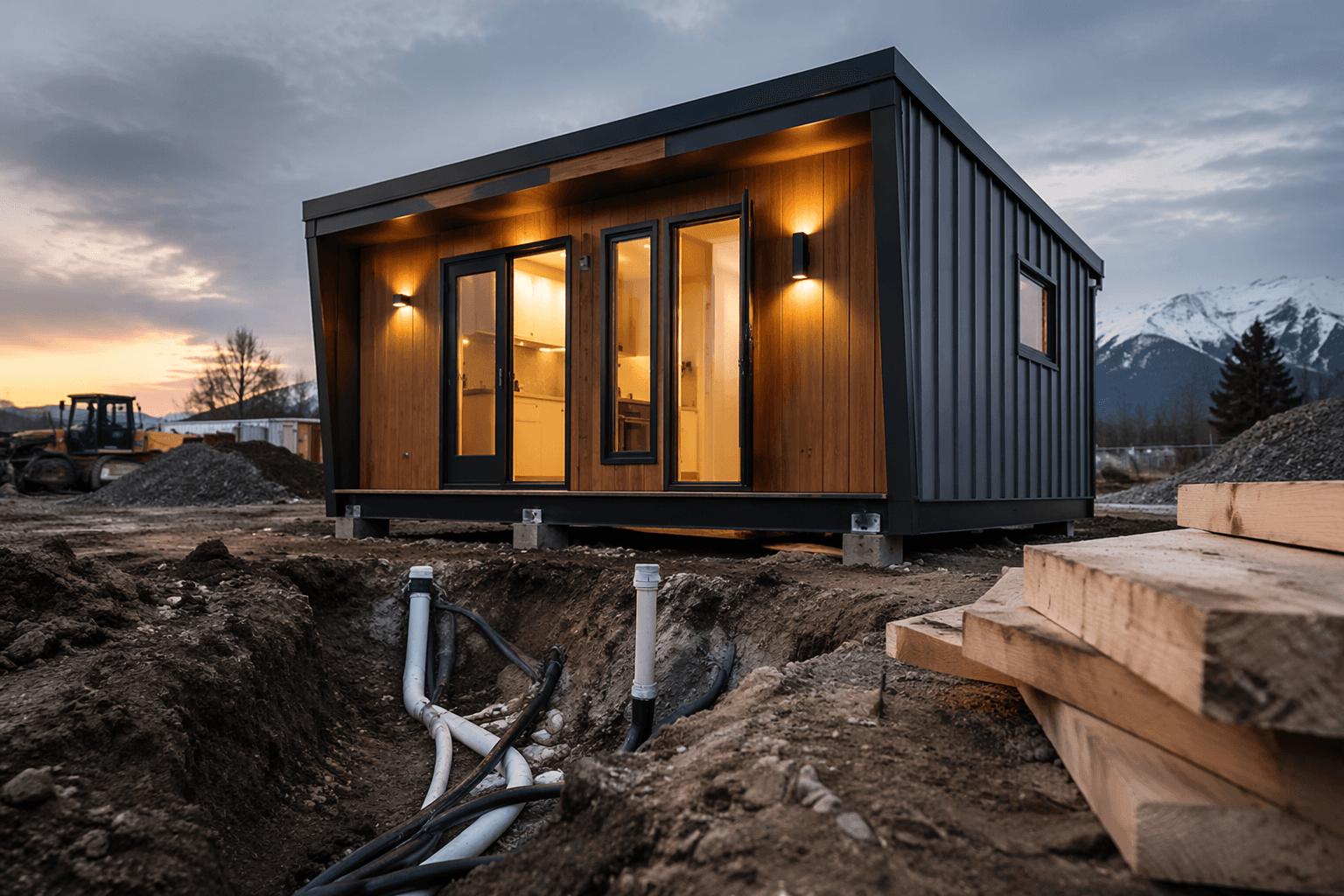
The tradeoff for that wider, more apartment-like interior is mobility. Smile sits on a double-axle trailer, but its wheels are rated only for small on-site movements, so it has to be delivered by truck rather than towed like a more conventional road-going tiny house. That changes how you should think about it from day one.
This is not the tiny house for someone who wants to wander between campsites with total independence. It is better understood as a compact home that is meant to be placed and lived in. If your priority is a stable siting, a more permanent setup, and an interior that can support everyday routines, that compromise makes sense. If you want frequent road travel, the wider format and limited wheel rating become a serious constraint.
Cost follows the same logic. Smile starts around €35,000, or roughly $41,000, and a Spassio listing puts it at about €30,645 plus VAT, which shows how configuration and market listing can shift the number. Either way, once you move into wider, more fitted-out territory, you are paying for comfort, not just square footage.
The useful upgrades make it easier to live with over time
Smile is not locked into a single spec. Vagabond Haven says the model can be customized, and the options include finish changes, a freestanding shed, and an off-grid package with solar panels, batteries, and water harvesting. That matters because a wider tiny house often starts to make sense when it is part of a broader site plan rather than a one-off shell.
For couples, the shed option is especially practical. It lets you keep bulkier gear out of the living area, which preserves the apartment-like feeling that the extra width creates. The off-grid package is the other smart move if the house is going to sit on a semi-permanent site, since a more settled home benefits from self-sufficiency as much as from layout.
Where Smile sits in Vagabond Haven’s lineup
Smile is not just a one-off design experiment. Vagabond Haven says it has 25 square metres of living area and is one of three homes in its “EXTRA LARGE” category. That tells you a lot about how the company thinks about size: not as bare-minimum minimalism, but as a livable range where the house can still feel compact without becoming ascetic.
The pricing ladder makes that clearer. Smile sits near the middle of the brand’s current lineup, while larger models such as Zenith are listed at 44 square metres and €53,380 plus VAT. That gap shows the design philosophy in action: Smile is the point where the brand’s comfort-first approach starts to feel spacious, but before the footprint climbs into genuinely larger-home territory.
Vagabond Haven says its homes are architect-designed, built from eco-friendly and healthy materials, and available for Europe-wide delivery. It also says it offers ready-built models for immediate delivery, which reinforces the company’s push toward turnkey living instead of kit-style hardship. The message is consistent from the product page to the wider brand: this is tiny housing for people who want the benefits of small living without the punishment.
From a family build to an established producer
That approach comes out of a real company arc. Vagabond Haven says its starting shot was in 2019 and that it has since built and delivered more than 200 homes across Scandinavia and Europe. A Swedish-language company page says Manuel Kohout built the first house for Vagabond Haven in 2017, and another company post says he hired two carpenters to help with the first houses before facing the bigger question of whether to expand his own workshop or partner with an established builder.
Kohout has described the founding idea in terms of nature, freedom, travel, lower housing costs, and well-being, summed up by the motto “build small, live big.” That philosophy explains why Smile is shaped the way it is. It is not trying to prove that people can endure tiny living. It is trying to make the case that a compact footprint, when widened just enough, can support the daily rhythm of two adults without making them feel like they are living on top of each other.
That is the real lesson here: a tiny house does not need to get much bigger to feel radically more comfortable. In Smile, a modest increase in width, a sensible ceiling height, and a layout that respects circulation turn 25 square metres into a home that reads as calm, usable, and surprisingly apartment-like.
This article was produced by Prism’s automated news system from verified source data, official records, and press releases, then run through automated quality and moderation checks before publishing. The system is built and supervised by the people who set the standards it runs under. Read our full AI policy.
Did this article answer your question?