Teacup Tiny Homes' Hyperion Proves Park Models Can Deliver Full Residential Comfort
Teacup Tiny Homes' 378-sq-ft Hyperion park model bundles a full bathtub, chef's kitchen, and R-40 insulation into a legal siting workaround that sidesteps standard THOW zoning limits.
[article below]
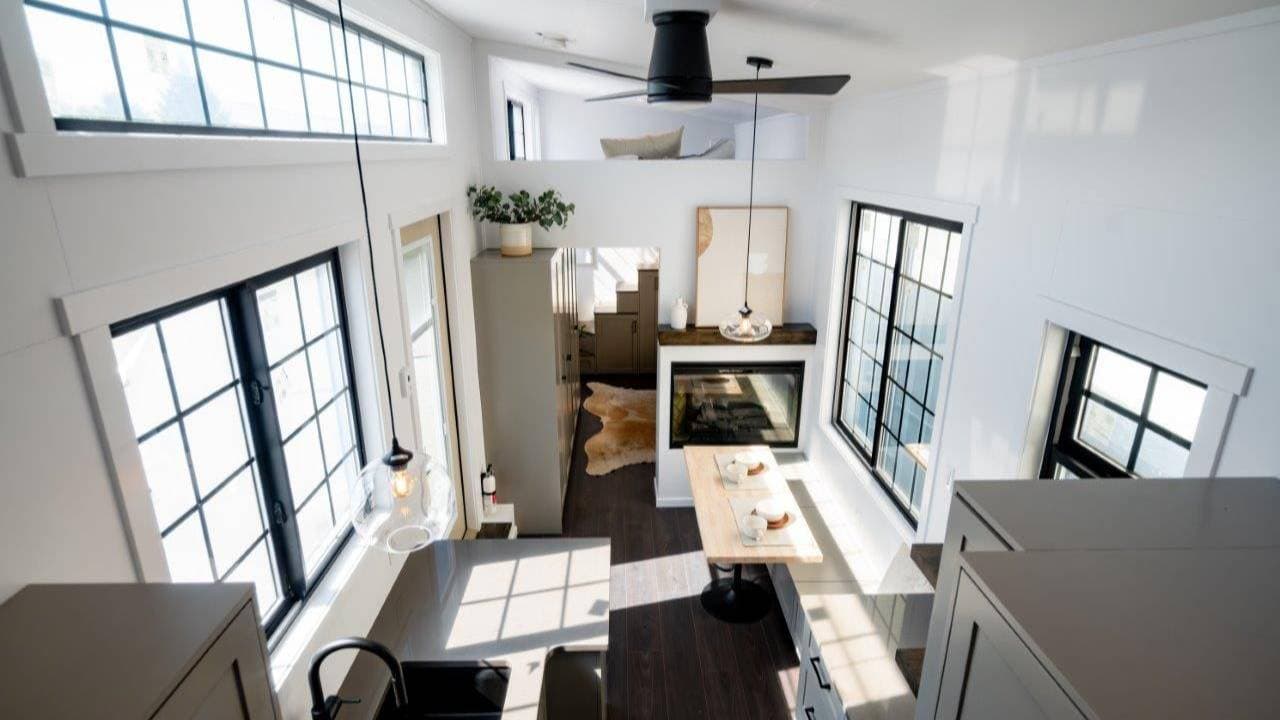
The Hyperion doesn't ask you to compromise. At 36 feet long and 10.5 feet wide, this park model from Alberta-based Teacup Tiny Homes clocks in at 378 square feet and delivers what most compact builds only promise: a private ground-floor bedroom, a full bathroom with a bathtub, a proper chef's kitchen, and a sleeping loft reached by storage-integrated stairs. It's engineered for Canadian winters and full-time occupancy, not weekend retreats. And its classification as a park model rather than a standard tiny house-on-wheels changes nearly every practical calculation a prospective buyer needs to make.
What "Park Model" Actually Means for Siting
The 10.5-foot width is the number that defines everything. Standard road-legal tiny homes on wheels max out at 8.5 feet across; the Hyperion's extra two feet push it out of THOW territory and into park model status, certified to CSA Z241 in Canada. That single classification shift has cascading effects. Park model units are routinely permitted at RV resorts and designated tiny-home communities where a standard THOW might face resistance, but they require special oversize permits for road transport. They are not weekend-relocatable units; they are designed for long-term or seasonal placement, and moving one demands a heavy-duty tow vehicle and advance permitting coordination.
For buyers who feel hemmed in by traditional zoning, this is precisely the workaround the Hyperion represents. Many municipalities that restrict accessory dwelling units or prohibit THOWs on residential lots have separate provisions for RV parks and park model communities. Before signing anything, verify three things with your local authority: whether park models are permitted on your target site, what hook-up infrastructure is required, and whether your jurisdiction has adopted the CSA Z241 standard or applies a different classification system entirely.
The CSA Loft Change Buyers Must Know
Here's the regulatory detail that catches shoppers off guard. The 2018 CSA 241-PM code revision eliminated lofts from Canadian park model certification. Teacup is explicit about this on their own site: any park model they build will be constructed without a loft under current Canadian certification requirements. The Hyperion, as profiled, includes a sleeping loft, which signals it was either custom-built under prior code conditions or built to a different certification standard. If a sleeping loft is on your must-have list, this code distinction is a direct conversation to have with your builder before deposit. U.S. buyers should confirm whether their state's adopted RV code mirrors the Canadian restriction or permits lofts under separate provisions.
Cold-Climate Engineering: The Specs That Matter
Teacup has been building since 2016 and has built a specific reputation around cold-weather performance. The Hyperion's full-time-living positioning is backed by a mechanical and insulation system that treats comfort in sub-zero temperatures as a baseline, not an upgrade. Standard specs across Teacup's builds include:
- R-22 wall insulation and R-40 ceiling and subfloor insulation, material thresholds that exceed what most RV-certified units carry
- Dual-pane low-E windows with a screen package, reducing heat loss while maintaining the light-filled interior the Hyperion's design prioritizes
- In-floor radiant heat as standard, which Teacup specifically identifies as "paramount for successful cold weather comfort" given that floor-level warmth eliminates the cold zones that forced-air heating leaves near the ground
- HVAC combination system covering heat, ventilation, and air conditioning for year-round climate control
- Certifications to RVIA, CSA Z240 RV, Z241 Park Model, and CSA A277 (for foundation-set variants), giving buyers documented assurance of build quality
Teacup clients living in units through Canadian winters have reported interior temperatures of +28°C when outdoor overnight temperatures dropped to -40°C. That is not a marketing claim; it is a field-tested outcome from the insulation and heating stack described above.
The Floor Plan as a Comfort Argument
The Hyperion's layout makes the case that 378 square feet can function like a small house rather than an oversized camper. The ground-floor bedroom is a genuine private room, not a loft space requiring a ladder at 2 a.m. The full bathroom includes a bathtub, a feature that distinguishes this category from virtually all compact THOW builds, where a tub is almost always the first thing eliminated. The centralized kitchen and living area is designed around proper appliances and prep space, earning the "chef's kitchen" label rather than just the headline. And the storage-integrated staircase to the sleeping loft turns what is typically dead space into functional cabinetry, a design move that reclaims square footage without adding footprint.
The Hyperion was a custom commission, and the client-facing quote on Teacup's own site captures what the build process felt like from the buyer side: "I had met with other builders but when I met Jen (the owner)... I could feel her passion and excitement about tiny homes and what we could create together."
The Buyer's Cold-Weather Checklist
If the Hyperion is the model, here is the verification list every serious buyer of a full-time park model should run through before committing:
1. Confirm local siting rules. Call your municipality or county zoning office and ask specifically whether CSA Z241-certified park models are permitted on your target site. "RV park" and "tiny home community" are not interchangeable in every jurisdiction.
2. Verify insulation minimums. Insist on documented R-values for walls, ceiling, and subfloor. R-22/R-40 is Teacup's standard; anything significantly below that in a cold-climate unit deserves scrutiny.
3. Check the heating system. In-floor radiant heat, a backup heat source, and a functional HVAC system should all be present and documented. Ask what the system is rated for in terms of minimum outdoor temperature.
4. Confirm window specification. Dual-pane low-E is the floor for cold-climate full-time living. Single-pane windows in a northern winter represent a significant ongoing energy cost.
5. Ask about the loft. Given the CSA 241-PM code change, clarify what certification your unit will carry and whether a loft is permitted under that certification in your location.
6. Confirm utility hookups. Full-time occupancy requires electrical, water, and sewer connections rated for residential use. Confirm the unit's hook-up specifications match what your target site provides.
7. Review transport permitting. Oversize permits for a 10.5-foot-wide unit vary by state and province. If you ever plan to relocate, understand the permit process and associated cost before you buy.
What the Hyperion Signals About the Market
Park models are increasingly where the premium end of the tiny home market is landing. Teacup's pricing for park models with the finishes seen on the Hyperion starts above $200,000 CAD plus GST, reflecting the use of residential-grade materials, full appliance packages, and the engineering overhead of a cold-climate build. That price sits well above entry-level THOW territory but well below the cost of a conventional small home in most Canadian or northern U.S. markets.
The broader trend the Hyperion represents is a category convergence: builders are erasing the functional gap between a tiny home and a small house. When a 378-square-foot unit on a trailer can deliver a bathtub, a real kitchen, a private bedroom, and demonstrated -40°C performance, the remaining objections are almost entirely regulatory rather than livability-based. For buyers willing to do the jurisdictional homework, that gap is closing fast.
Let me now format the final output properly:
The Hyperion doesn't ask you to compromise. At 36 feet long and 10.5 feet wide, this park model from Alberta-based Teacup Tiny Homes clocks in at 378 square feet and delivers what most compact builds only promise: a private ground-floor bedroom, a full bathroom with a bathtub, a proper chef's kitchen, and a sleeping loft reached by storage-integrated stairs. It's engineered for Canadian winters and full-time occupancy, not weekend retreats. And its classification as a park model rather than a standard tiny house-on-wheels changes nearly every practical calculation a prospective buyer needs to make.
What "Park Model" Actually Means for Siting
The 10.5-foot width is the number that defines everything. Standard road-legal tiny homes on wheels max out at 8.5 feet across; the Hyperion's extra two feet push it out of THOW territory and into park model status, certified to CSA Z241 in Canada. That single classification shift has cascading effects. Park model units are routinely permitted at RV resorts and designated tiny-home communities where a standard THOW might face resistance, but they require special oversize permits for road transport. They are not weekend-relocatable units; they are designed for long-term or seasonal placement, and moving one demands a heavy-duty tow vehicle and advance permitting coordination.
For buyers who feel hemmed in by traditional zoning, this is precisely the workaround the Hyperion represents. Many municipalities that restrict accessory dwelling units or prohibit THOWs on residential lots have separate provisions for RV parks and park model communities. Before signing anything, verify three things with your local authority: whether park models are permitted on your target site, what hook-up infrastructure is required, and whether your jurisdiction has adopted the CSA Z241 standard or applies a different classification system entirely.
The CSA Loft Change Buyers Must Know
Here's the regulatory detail that catches shoppers off guard. The 2018 CSA 241-PM code revision eliminated lofts from Canadian park model certification. Teacup is explicit about this on their own site: any park model they build will be constructed without a loft under current Canadian certification requirements. The Hyperion, as profiled, includes a sleeping loft, which signals it was either custom-built under prior code conditions or built to a different certification standard. If a sleeping loft is on your must-have list, this code distinction is a direct conversation to have with your builder before deposit. U.S. buyers should confirm whether their state's adopted RV code mirrors the Canadian restriction or permits lofts under separate provisions.
Cold-Climate Engineering: The Specs That Matter
Teacup has been building since 2016 and has built a specific reputation around cold-weather performance. The Hyperion's full-time-living positioning is backed by a mechanical and insulation system that treats comfort in sub-zero temperatures as a baseline, not an upgrade. Standard specs across Teacup's builds include:
- R-22 wall insulation and R-40 ceiling and subfloor insulation, material thresholds that exceed what most RV-certified units carry
- Dual-pane low-E windows with a screen package, reducing heat loss while maintaining the light-filled interior the Hyperion's design prioritizes
- In-floor radiant heat as standard, which Teacup specifically identifies as "paramount for successful cold weather comfort" given that floor-level warmth eliminates the cold zones that forced-air heating leaves near the ground
- HVAC combination system covering heat, ventilation, and air conditioning for year-round climate control
- Certifications to RVIA, CSA Z240 RV, Z241 Park Model, and CSA A277 (for foundation-set variants), giving buyers documented assurance of build quality
Teacup clients living in units through Canadian winters have reported interior temperatures of +28°C when outdoor overnight temperatures dropped to -40°C. That is not a marketing claim; it is a field-tested outcome from the insulation and heating stack described above.
The Floor Plan as a Comfort Argument
The Hyperion's layout makes the case that 378 square feet can function like a small house rather than an oversized camper. The ground-floor bedroom is a genuine private room, not a loft space requiring a ladder at 2 a.m. The full bathroom includes a bathtub, a feature that distinguishes this category from virtually all compact THOW builds, where a tub is almost always the first thing eliminated. The centralized kitchen and living area is designed around proper appliances and prep space, earning the "chef's kitchen" label rather than just the headline. And the storage-integrated staircase to the sleeping loft turns what is typically dead space into functional cabinetry, a design move that reclaims square footage without adding footprint.
The Hyperion was a custom commission, and the client-facing quote on Teacup's own site captures what the build process felt like from the buyer side: "I had met with other builders but when I met Jen (the owner)... I could feel her passion and excitement about tiny homes and what we could create together."
The Buyer's Cold-Weather Checklist
If the Hyperion is the model, here is the verification list every serious buyer of a full-time park model should run through before committing:
1. Confirm local siting rules. Call your municipality or county zoning office and ask specifically whether CSA Z241-certified park models are permitted on your target site. "RV park" and "tiny home community" are not interchangeable in every jurisdiction.
2. Verify insulation minimums. Insist on documented R-values for walls, ceiling, and subfloor. R-22/R-40 is Teacup's standard; anything significantly below that in a cold-climate unit deserves scrutiny.
3. Check the heating system. In-floor radiant heat, a backup heat source, and a functional HVAC system should all be present and documented. Ask what the system is rated for in terms of minimum outdoor temperature.
4. Confirm window specification. Dual-pane low-E is the floor for cold-climate full-time living. Single-pane windows in a northern winter represent a significant ongoing energy cost.
5. Ask about the loft. Given the CSA 241-PM code change, clarify what certification your unit will carry and whether a loft is permitted under that certification in your location.
6. Confirm utility hookups. Full-time occupancy requires electrical, water, and sewer connections rated for residential use. Confirm the unit's hook-up specifications match what your target site provides.
7. Review transport permitting. Oversize permits for a 10.5-foot-wide unit vary by state and province. If you ever plan to relocate, understand the permit process and associated cost before you buy.
What the Hyperion Signals About the Market
Park models are increasingly where the premium end of the tiny home market is landing. Teacup's pricing for park models with the finishes seen on the Hyperion starts above $200,000 CAD plus GST, reflecting the use of residential-grade materials, full appliance packages, and the engineering overhead of a cold-climate build. That price sits well above entry-level THOW territory but well below the cost of a conventional small home in most Canadian or northern U.S. markets.
The broader trend the Hyperion represents is a category convergence: builders are erasing the functional gap between a tiny home and a small house. When a 378-square-foot unit on a trailer can deliver a bathtub, a real kitchen, a private bedroom, and demonstrated -40°C performance, the remaining objections are almost entirely regulatory rather than livability-based. For buyers willing to do the jurisdictional homework, that gap is closing fast.
The Hyperion doesn't ask you to compromise. At 36 feet long and 10.5 feet wide, this park model from Alberta-based Teacup Tiny Homes clocks in at 378 square feet and delivers what most compact builds only promise: a private ground-floor bedroom, a full bathroom with a bathtub, a proper chef's kitchen, and a sleeping loft reached by storage-integrated stairs. It's engineered for Canadian winters and full-time occupancy, not weekend retreats. And its classification as a park model rather than a standard tiny house-on-wheels changes nearly every practical calculation a prospective buyer needs to make.
What "Park Model" Actually Means for Siting
The 10.5-foot width is the number that defines everything. Standard road-legal tiny homes on wheels max out at 8.5 feet across; the Hyperion's extra two feet push it out of THOW territory and into park model status, certified to CSA Z241 in Canada. That single classification shift has cascading effects. Park model units are routinely permitted at RV resorts and designated tiny-home communities where a standard THOW might face resistance, but they require special oversize permits for road transport. They are not weekend-relocatable units; they are designed for long-term or seasonal placement, and moving one demands a heavy-duty tow vehicle and advance permitting coordination.
For buyers who feel hemmed in by traditional zoning, this is precisely the workaround the Hyperion represents. Many municipalities that restrict accessory dwelling units or prohibit THOWs on residential lots have separate provisions for RV parks and park model communities. Before signing anything, verify three things with your local authority: whether park models are permitted on your target site, what hook-up infrastructure is required, and whether your jurisdiction has adopted the CSA Z241 standard or applies a different classification system entirely.
The CSA Loft Change Buyers Must Know
Here's the regulatory detail that catches shoppers off guard. The 2018 CSA 241-PM code revision eliminated lofts from Canadian park model certification. Teacup is explicit about this on their own site: any park model they build will be constructed without a loft under current Canadian certification requirements. The Hyperion, as profiled, includes a sleeping loft, which signals it was either custom-built under prior code conditions or built to a different certification standard. If a sleeping loft is on your must-have list, this code distinction is a direct conversation to have with your builder before deposit. U.S. buyers should confirm whether their state's adopted RV code mirrors the Canadian restriction or permits lofts under separate provisions.
Cold-Climate Engineering: The Specs That Matter
Teacup has been building since 2016 and has built a specific reputation around cold-weather performance. The Hyperion's full-time-living positioning is backed by a mechanical and insulation system that treats comfort in sub-zero temperatures as a baseline, not an upgrade. Standard specs across Teacup's builds include:
- R-22 wall insulation and R-40 ceiling and subfloor insulation, material thresholds that exceed what most RV-certified units carry
- Dual-pane low-E windows with a screen package, reducing heat loss while maintaining the light-filled, airy interior the Hyperion's design prioritizes
- In-floor radiant heat as standard, which Teacup specifically identifies as "paramount for successful cold weather comfort," given that floor-level warmth eliminates the cold zones that forced-air heating leaves near the ground
- HVAC combination system covering heat, ventilation, and air conditioning for year-round climate control
- Certifications to RVIA, CSA Z240 RV, Z241 Park Model, and CSA A277 (for foundation-set variants), giving buyers documented assurance of build quality
Teacup clients living in units through Canadian winters have reported interior temperatures of +28°C when outdoor overnight temperatures dropped to -40°C. That is not a marketing claim; it is a field-tested outcome from the insulation and heating stack described above.
The Floor Plan as a Comfort Argument
The Hyperion's layout makes the case that 378 square feet can function like a small house rather than an oversized camper. The ground-floor bedroom is a genuine private room, not a loft space requiring a ladder at 2 a.m. The full bathroom includes a bathtub, a feature that distinguishes this category from virtually all compact THOW builds where a tub is almost always the first thing eliminated. The centralized kitchen and living area is designed around proper appliances and prep space, earning the "chef's kitchen" label rather than just claiming it. And the storage-integrated staircase to the sleeping loft turns what is typically dead space into functional cabinetry, a design move that reclaims square footage without adding footprint.
The Hyperion was a custom commission, and a buyer quote on Teacup's own site captures what working with the company actually felt like: "I had met with other builders but when I met Jen (the owner)... I could feel her passion and excitement about tiny homes and what we could create together."
The Buyer's Cold-Weather Checklist
If the Hyperion is the model, here is the verification list every serious buyer of a full-time park model should run through before committing:
1. Confirm local siting rules. Call your municipality or county zoning office and ask specifically whether CSA Z241-certified park models are permitted on your target site. "RV park" and "tiny home community" are not interchangeable in every jurisdiction.
2. Verify insulation minimums. Insist on documented R-values for walls, ceiling, and subfloor. R-22 in walls and R-40 in ceiling and floor is Teacup's documented standard; anything significantly below that in a cold-climate unit deserves scrutiny.
3. Check the heating system. In-floor radiant heat, a backup heat source, and a functional HVAC system should all be present and documented. Ask what the system is rated for in terms of minimum outdoor temperature.
4. Confirm window specification. Dual-pane low-E is the floor for cold-climate full-time living. Single-pane windows in a northern winter represent a significant and ongoing energy penalty.
5. Ask about the loft. Given the 2018 CSA 241-PM code change, clarify what certification your unit will carry and whether a loft is permitted under that certification in your location.
6. Confirm utility hookups. Full-time occupancy requires electrical, water, and sewer connections rated for residential use. Confirm the unit's hook-up specifications match what your target site provides.
7. Review transport permitting. Oversize permits for a 10.5-foot-wide unit vary by state and province. If you ever plan to relocate, understand the permit process and associated cost before you buy.
What the Hyperion Signals About the Market
Park models are increasingly where the premium end of the tiny home market is landing. Teacup's pricing for park models with the finishes seen on the Hyperion starts above $200,000 CAD plus GST, a number that reflects residential-grade materials, full appliance packages, and the engineering overhead of a cold-climate build. That sits well above entry-level THOW territory but well below the cost of a conventional small home in most Canadian or northern U.S. markets.
The broader trend the Hyperion represents is a category convergence: builders are erasing the functional gap between a tiny home and a small house. When a 378-square-foot unit on a trailer can deliver a bathtub, a serious kitchen, a private bedroom, and demonstrated -40°C performance, the remaining objections are almost entirely regulatory rather than livability-based. For buyers willing to do the jurisdictional homework upfront, the gap between "tiny home" and "real home" is narrower than it has ever been.
This article was produced by Prism’s automated news system from verified source data, official records, and press releases, then run through automated quality and moderation checks before publishing. The system is built and supervised by the people who set the standards it runs under. Read our full AI policy.
Did this article answer your question?