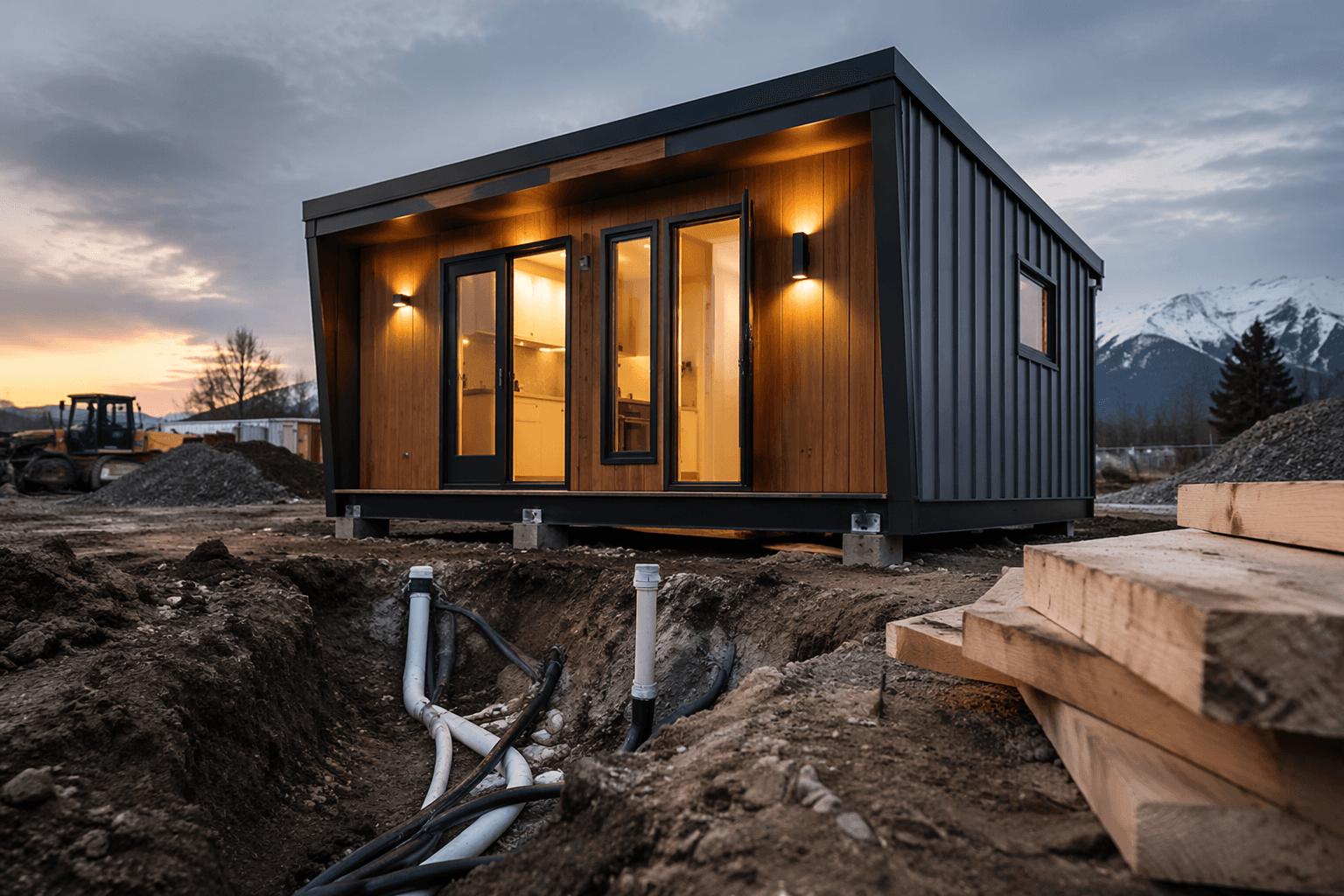
Family of Four Shares Best and Worst Features of Their 560-Square-Foot Tiny Home
A family of four squeezed into 560 square feet built their custom tiny home for under $8,000 — but four years in, the no-dishwasher decision still stings daily.
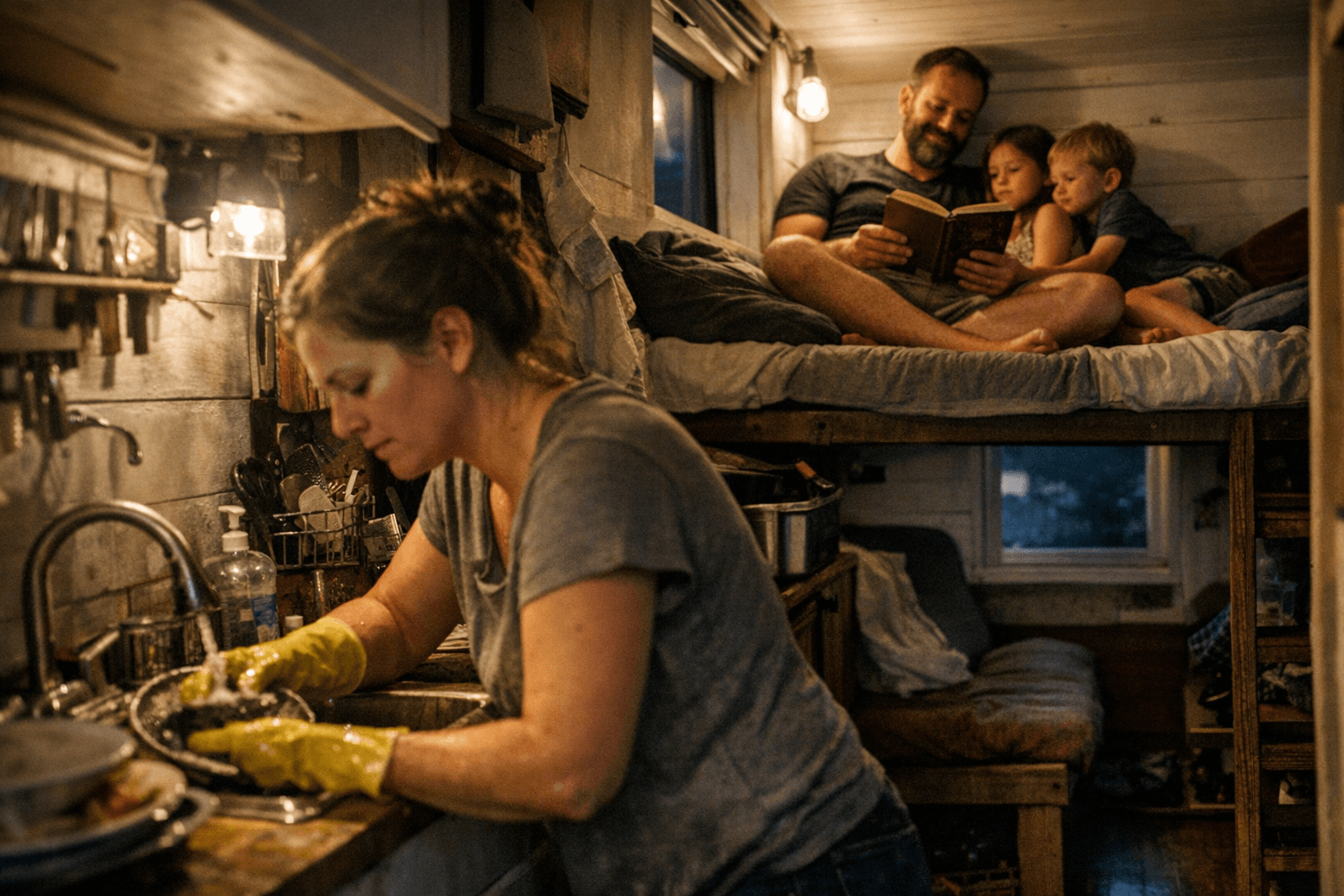
Four years into full-time tiny living, Carson and Brielle Matranga have a clear-eyed answer for anyone who asks whether a family of four can actually make it work inside 560 square feet: yes, but the design decisions you get wrong will find you every single day.
The Matrangas built their first version of the home themselves, a self-contracted job completed in May 2022 with help from Brielle and Carson's grandfather. The original structure came in at 416 square feet, studio-style, and the total build cost landed at roughly $7,655, not counting interior furnishings. They paid $1,795 for outside contractors to lay the concrete foundation, $375 for the construction permit, and sourced the slab, rebars, and main door through Carson's grandfather. By any conventional housing measure, it was an extraordinary outcome. A family put a permanent roof over their heads for less than most people spend on a used car.
But 416 square feet as a studio configuration, with two children in the picture, forced an expansion. The Matrangas added a separate bedroom, pushing the total footprint to roughly 560 square feet. That addition is what makes their story useful as a blueprint: it shows both what thoughtful small-footprint design can achieve and exactly where the seams start to show when real family life collides with a compact floor plan.
The Design Feature That Earns Its Square Footage
Ask Brielle Matranga what she'd fight to keep in any future tiny build, and the answer is the ceiling. The home's 12-foot ceilings, paired with clerestory windows positioned high on the walls, do more spatial heavy lifting than any single design element in the house. Brielle told Business Insider that the combination makes the compact interior feel significantly larger and dramatically improves daylight throughout the day. Her recommendation to anyone planning a tiny home: go taller, even if it costs you somewhere else in the budget.
This is not decorative preference. In a sub-600-square-foot home, vertical space is the one dimension that doesn't compete directly with furniture placement, traffic flow, or storage. Clerestory windows, specifically, pull light deep into the floor plan without sacrificing wall space that would otherwise hold shelving or cabinetry. For families weighing where to spend their per-square-foot budget, the Matrangas' four years of daily experience makes a compelling case that ceiling height is the last place to value-engineer down.
The ground-floor bedroom placement was another deliberate layout call that paid off. Avoiding a loft-style sleeping situation, which is common in smaller tiny builds, made the space genuinely workable for a household with young children. Loft bedrooms can feel like an adventure for adults; for a family with kids who need accessible, consistent sleep routines, a proper ground-level bedroom changes the daily equation entirely.
Where the Compromises Accumulate
The honest accounting of tiny family life shows up in the kitchen and the hallway. Brielle described sometimes having to "shimmy past" a kitchen trash can just to access the bathroom, a mundane friction point that nonetheless captures how precisely a small-home layout has to be choreographed. When a single misplaced bin creates a daily obstacle course, it signals how little margin exists for anything that wasn't planned down to the inch.
Both Carson and Brielle cited the absence of a dishwasher as one of the decisions they'd reverse if they were building today. In a home where two adults and two children generate dishes around the clock, hand-washing is not a minor inconvenience; it's a recurring time cost that compounds across years. The same goes for storage: the Matrangas identified the lack of it as a persistent pain point, the kind that doesn't announce itself dramatically but slowly taxes daily life through clutter, lost items, and the constant negotiation of where things live.
These are not design failures unique to the Matrangas. They're patterns that emerge in nearly every honest tiny-home family profile, which is precisely what makes their specificity valuable. Knowing in advance that a family of four will outpace a studio-style 416 square feet, that a dishwasher slot is worth whatever it displaces, and that storage planning needs to happen before walls go up rather than after, these are the calibrations that separate a liveable tiny home from a daily exercise in frustration.
The Financial Reality
The economic driver behind the Matrangas' build is not subtle. Rising housing costs pushed a generation of buyers and renters toward radical alternatives, and a custom home built for under $8,000 on a family member's property represents a financial outcome that conventional housing simply cannot match at that price point. Four years in, the family continues to operate with a dramatically reduced housing footprint in terms of both cost and physical space, and their story sits within a broader cohort treating owner-built small-footprint housing as a long-term financial strategy rather than a temporary experiment.
The tradeoff is real work: the daily friction of a cramped kitchen path, the absence of labor-saving appliances, the constant management of limited storage. Those pain points don't disappear, but for the Matrangas, they've proven manageable across four years and a family expansion.
Who This Works For, and Who Should Think Twice
The Matranga model makes the most sense if you can check most of these boxes:
- You have access to land, whether a family parcel or a long-term arrangement, that removes the cost of purchasing a lot
- You're willing to self-contract or take on significant build labor to keep costs in the sub-$10,000 range
- You can prioritize design decisions that serve a family: ground-floor bedrooms, maximum ceiling height, and storage-first cabinetry over aesthetic choices
- You're building with a long-term mindset and can phase in expansions, as the Matrangas did, when the original footprint stops working
It is a harder fit if you're expecting a plug-and-play lifestyle with standard appliances and conventional square footage norms. The absence of a dishwasher is a small example of a larger principle: in 560 square feet, every omission has a daily cost. Families who go in without mapping those tradeoffs explicitly tend to discover them the hard way.
The Matrangas went in with open eyes, built something that worked on a shoestring, and have spent four years refining their understanding of what matters in a small-footprint family home. The ceiling stays. The trash can moves.
This article was produced by Prism’s automated news system from verified source data, official records, and press releases, then run through automated quality and moderation checks before publishing. The system is built and supervised by the people who set the standards it runs under. Read our full AI policy.
Did this article answer your question?