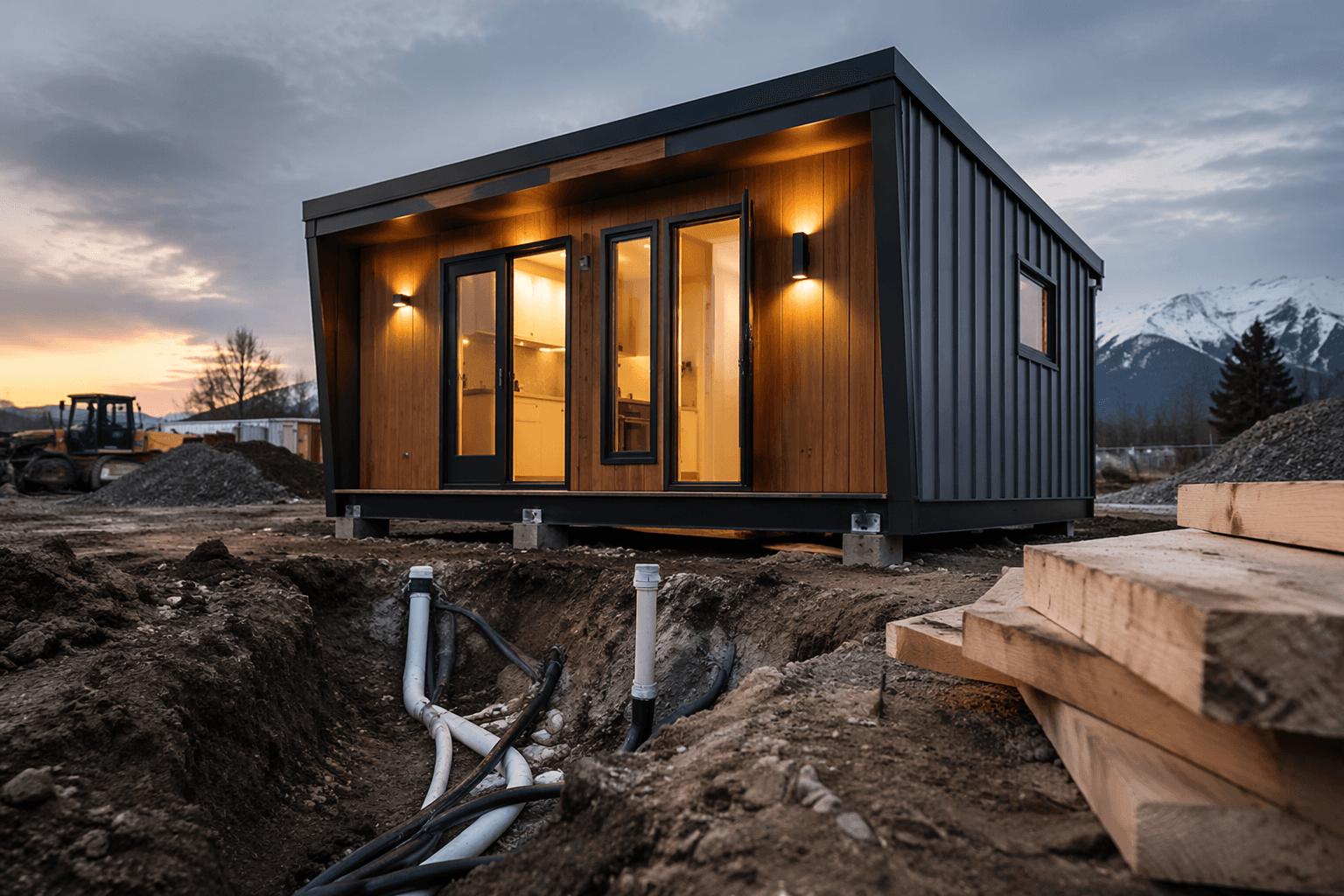
The Other Side Foundation expands tiny-home village and housing network
Nearly 60 tiny homes are only part of the story. The real test is whether The Other Side’s unpaid-labor model can keep expanding housing without undercutting its mission.

The Other Side Village is no longer just a tiny-home pilot on Salt Lake City’s west side. It now sits inside a larger housing-and-business network with nearly 60 single-person homes, apartment holdings, a community center, a life-skills school, and another doughnut shop on the way. That reach has made the project a showcase for recovery-minded housing, but also an accountability story about who does the work, who gets the benefit, and what the public is really subsidizing.
A tiny-home village that grew into an ecosystem
What makes this project different from a stand-alone tiny-house development is the scale around it. The Other Side Foundation has built a footprint in central Salt Lake City that ties housing to employment and recovery services, instead of treating the village as an isolated shelter model. The former Latter-day Saint chapel in the network was turned into a community center and life-skills school, and the organization is also controlling apartment complexes while preparing to open another doughnut shop.
That broader structure matters because the village is not being asked to carry the whole mission on its own. The homes give residents a place to land, but the businesses and adjacent properties are part of the same system, helping keep people connected to work, support, and transition pathways. In tiny-house terms, this is not a minimalist experiment. It is a full recovery economy built around small homes.
How the program began
The academy traces its roots to January 2014, when Joseph Grenny and his wife, Celia, received a letter from an inmate named Zach at Utah County Jail. The historic Armstrong Mansion in downtown Salt Lake City became the home for The Other Side Academy, which describes itself as a 501(c)(3) nonprofit offering a two-year residential program plus a six-month transitional program.
The academy says it accepts men and women ages 18 to 64 and works with diversion, alternative sentencing, probation, and parole referrals. In practice, that puts the program at the intersection of housing, criminal-justice diversion, and rehabilitation. KUER described the model as a 2.5-year residential-and-transitional program, and one participant said the organization paid for his flight to Utah, a reminder that the network is recruiting far beyond state lines.
The labor model at the center of the controversy
The sharpest tension in the story is the work requirement. The Salt Lake Tribune reported that students and graduates work at Other Side businesses without pay for two years while receiving housing and support. About half of the academy’s students are criminal defendants who agree to the program instead of serving time behind bars.
That arrangement helps explain how the organization keeps adding properties and services. Unpaid labor supports the businesses, and the businesses help support the mission. For supporters, that reads as structure, accountability, and a second chance made tangible. For critics, it raises a harder question: when does a recovery program become dependent on labor it does not pay, especially when public money is also in the mix?
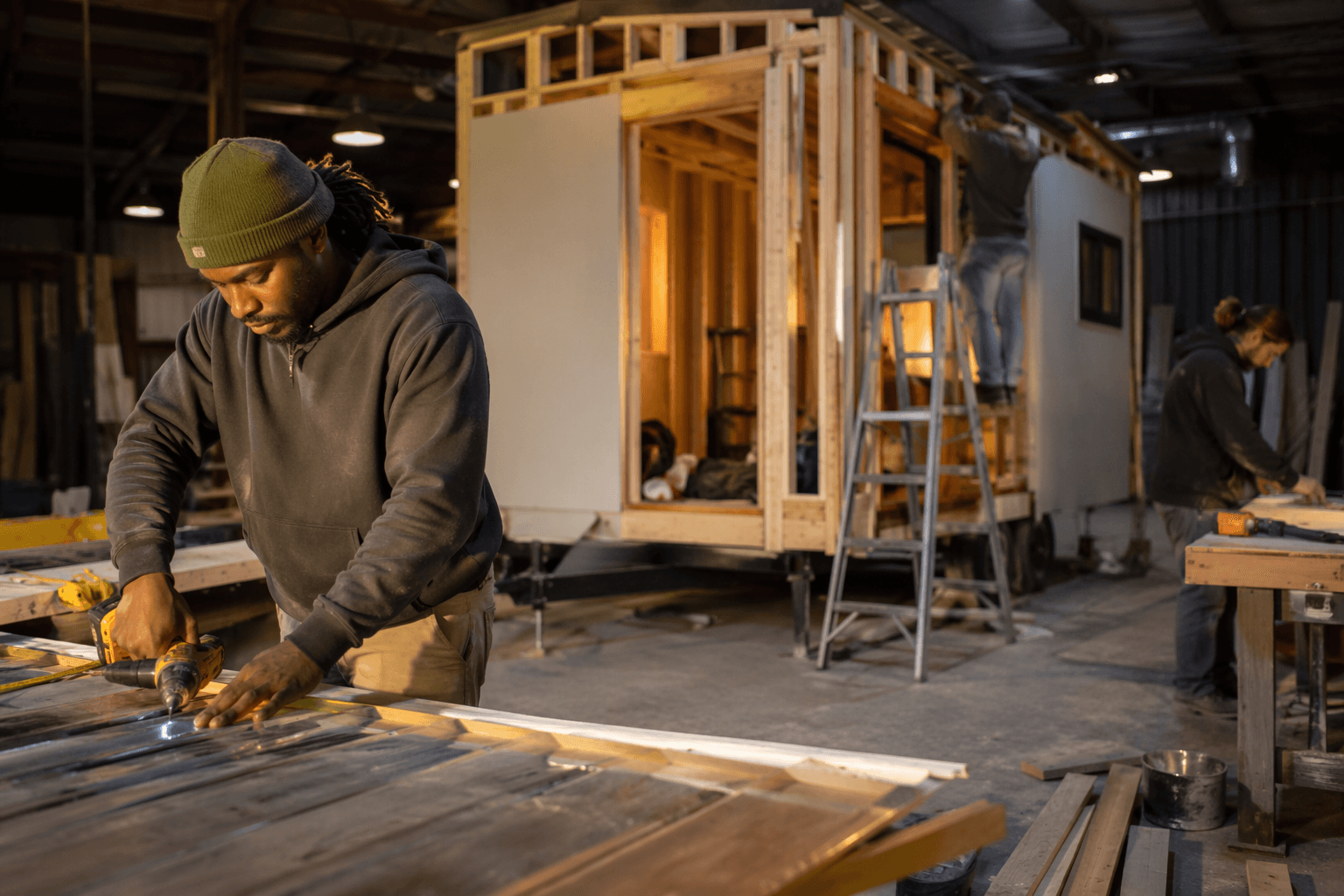
The organization has said it rejects government funding in principle, yet the buildout has continued with taxpayer support. That contradiction is at the heart of the accountability debate. The housing network may be giving people shelter and a path forward, but it is also asking participants to power a growing enterprise that extends well beyond the village itself.
Where the tiny-home village stands now
Salt Lake City says The Other Side Village’s pilot project sits on city-owned land at 1850 W Indiana Avenue, a 70-acre parcel that was a municipal landfill from 1923 to 1962. That location matters as much symbolically as it does practically. The project is transforming a long-neglected piece of public land into housing, but it is doing so under a model that blends private branding, civic support, and resident labor.
The buildout has been staged. In February 2025, coverage said the former LDS chapel was being converted into a prep school for prospective village residents, showing that the training pipeline came before the village reached its current size. Later coverage said the village launched a second phase, with the Miller and Boyer families, The Church of Jesus Christ of Latter-day Saints, and the state committing $30 million to expansion. The church pledged $5 million, and the state pledged $3 million.
A June 2026 report said the village had installed another tiny home and described the neighborhood as democratically run by residents with a focus on accountability. That governance style fits the organization’s broader philosophy: peer oversight, structure, and a strong emphasis on personal responsibility. Erin Mendenhall has described the village as a “beacon of hope and healing,” reflecting the public support surrounding the project even as the labor and funding model continues to invite scrutiny.
What the long-term plan says about the scale
The village website puts the long-range ambition plainly: 430 fully furnished cottage-style homes on a 39-acre site in Salt Lake City. Each home is about 400 square feet and includes a kitchen, bathroom, bedroom, and stocked essentials. That is a major leap from a pilot village with nearly 60 units, and it shows how quickly a tiny-home project can become a redevelopment strategy.
For tiny-house readers, the lesson is not just about square footage. It is about how a small-footprint housing model can be used to anchor a much larger system of rehabilitation, public funding, philanthropy, and labor. The homes may be compact, but the policy questions around them are not.
The Other Side Village is proving that tiny homes can do more than house people for a moment. They can become the visible center of a whole recovery network, which is exactly why the question of unpaid work matters so much. If the village keeps growing, the real measure will not be the number of cottages alone, but whether the model’s promise still holds once the labor behind it is fully counted.
This article was produced by Prism’s automated news system from verified source data, official records, and press releases, then run through automated quality and moderation checks before publishing. The system is built and supervised by the people who set the standards it runs under. Read our full AI policy.
Did this article answer your question?