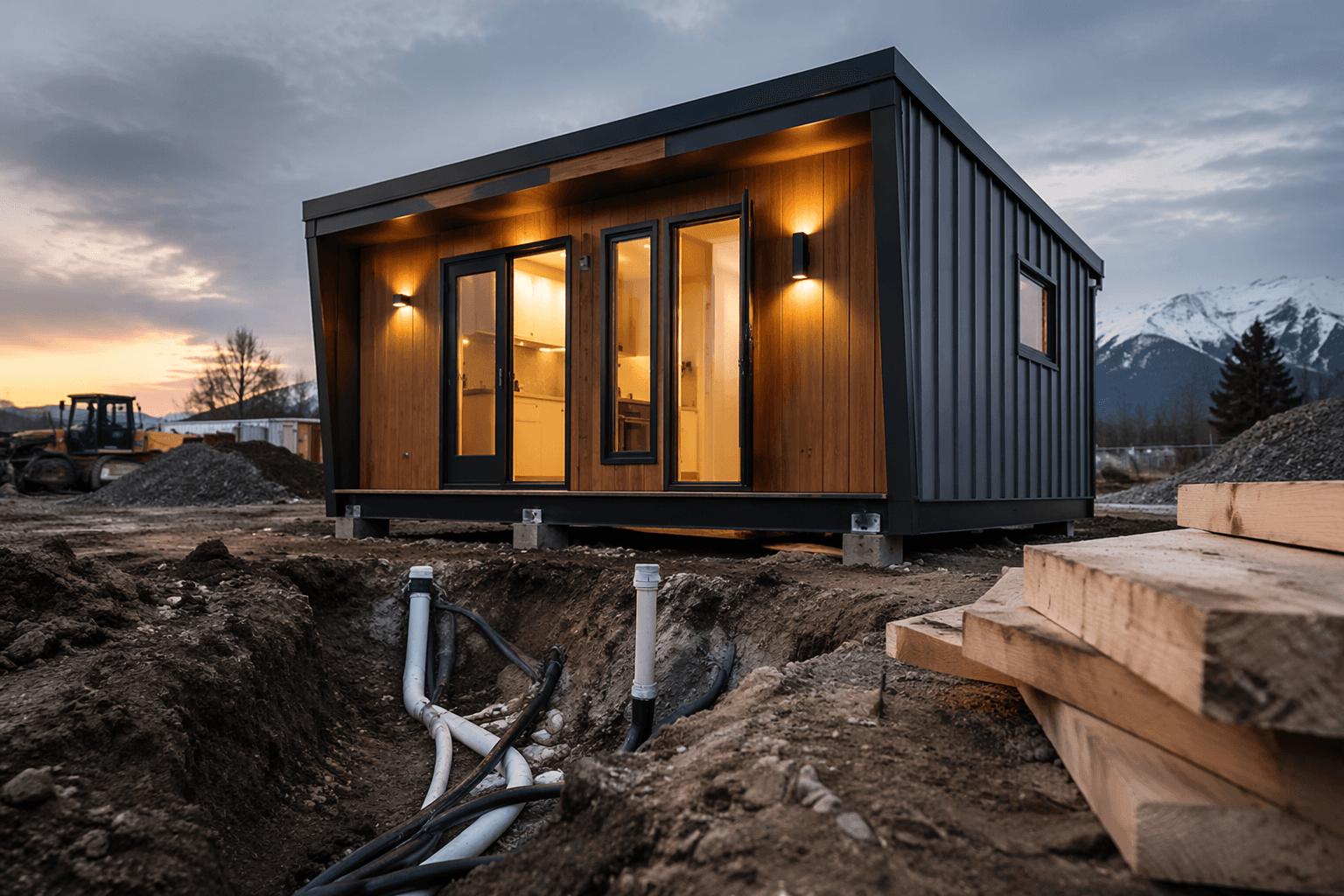
Tiny House Basics trailers boost comfort with wider, certified foundations
Wider decks, box-tube steel, and Stage 1 certification make the trailer the make-or-break safety system under every tiny home on wheels.
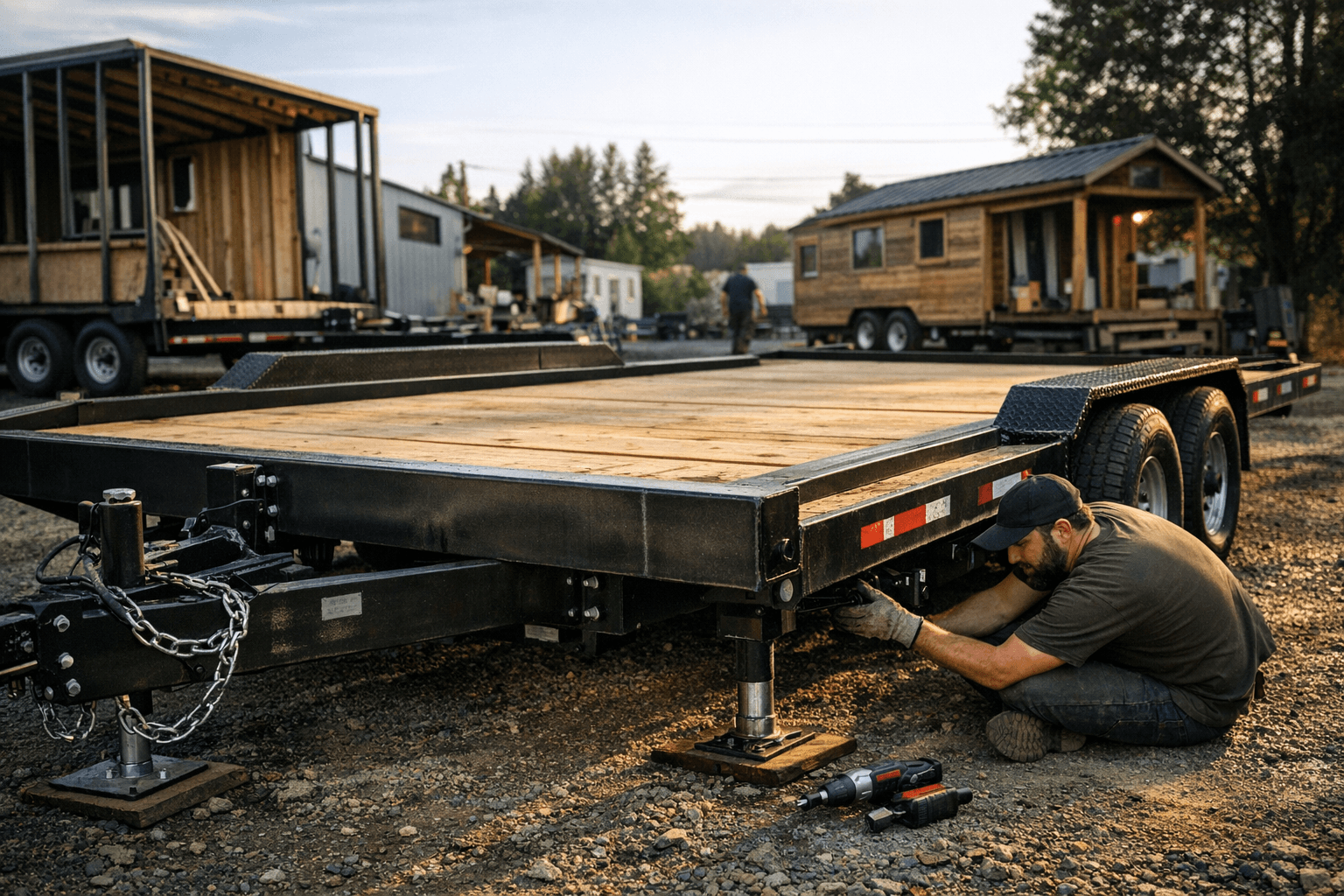
Tiny home buyers love to focus on finishes, but the real make-or-break decision sits underneath the floor. The trailer determines whether the home is legal to move, stable on the road, properly balanced once it is parked, and durable enough to survive years of travel and daily living.
That is why Tiny House Basics has become such an important name in the tiny-house world. The company builds purpose-built tiny-house trailers for people who actually live tiny, and its approach starts with lived experience as much as metalwork. Joshua and Shelley Engberg chose tiny living in 2014 after facing high living costs, then built their own 28-foot tiny house on wheels. Joshua brought metal-fabrication and custom-trailer experience, while Shelley brought interior design knowledge, and that mix shows up in the way the company talks about both structure and livability.
Why the trailer matters before a wall goes up
A tiny house on wheels is only as good as the foundation it rides on. If the trailer flexes too much, the house above it can crack, shift, or wear out faster during transport. If the width, axle setup, or weight distribution is off, the build may feel cramped, tow badly, or create long-term safety problems.
Tiny House Basics leans into that reality with box-tube steel construction for its main frame rails and crossmembers. Box tube is more rigid than flat stock flanges, which matters because less flex means less chance of siding or drywall damage when the home is being moved. The company also uses fully insulatable subfloors and perimeter load-bearing frames, both of which help support the weight of a real house, not just a shell.
Certification gives builders a checkpoint, not a gamble
One of the clearest signs that the tiny-house market is maturing is the move toward formal inspection. Tiny House Basics says its trailers exceed NOAH Stage 1 requirements, which gives builders a foundation checkpoint before the home reaches a driveway. That matters because Stage 1 is where the trailer itself is inspected for the frame, axles and tires, brakes on each axle, and the frame’s length and width.
That early review changes the risk profile of the whole project. If the trailer is wrong, every later step, from framing to rough-in systems, has to work around a weak starting point. A certified foundation does not finish the house for you, but it reduces the chance that the entire build begins on a bad base.
Wider trailers are changing what tiny living feels like
The most noticeable shift in this part of the market is width. Tiny House Basics helped popularize wider formats, and its 10-foot and 12-foot options have become a serious comfort upgrade over the standard 8.5-foot travel width. Those extra feet open the door to traditional furniture, full-size appliances, and layouts that feel more like a permanent home than a narrow camper.
The company says its 10-foot-wide trailers can be built from 10 feet to 48 feet long, including gooseneck configurations. It also says oversized trailers use custom 10-foot-wide axles so the fenders stay on the side of the deck for better road manners. Its 12-foot-wide trailer frames are offered from Texas, Pennsylvania, and California, with standard deck, deckover, and drop-axle configurations.
For anyone trying to build a home that will actually be comfortable day after day, that matters. Width affects how a kitchen functions, whether a hallway feels tight, and whether a living area can hold more than built-in benches and fold-down tables. In practice, the wider formats push tiny houses closer to small homes than novelty spaces.
The company model goes beyond a one-time sale
Another part of Tiny House Basics’ appeal is that it does not stop at the trailer sale. The company offers lifetime consulting and custom design support, which turns the relationship into something closer to a long-term build partnership. When plumbing, electrical, or structural questions come up, that kind of access can save time, money, and rework.
That support also reflects how the company sees itself. Its story is not just about manufacturing; it is about builders helping builders, with the founders’ own tiny-house experience shaping the product. Earlier reporting described the company as building over 450 custom tiny-house trailers per year, a scale that shows this is no longer a niche side project. It has become a significant manufacturer in a market that depends on specialized equipment.
What to look for before you start building
If you are choosing a trailer for a tiny home on wheels, the safest decision is to treat the trailer as the house’s most important structural purchase. Before framing begins, focus on the specs that affect legality, road safety, and how the finished home will live over time.
The biggest checkpoints are:
- Width and length, especially if you want a 10-foot or 12-foot layout instead of the standard 8.5-foot profile
- Trailer type, including bumper-pull or gooseneck, depending on how you plan to tow
- Frame construction, with box-tube rails and crossmembers offering greater rigidity
- Load support, including perimeter load-bearing frames and fully insulatable subfloors
- Certification, with Stage 1 inspection helping confirm the foundation before the build moves forward
- Builder support, especially if you want custom design help after the trailer is delivered
These details are not glamorous, but they decide whether a tiny house feels solid, towable, and comfortable once it is finished. A well-built trailer can make the difference between a cramped experiment and a durable home.
The bottom line for tiny-house buyers
Tiny House Basics shows how far the tiny-house market has moved toward professional standards. The company blends the credibility of lived tiny-house experience, the practical discipline of metal fabrication, and a more serious approach to inspection and structural design. Its wider trailers, certified foundations, and lifetime support all point to the same conclusion: the trailer is not just a platform, it is the hidden foundation that decides whether the rest of the house can work.
For anyone planning a tiny home on wheels, that is the first decision to get right. A strong, certified, properly sized trailer does more than carry the build. It protects the legality, safety, comfort, and durability of the whole home from the very beginning.
This article was produced by Prism’s automated news system from verified source data, official records, and press releases, then run through automated quality and moderation checks before publishing. The system is built and supervised by the people who set the standards it runs under. Read our full AI policy.
Did this article answer your question?