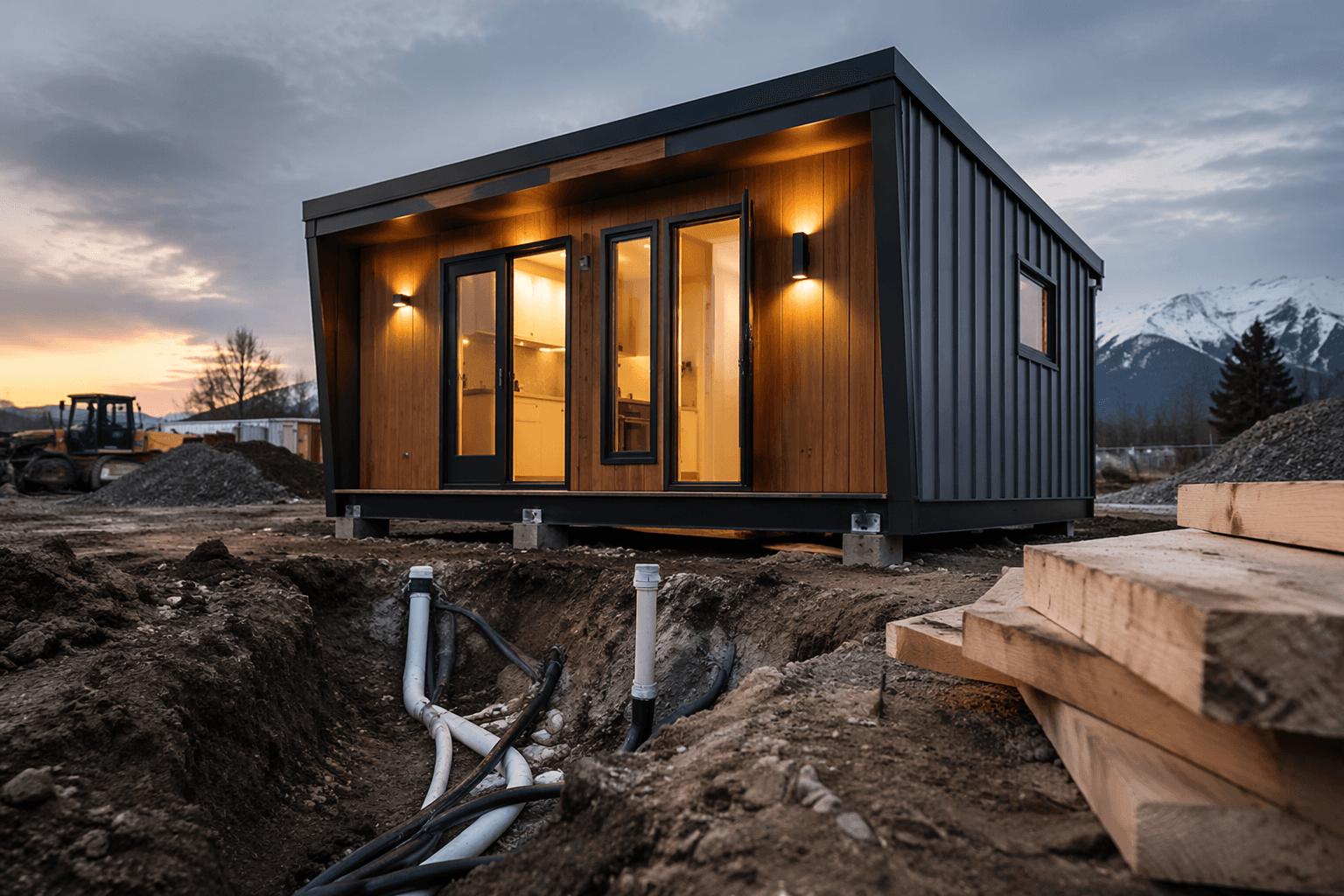
Tiny House Expedition's "Living Tiny Legally" Series Tackles Zoning Hurdles in Three Parts
For the first time in ICC history, an outside film crew filmed inside the hearing room where tiny house Appendix Q was approved for the 2018 International Residential Code.
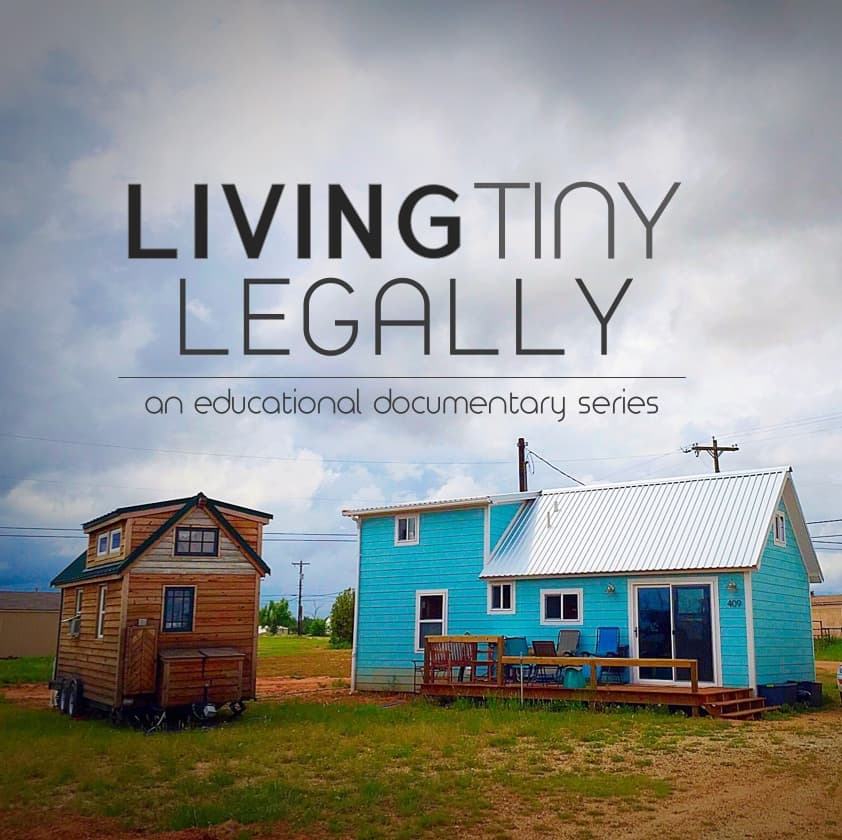
The most consequential moment Tiny House Expedition ever filmed wasn't a tour or a community profile. It was a vote. Public comment RB168-16, the tiny house appendix, passed its final round of International Code Council voting, receiving the required two-thirds majority. Tiny House Expedition's filmmakers Alexis Stephens and Christian Parsons were in the room to capture it, and that access was unprecedented: it was the first time in International Code Council history that an outside film crew had been granted permission to film inside the hearing room and to distribute the footage publicly.
The "Living Tiny Legally" series is an educational documentary series that explores the benefits tiny housing can bring to a community and how legal obstacles are being overcome across the United States, produced by Tiny House Expedition, a documentary and community outreach project led by Stephens and Parsons, who travel North America in their tiny home on wheels. The series spans three parts, with Parts 1 and 2 completed and Part 3 currently in production.
Part 1 opens on the zoning side of the legalization equation. It provides an in-depth, inside look into how a handful of cities from across the country are making legal tiny housing and legal tiny house communities a reality via innovative zoning, with policymakers sharing their methods and insights to demystify the planning and zoning process, and advocates providing a better understanding of the tiny house movement and the benefits tiny homes could bring to a community. The film's centerpiece is the ICC hearing itself, covering the arguments for why the appendix was needed, its implications for the movement, and the next steps for implementing it locally. The new Appendix Q addresses standards for dwellings 400 square feet or less, and it represents the first set of building standards for dwellings ever incorporated into a model code.
Part 2 shifts from zoning to building codes. It explores the benefits of tiny housing, examines the need for building standards, and looks at how current codes can be updated to be more tiny house friendly. Two case studies anchor the episode. One is the Construction Careers Academy in San Antonio, a CTE program that opened the door for permitted, inspected, and certified tiny houses. The other is Walsenburg, Colorado, told as a behind-the-scenes story of how the small city became a tiny house friendly town, covering both zoning and building codes.
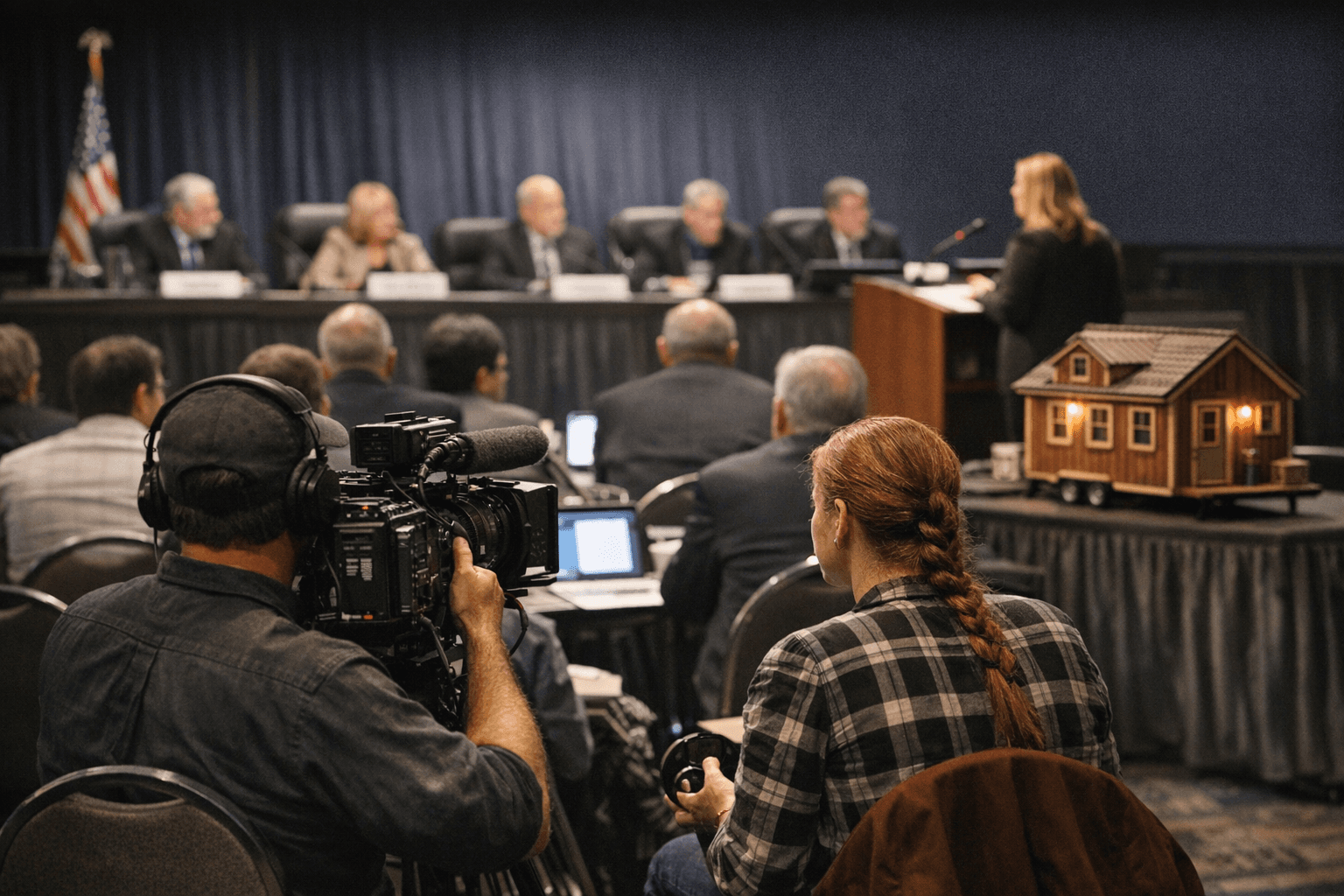
Part 3 hasn't finished filming yet, but its focus is already pointed at the hardest question in the movement: where do legalization efforts go from here? The finished series has already earned traction well beyond the tiny house community. The films have been featured in Parade Magazine, TreeHugger, and Curbed, and have been used as educational tools across the world, serving as a go-to resource for the State of Colorado, Ventura County in California, and the City of Victoria in British Columbia.
The zoning mechanics the series covers are more straightforward than most people assume. Municipalities can permit tiny homes by right, through a conditional use permit from the planning commission, by special exception from the zoning board, or through a building permit approved by the building inspector. The more common sticking point is definitional: local zoning codes written around conventional single-family homes often simply don't have language that fits a 200-square-foot structure. Lowering minimum square footage thresholds or aligning a tiny home's specs with an existing "detached second dwelling unit" definition are the two most practical paths forward. Amending those definitions is also, notably, one of the fastest and lowest-cost routes to affordable housing a municipality can take, because the cost of construction shifts almost entirely to the private market rather than requiring public subsidy.
Parts 1 and 2 are available online and have been applauded across North America as an insightful, inspiring educational resource for both tiny house advocates and government officials. Anyone trying to move the needle in their own city should watch both before walking into a planning commission meeting.
This article was produced by Prism’s automated news system from verified source data, official records, and press releases, then run through automated quality and moderation checks before publishing. The system is built and supervised by the people who set the standards it runs under. Read our full AI policy.
Did this article answer your question?